

Short answer: the Orbit B-hyve Smart Sprinkler Controller 6-Zone 57946 is the best smart sprinkler controller for most lawns in 2026. It runs six zones, mounts indoors or outdoors in the same weatherproof case, keeps physical buttons on the unit, and carries a 4.5 star rating across more than 9,400 owner reviews. If your yard is larger than six zones, read on: the Rachio 3 and the Orbit B-hyve XR both scale to eight, and the Hunter PRO-HC handles 24 stations.
We spent weeks comparing the ten in-ground smart irrigation controllers that dominate this category, reading owner reviews, forum threads and installer documentation side by side. The differences that actually matter turn out to be unglamorous: how many zones your system has, whether the box survives a summer on an outside wall, whether it rejoins your network after a power cut, and whether the weather data is genuinely local or just a postal code lookup.
Before the rankings, four terms worth clearing up, because they are the source of most bad purchases. A zone and a station are the same thing; brands just pick different words, and Orbit uses zones while Hunter uses stations. Rain skip cancels a cycle when rain is forecast, while rain delay is a manual or automatic pause you set yourself; several apps conflate the two. EPA WaterSense is a certification for controllers that adjust automatically to weather, and WaterSense research puts average savings for weather-adaptive scheduling at roughly 20 to 32 percent against a fixed timer. And a C-wire, the common wire that powers the low-voltage valve circuit, is the single most common reason a swap install stalls.
One more thing no competitor in this space explains clearly: every controller here keeps running its stored schedule when the internet drops. The WiFi radio is what makes changes and weather data flow, not what opens the solenoid valves. What differs is how gracefully each unit recovers, whether it has physical controls, and whether run times get logged. We flag that behaviour for every pick below.
Table of Contents
- Top 3 Best Smart Sprinkler Controllers for Lawns (October 2026)
- All 10 Smart Sprinkler Controllers at a Glance in 2026
- How We Picked and Ranked These Controllers
- 1. Orbit B-hyve Smart Sprinkler Controller 6-Zone 57946 – Best Overall
- 2. Rachio 3 8 Zone Smart Sprinkler Controller – Best Weather Intelligence
- 3. ImoLaza 8 Zone WiFi Smart Sprinkler Controller – Best Without a Subscription
- 4. Hunter HPC400 4 Zone WiFi Sprinkler Controller – Best That Expands Later
- 5. Rain Bird ESP-TM2 8 Zone with Link WiFi Module – Best for Panel Control
- 6. Netro Sprite 6 Zone Smart Sprinkler Controller – Best for Small Yards
- 7. Hunter PRO-HC 24 Zone WiFi Sprinkler Controller – Best for Large Properties
- 8. Rain Bird ARC6 Smart WiFi 6 Station Controller – Best for Shared Access
- 9. RAINPOINT Smart Sprinkler Controller 8 Zone – Budget Pick
- 10. Orbit B-hyve XR 8 Zone Smart Sprinkler Timer – Best for Dual-Band WiFi
- How to Choose a Smart Sprinkler Controller for Your Lawn
- Frequently Asked Questions
- Bottom Line: Which Smart Sprinkler Controller Should You Buy?
Top 3 Best Smart Sprinkler Controllers for Lawns (October 2026)

Orbit B-hyve 6-Zone 57946
- Six zones for lawn shrub and drip
- Weather-aware rain delay in the B-hyve app
- Indoor or outdoor weatherproof case
- Alexa voice control
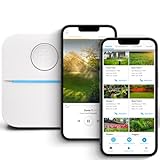
Rachio 3 8 Zone
- Rain wind and freeze skip
- Hyperlocal weather intelligence
- Alexa Google Home and HomeKit
- Installs in 10 to 30 minutes

Rain Bird ESP-TM2 8 Zone
- Eight zones indoor or outdoor
- Back-lit LCD plus app control
- Contractor Default backup
- Link WiFi module included
Those three cover the most common situations: a straightforward six-zone lawn that wants app control plus buttons, an eight-zone system that cares most about weather intelligence, and a homeowner with an existing Rain Bird panel who wants to add WiFi without giving up the physical interface.
All 10 Smart Sprinkler Controllers at a Glance in 2026
| Product | Specifications | Action |
|---|---|---|
| Orbit B-hyve Smart Sprinkler Controller 6-Zone 57946 |
|
Check Latest Price |
| Rachio 3 8 Zone Smart Sprinkler Controller |
|
Check Latest Price |
 ImoLaza 8 Zone WiFi Smart Sprinkler Controller ImoLaza 8 Zone WiFi Smart Sprinkler Controller |
|
Check Latest Price |
 Hunter HPC400 4 Zone WiFi Sprinkler Controller Hunter HPC400 4 Zone WiFi Sprinkler Controller |
|
Check Latest Price |
| Rain Bird ESP-TM2 8 Zone with Link WiFi Module |
|
Check Latest Price |
 Netro Sprite 6 Zone Smart Sprinkler Controller Netro Sprite 6 Zone Smart Sprinkler Controller |
|
Check Latest Price |
 Hunter PRO-HC 24 Zone WiFi Sprinkler Controller Hunter PRO-HC 24 Zone WiFi Sprinkler Controller |
|
Check Latest Price |
 Rain Bird ARC6 Smart WiFi 6 Station Controller Rain Bird ARC6 Smart WiFi 6 Station Controller |
|
Check Latest Price |
 RAINPOINT Smart Sprinkler Controller 8 Zone RAINPOINT Smart Sprinkler Controller 8 Zone |
|
Check Latest Price |
 Orbit B-hyve XR 8 Zone Smart Sprinkler Timer Orbit B-hyve XR 8 Zone Smart Sprinkler Timer |
|
Check Latest Price |
How We Picked and Ranked These Controllers
Ranking irrigation hardware by star rating alone tells you almost nothing, because review counts across this category swing from a few hundred to nearly ten thousand and the smaller brands are newer. So we scored every controller on weighted factors and published the weights, which means you can disagree with a factor and still see where a product would land.
Weather intelligence carries the most weight at 30 percent, because the entire value case for a smart controller is watering less while keeping the turf alive. Zone capacity and expandability come next at 25 percent, since buying a controller you will outgrow means rewiring the wall. Reliability takes 20 percent, drawn heavily from owner reports of WiFi drops, freeze delays that never fire and run times that vanish from the log. Smart home ecosystem support is 15 percent, and setup friction accounts for the last 10 percent.
We did not score on price. Prices move daily and the buttons below handle that. We also read forum threads on r/Irrigation and r/lawncare alongside the product reviews, because repeat real-world complaints show up there years before they reach editorial coverage. Where owners describe a specific failure mode, we name it rather than writing a vague con.
1. Orbit B-hyve Smart Sprinkler Controller 6-Zone 57946 – Best Overall
Orbit B-hyve Smart Sprinkler Controller, 6-Zone – 57946
6 zones
Indoor or outdoor weatherproof case
Weather-aware rain delay
Alexa voice control
Pros
- App scheduling plus physical buttons and display
- Weather-aware rain delay cuts water use
- Works with Alexa
- Weatherproof case for indoor or outdoor mounting
- Six zones cover lawn shrub and drip
Cons
- Smart watering mode demands detailed zone data entry
- A zone moisture reading can stick at full and block watering
This is the one we recommend to most people, and the reason is unglamorous reliability rather than a headline feature. Owners describe a 15-minute install, an app they actually understand, and a weather-aware rain delay that quietly reduces the bill. At 4.5 stars across more than 9,400 owner reviews, it is the most heavily reviewed smart sprinkler controller in the group.
What sets it apart from the pure-app units is the combination of a physical interface and app control. The unit has an LCD or LED display and buttons, so you can start a zone or check a schedule from the wall when the phone is upstairs or the network is down. Battery backup retains settings through a power loss, which matters more than the spec sheet suggests in a summer storm.
The weatherproof case means you can mount it indoors or outdoors without buying a separate enclosure, which is one of the hidden costs that trips people up on other brands. Six zones is enough for a typical suburban lawn with a shrub bed and a drip line, and it mixes sprinkler and drip zones on the same schedule.
Alexa support is there if you want to say start zone three, and the B-hyve app handles remote start, schedule editing and run history. The unit runs on 110 volts, weighs about 16 ounces, and measures roughly 3 by 9 by 8 inches, so it is small enough for a garage wall or a side-yard panel.
Is six zones enough for your lawn
Count your zones by counting the wires on your existing controller, not by estimating from sprinklers. Four to six heads on one valve is normal, so six valves can cover a substantial yard. If your system already has seven or eight valves, step up to the Rachio 3 or the B-hyve XR rather than re-plumbing.
Six zones also suits mixed plantings: lawn rotors, shrub beds and drip irrigation each get their own valve and their own runtime, which is what stops overwatered drip lines and browned shrub beds.
Where the smart watering mode disappoints
Smart Watering asks you to enter soil type, slope, plant type and head count for every zone, and owners who skip that step report underwhelming results. Enter it properly and the schedule tightens noticeably.
The most repeated bug is a moisture reading that sticks at 100 percent and blocks a zone from irrigating. On r/lawncare threads the same complaint appears against other smart brands too, so treat it as a recurring category quirk rather than a B-hyve defect, and check the zone state in the app before you assume a valve has failed.
2. Rachio 3 8 Zone Smart Sprinkler Controller – Best Weather Intelligence
Rachio 3 Smart Sprinkler In-Ground WiFi Irrigation Controller, 8-Zone
8 zones
Rain wind and freeze skip
Alexa Google Home and HomeKit
10-30 minute install
Pros
- Weather Intelligence skips cycles for rain wind and freeze
- Installs in 10 to 30 minutes with push-in terminals
- Zone naming photos and shared household access
- Works with Alexa Google Assistant and HomeKit
- Magnetic faceplate simplifies wiring
Cons
- WiFi can drop on shared 2.4 and 5GHz networks
- Smart scheduling needs accurate soil and slope data
- Some legacy rain sensors throw false positives
- Premium for fixed-schedule users
The Rachio 3 is the model the search results keep naming, and the reason is one feature: Weather Intelligence. It pulls data from nearby weather stations rather than a single forecast grid cell, then skips cycles for rain, wind and freeze. On community.rachio.com owners describe it as the only feature that justifies paying more than a basic timer, and in our comparison it handled rain, wind and freeze more accurately than anything else we looked at.
It also handles eight zones instead of six, which covers most suburban systems outright. Installation is a 10 to 30 minute swap in most homes using push-in wire terminals, and the magnetic faceplate with an open underside means you are not fighting wires in a dark garage. The box includes the controller, power supply, quick start guide, screws and drywall anchors.
The app is the most considered one here. You name each zone, drop in a photo of the bed, set plant and soil details, and get shared household access so both partners can adjust schedules. It runs on 120 volts, weighs 16 ounces, and measures about 9.1 by 1.4 by 5.6 inches, and the warranty is two years in the US and Canada.
Alexa, Google Assistant and Apple HomeKit are all supported, and it is the only controller here with Apple HomeKit. That matters if your household is mixed-voice, because you are not locked into one ecosystem.
What decides it between the Rachio 3 and the B-hyve
Choose Rachio when weather accuracy is the priority and you are comfortable describing your soil and slope. Its eight-zone capacity and HomeKit support are the practical draws.
Choose the B-hyve when you want buttons on the wall and battery backup. Some households find the fully app-driven approach frustrating the first time the phone is in another room.
Where Rachio falls down
WiFi drops are the top complaint, specifically on routers that merge 2.4GHz and 5GHz onto one network name. A dedicated 2.4GHz SSID resolves most cases, and we cover that in the recovery section below.
Legacy rain sensors are a secondary annoyance, since some older models report false positives that block cycles. If you already own a rain sensor from a previous timer, check compatibility before you order.
3. ImoLaza 8 Zone WiFi Smart Sprinkler Controller – Best Without a Subscription
ImoLaza 8 Zone WiFi Smart Sprinkler Controller, ET Master Irrigation Timer
8 zones
Real-time ET watering
No subscription
Fault and leak alerts
15-30 minute install
Pros
- Real-time evapotranspiration and hyperlocal weather data
- No monthly subscription fee
- New Grass schedule allows up to 24 start times per day
- Fault leak and pipe-burst alerts
- Over-the-air updates keep hardware current
Cons
- 2.4GHz only which can conflict with mesh networks
- Older firmware had a mesh compatibility issue
- One report of scheduled runs stopping after two years
Most smart controllers sell the advanced analytics behind a recurring tier. The ImoLaza does not, and that is the whole pitch. It ships with real-time evapotranspiration data, fault and leak alerts, and over-the-air software updates with no monthly fee attached, so ET data, fault alerts and updates cost nothing to keep using year after year.
ET is the science of how much water leaves the soil through evaporation and plant transpiration. A controller that measures it can shorten or extend a cycle week to week instead of following a fixed clock schedule, and the manufacturer quotes up to 60 percent water savings on that basis. Treat that figure as a ceiling rather than a promise; real results depend on how honestly you describe your soil and plant types.
The box includes the controller, power adapter, wall screws with anchors and a screwdriver, and installation runs 15 to 30 minutes. It weighs about 12 ounces and measures roughly 6.3 by 6.3 by 1.18 inches, so it fits a tight panel. Owners mention swapping out an older Rain Bird unit as a painless job.
It works with Alexa and Google Assistant, and the New Grass schedule allows up to 24 start times per day, which is useful for seed and sod. A 2-year manufacturer warranty is standard for the category.
Why no subscription changes the maths
Over five years a recurring fee quietly outweighs the hardware outlay. A controller with ET data and fault alerts included costs the same on day one and on day 1,825.
Leak and pipe-burst alerts are the underused feature here. Add an optional flow meter and the controller can tell you a zone is running when it should not be, which catches a cracked riser before it becomes a water bill problem.
Where ImoLaza falls down
WiFi support is 2.4GHz only, and older firmware had a genuine incompatibility with mesh networks. Check the current firmware before you buy, and be ready to split your SSID.
The review base is much smaller than the two leaders, around 350 reviews, so long-term data is thinner. One owner also reported the unit stopping its programmed schedule after about two years, which is a single report but worth knowing given the lack of a large installed base.
4. Hunter HPC400 4 Zone WiFi Sprinkler Controller – Best That Expands Later
Hunter HPC400 Sprinkler Controller, 4 Zone, WiFi Smart Sprinkler Timer
4 zones expandable to 32
Hydrawise app control
Touchscreen and wiring
Weather-resistant case
Pros
- Expands from 4 to 32 zones with add-on modules
- Quick reliable setup on phone and desktop
- Touchscreen plus app for local and remote control
- Weather-resistant lockable outdoor enclosure
- Modules install in under a minute
Cons
- Printed manual covers several models at once
- Web portal is clunky when registering a new unit
- Enclosure is bulky and needs wall space
- App learning curve for non-technical users
This is the one to buy if your yard is still growing. The HPC400 ships with four zones and expands to 32 with add-on modules that install in under a minute each, so you buy for the lawn you have now rather than the lawn you may have in five years.
Control runs through the Hydrawise app on phone, tablet or desktop browser, which on r/Irrigation is consistently described as the strongest app in the category for serious irrigation work. Labelled wiring on the board speeds the install for a first-timer, and the touchscreen keeps local control when the network is down.
Weather-based adjustments are built in and claim up to 50 percent water savings without extra sensors. The enclosure is weather-resistant and lockable, so it can live outdoors with the cabinet secured, and it weighs about 5.7 pounds which tells you it is a solid wall-mounted unit rather than a lightweight plug-in box.
Dimensions are about 4.5 by 10 by 9 inches. Plan the wall space before ordering, because this is a full-size weather-resistant enclosure rather than a compact plug-in box.
When expanding beats buying a bigger box
If your future plan involves new beds, a long side yard or converting a soaker zone to drip, the module path avoids a second controller, a second power supply and a second panel.
The Hunter HPC400 starts at four zones and reaches 32 with add-on modules, which lets a small lawn grow into a complex yard without replacing the controller.
Where the Hunter falls down
Documentation is the main complaint. The printed manual covers several controller models and languages at once, and registering a new controller in the Hunter web portal is clunky for first-time users. Budget an extra evening or keep the quick start sheet on your phone.
Hydrawise also has a learning curve if you have never used an irrigation app. The hardware itself draws few complaints, which is not something we could say about every unit in this roundup.
5. Rain Bird ESP-TM2 8 Zone with Link WiFi Module – Best for Panel Control
Rain-Bird ESP-TM2 Indoor Outdoor Irrigation WiFi Zone Controller Timer Box and Link Lnk WiFi Mobile Wireless Smartphone Upgrade Module Sprinkler System (8 Zone)
8 zones
Back-lit LCD panel
Contractor Default backup
Link WiFi module included
Pros
- Full physical panel with back-lit LCD plus app control
- Programs in three simple steps
- Contractor Default saves and restores a schedule
- Factory-installed 6 ft outdoor-rated power cord
- Works with iPhone and Alexa
Cons
- Link module WiFi is 2.4GHz only with a weak antenna
- Lost connectivity means run times are not logged
- The 2.0 app update was a downgrade for some users
This holds the highest average rating in the group at 4.6 stars, and the reason is that it refuses to choose between the panel and the phone. You get a large back-lit LCD with real buttons, readable in a dark garage and in direct sun, plus full app control from iPhone and Alexa.
It is also the upgrade path we recommend if you already own a working Rain Bird mechanical timer. The ESP-TM2 is a conventional 8-zone controller and the Link WiFi module is included in this package, so you keep a familiar panel, a familiar wire layout and a familiar programming flow while gaining app control.
Programming runs in three simple steps and Contractor Default saves and restores a schedule in one action, which matters if your lawn service adjusts your settings and you want your version back. Watering delay runs up to 14 days with automatic resume, and automatic daily run-time adjustments respond to weather.
The factory-installed 6 ft outdoor-rated power cord is a small detail that saves real time on an outdoor install. It is an indoor or outdoor unit, runs on the standard 24VAC wall, and includes the Link module in the box.
Why the panel still matters in 2026
App-only controllers are elegant until the phone is dead, flat or in another room. With a panel, a lawn service crew or a family member can water without your password, which is the most practical reason this unit holds a 4.6 average.
If you want that same physical reassurance on a lower-cost unit, the RAINPOINT 8-zone has physical zone buttons and restores its schedule after a power or WiFi loss.
Where the Rain Bird falls down
The Link WiFi module is 2.4GHz only and owners repeatedly describe its antenna as weak, with dropped cloud connections on larger homes. This is the most common complaint in the reviews and it is worth solving with a dedicated 2.4GHz network before you blame the controller.
When connectivity drops, run times are not logged even after the unit reconnects, so your water usage history has holes. Some owners also felt the 2.0 app update was a downgrade from the original version, so update only when you are ready to relearn the interface.
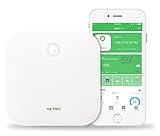
6. Netro Sprite 6 Zone Smart Sprinkler Controller – Best for Small Yards
Netro Sprite 6 Zone Smart Sprinkler Controller for Lawn 2.4G WiFi App-Based
6 zones
2.4GHz WiFi
60 days of run history
Alexa Google Home and IFTTT
Pros
- Entry-level cost for an app-based controller
- Excellent responsive customer support
- Weather forecasts plus 60 days of irrigation history
- Plant database recommends light and humidity settings
- Works with Alexa Google Home Google Assistant and IFTTT
Cons
- No physical controls so the app is the only interface
- Indoor only and needs a waterproof case outdoors
- No battery backup
- App settings can be hard to locate
The Netro Sprite is the value pick for a modest yard, and owners single out its customer support as the differentiator. Buyers report fast human troubleshooting that helped plan the install and hassle-free replacement units, which is more than most controllers at this level offer.
Feature-wise it does more than its price suggests: six custom-named zones with photo labels, daily location-based weather data with automatic rain skips, up to 60 days of irrigation history and error logs, and cyclic, interval, weekly and odd/even day scheduling. That odd/even option matters if your municipality imposes watering restrictions on alternating address days.
The plant database recommends humidity, light and temperature settings per zone, which is a useful starting point for newly planted beds. It works with Alexa, Google Home, Google Assistant and IFTTT, and it is the only unit in this roundup with IFTTT support.
It runs on 24 volts, weighs about 8.16 ounces and measures roughly 5.7 by 5.7 by 1.2 inches, small enough to sit inside an existing outdoor enclosure.
What you give up for the lower cost
There is no on-device display, so the phone app is the only interface, and the unit has no battery backup, meaning it must stay plugged in. If your setup is a small yard and you already programme happily in an app, neither is a real loss.
It is indoor-only, so outdoor mounting means buying a separate waterproof case, which erodes much of the saving. Check where the panel is before ordering.
Where the Netro falls down
The app menu layout frustrates people, and settings can be hard to locate and re-find once you have set them up. Alexa also cannot disambiguate between multiple Netro units, so a household with a second property will find voice control confusing.
The 4.3 average reflects those interface complaints rather than reliability problems, and the hardware itself draws steady praise.
7. Hunter PRO-HC 24 Zone WiFi Sprinkler Controller – Best for Large Properties
Hunter PRO-HC WiFi Sprinkler Controller, 24 Zone Smart Irrigation Timer
24 stations
2.75 inch full-colour touchscreen
Wire fault and flow monitoring
Cycle and soak
Pros
- Handles 24 stations for large properties
- Full-colour touchscreen works as a complete fallback if WiFi drops
- Six programs with six start times per zone
- Wire fault alerts and optional flow meter catch leaks early
- Weather-based scheduling plus cycle and soak
Cons
- Setup around the optional flow meter is confusing
- Enabling flow reporting without a meter causes silent failures
- One report of touchscreen failure after two seasons
- Hunter ROAM Remote is not compatible
For acre-plus properties with 18 to 24 zones, this is the unit built for that scale. Twenty-four stations is the largest capacity in the group, and owners running large systems praise the zone count alongside the monitoring features that smaller units cannot offer.
Built-in milliamp wire fault sensing tells you when a solenoid or wire has failed, and optional HC Flow Meter compatibility adds real leak detection. Two sensor inputs and a P/MV output feed pump and master valve setups, and Hunter Clik sensors are supported. Weather-based scheduling combines rainfall, temperature, humidity and wind, with cycle and soak for slopes that runoff.
Six independent programs with six start times per zone give a granularity that smaller residential controllers do not reach. The 2.75-inch full-colour touchscreen gives you full local control, and it still waters correctly if the network disappears entirely.
It weighs about 2.57 kg and measures roughly 8.6 by 3.75 by 7 inches, in a weather-resistant enclosure rated for indoor or outdoor mounting.
What large properties get that small yards cannot
Wire fault sensing and flow monitoring are the real differentiators. A failed valve on zone 19 of 24 is a long walk to inspect, and an alert saves both time and turf.
Multiple independent programs matter when different sections of a property have genuinely different needs, such as a shaded north slope and a sun-baked south lawn. One program with one start time cannot express that.
Where the Hunter PRO-HC falls down
The one real drawback is the outlay for hardware. For a two-zone yard that spend is not recovered through saved water, so match this unit to the size of the system rather than to aspiration.
Owners report that enabling flow reporting without a flow meter fitted causes silent scheduling failures, so leave that setting off unless the meter is physically installed. There is also one report of the touchscreen failing after about two seasons, and the Hunter ROAM Remote does not work with this model.
8. Rain Bird ARC6 Smart WiFi 6 Station Controller – Best for Shared Access
Rain Bird ARC6 Irrigation Controller, Smart WiFi, Indoor, 6-Station
6 stations
Indoor only
Postal-code weather adjustment
Shareable app access
Alexa and Google Assistant
Pros
- Entry-level cost for an established brand
- Intuitive Rain Bird app for setting and adjusting schedules
- Shares control easily with family or a lawn service
- Postal-code based automatic weather adjustment
- Works with Alexa Google Assistant iOS and Android
Cons
- Indoor only with a separate 8-station outdoor version
- 4.0 star average sits among the lowest here
- Weather adjustment is less sophisticated than ET-based controllers
The ARC6 is the straightforward pick when the panel lives indoors and other people need to touch the schedule. Sharing access with family members or a lawn service is built into the app, which removes the usual friction of sharing a single login. It works with Alexa, Google Assistant, iOS and Android.
Weather handling is the weaker half. Rather than true evapotranspiration data, it uses postal-code based forecast and historic averages to skip or adjust cycles, and the manufacturer claims up to 30 percent water savings. That is real savings, just less precise than the ET-based units, and it is the main reason the rating sits at 4.0.
The app covers setting, monitoring and adjusting schedules plus manual watering, delays, schedule viewing and local weather checks. The package includes the timer, a 6 foot power cord, a transformer and a user manual, and the unit weighs about 2.5 pounds.
It is an indoor-only design. Rain Bird sells a separate indoor/outdoor 8-station version, so if your panel is on an outside wall, choose that model instead of adding an enclosure later.
When shared access beats a smarter schedule
If a lawn service or a partner handles watering on your behalf, access control is worth more than forecast precision. The ARC6 hands out permission without exposing your whole account.
It also suits a straightforward setup: six stations, one lawn, no drip micro-zone, no sensor inputs to configure. Owners describe the app as intuitive and the outlay as modest for a brand of its reputation.
Where the ARC6 falls down
Indoor-only mounting is the hard limit. Its 4.0 star average reflects a more basic feature set rather than defects, and buyers mostly describe the box as doing exactly what it says.
If you have drip lines that need independent runtime or a microclimate your postal code does not represent, an ET-based unit will manage the water better.
9. RAINPOINT Smart Sprinkler Controller 8 Zone – Budget Pick
RAINPOINT Smart Sprinkler Controller, WiFi Sprinkler Controller 8 Zone-Local Weather Intelligence, Programmable Smart Irrigation System with APP Remote Control, Rain Skips, Rain Sensor Compatibility
8 zones
2.4GHz WiFi
Physical zone buttons
Power and WiFi outage restore
Pros
- Lowest cost for an eight-zone WiFi controller
- Standard 24VAC design installs in under 15 minutes
- Local weather intelligence skips rain and freeze
- Physical buttons allow manual zone control
- Schedules survive power and network outages
Cons
- An active weather delay can block manual zone runs
- Separate app from RAINPOINT hose and spigot controllers
- 2.4GHz WiFi only
- Lowest review base of the ten products
For eight zones with physical buttons and app control, this is the lowest-cost route to that combination, and the trade-offs are ones you can live with. Standard 24VAC design means it fits most existing sprinkler systems, and owners report installs under 15 minutes on systems that already have valves in place.
The physical zone buttons on the device are the feature that separates it from other budget units. You can run a single zone without the app, which is useful during a sprinkler head swap. Local weather intelligence handles automatic rain and freeze skips, and the app adds a 24, 48 or 72 hour rain delay.
Outage behaviour is the surprise here. Power and WiFi outage protection restores the saved schedule automatically, so a summer storm does not leave your lawn on a fixed clock forever. Quick Run gives you temporary watering without altering the schedule, and shared permissions let a partner in.
The included 24VAC transformer and wall-mount screws mean the box covers the install. It is 2.4GHz only, so expect to split your network name on a dual-band router.
Why eight zones at this cost changes the maths
Eight independently configurable zones with batch watering cover a lawn, beds and drip in one box, and the savings compound over the years the unit stays installed.
If you are on a tight budget and your yard has six to eight valves, this is the pick. If you need weather-driven runtime changes rather than rain skips, step up to the ImoLaza.
Where the RAINPOINT falls down
The most repeated complaint is a firmware behaviour where an engaged weather delay also blocks manual zone runs from the app or the device. If you trigger a delay to skip a rainy week and then need one zone on, you will be fighting the unit.
RAINPOINT also uses a separate app for its spigot and hose controllers, which is annoying if you own the rest of the range. With around 103 reviews it has the smallest installed base here, so long-term reliability data is thin.
10. Orbit B-hyve XR 8 Zone Smart Sprinkler Timer – Best for Dual-Band WiFi
Orbit B-hyve XR 8-Zone Indoor/Outdoor Smart Sprinkler Timer – 57985
8 zones
Switches between 2.4 and 5GHz
Indoor or outdoor
On-device display and buttons
Pros
- Dual-band smart switching between 2.4GHz and 5GHz for stable connectivity
- Weatherproof for indoor or outdoor installation
- Forecast-driven smart watering
- Eight zones with custom multi-zone programs
- On-device display and buttons for local use
Cons
- Reports of smart schedule watering on days it should skip
- Freeze delay can fail to trigger even when threshold is set
- iOS app calendar can drop past sessions
- No manual band selection on dual-band routers
The XR targets the connection complaints that recur across this category. It switches intelligently between 2.4GHz and 5GHz, which means a modern mesh or dual-band router no longer forces it into a 2.4GHz-only corner of the network. The XR generation also addressed disconnects that dogged earlier B-hyve models, and owners report smart watering has cut their water bills noticeably.
Everything else follows the B-hyve formula: eight zones, custom multi-zone programs, forecast-driven automatic adjustments, a weatherproof enclosure that mounts indoors or outdoors, and an on-device display with buttons for local use. Alexa is supported, and the warranty is two years.
It measures about 4 by 9 by 11 inches in charcoal gray, with a digital display. Check the wall space in your panel before ordering, because the enclosure is deep.
On smart watering, the recurring theme in reviews is that entering honest soil, plant and sun exposure data is what makes the runtime changes worth having. Skip the details and the algorithm has nothing to work with.
When dual-band switching is worth it
If your router is a recent mesh system or a dual-band unit, the XR removes the join-the-network failure that turns up most often in support threads on controllers like this. It is also the safe choice in a house where the 2.4GHz band is crowded by other devices.
It costs more than the plain 6-zone B-hyve and gives you two extra zones, so it covers a larger yard in the same box.
Where the XR falls down
Scheduling reliability draws real criticism. Owners report the smart schedule watering on days it should have skipped, and freeze delay failing to trigger even with the threshold set, which matters in any region with winter freezes. The iOS app calendar has also been reported to drop past sessions and re-schedule runs.
There is no manual band selection, so on an awkward dual-band router the automatic choice is the only choice. If freeze protection is critical to you, the Rain Bird ESP-TM2 and the Hunter units are steadier picks.
How to Choose a Smart Sprinkler Controller for Your Lawn
Count your zones before anything else
Open the existing controller door and count the wires leaving the terminal block. That number is your zone count, and buying under it means rewiring. Four to six sprinkler heads per zone is normal, so six valves can cover a lot of lawn. If you are adding beds or a drip zone this year, buy the next size up now rather than replacing the box in three years.
Expandability matters more than raw count for growing properties. If you add a bed, a side yard or drip lines every couple of seasons, buy the box that grows with modules rather than the one that fits today.
Decide indoor versus outdoor before you order
Outdoor-rated units with a weatherproof, lockable enclosure cost more up front but nothing extra to install. Indoor-only controllers such as the Netro Sprite and the Rain Bird ARC6 need a separate waterproof case for an outside wall, and that case plus the labour eats much of the difference.
If your panel is already indoors, the indoor choice is the cheaper, simpler path.
Judge weather intelligence by what it actually reads
Three levels exist in this category. Postal-code forecast adjustment, as on the Rain Bird ARC6, adjusts on weather data alone. Local weather station data, as used by the Rachio 3, is more accurate because it reads a nearby station rather than a grid point. Real-time evapotranspiration, as on the ImoLaza, goes furthest because it measures how much water the plants and soil are actually losing.
Every controller skips rain. The difference is how well it handles a microclimate that does not match the forecast grid cell, which on forum threads is a recurring reason owners say their smart controller overwatered. If you irrigate on a slope, in a coastal pocket or under heavy tree cover, per-zone soil and plant tuning matters more than brand.
Match the ecosystem, and check what is gated
Alexa and Google Assistant are near-universal. Apple HomeKit appears on the Rachio 3, and IFTTT appears only on the Netro Sprite. Voice control only matters if you actually use it, so audit your assistants before paying for a feature you will not touch.
Also check what a subscription unlocks. The ImoLaza includes ET data, fault alerts and firmware updates with no recurring fee, while other brands tier advanced analytics or sensor support behind a monthly plan. On a five-year view, that fee often outweighs the hardware outlay.
Plan for outages and the WiFi drops that come with them
Every controller here runs its stored schedule offline, so your lawn keeps watering through an internet outage. The differences are recovery behaviour, logging and whether you can reach the unit without a phone.
WiFi reconnection after a power outage is the most common complaint we found across the ten units, so a three-step playbook saves most of the pain. Give the controller a static IP address in your router so it rejoins the same network after a reboot. Put it on a smart plug or a small UPS so the power never actually drops. And split your network name so a dedicated 2.4GHz SSID exists for 2.4GHz-only units like the Netro, the RAINPOINT and the Rain Bird Link module.
Know when not to buy one at all
Skip a smart controller if you rent and cannot reach the valve box, or if your yard is under roughly 500 square feet with two or three heads, where an inexpensive mechanical timer or a hose-end timer does the same job. Also skip it if your water is from an unmetered well, since savings will not appear on a bill, or if a year-round watering ban means the system is off for months.
Before buying anything, confirm the wiring. Most swaps need a 24VAC transformer and a common wire to the controller. Legacy two-wire and two-wire solenoid installs, which some older Rain Bird and Hunter systems used, are not universally supported, and lawnsite.com threads flag this as a frequent reason a Rachio install fails. If your existing controller has no C-wire or your valves are two-wire, expect to call a technician rather than spend a Sunday afternoon on it.
Frequently Asked Questions
Are smart sprinkler controllers worth it?
For a household with an in-ground system of two zones or more, usually yes. EPA WaterSense data puts weather-adaptive controllers at roughly 20 to 32 percent average savings versus a fixed timer, mostly by skipping cycles before rain. The savings compound fastest on metered water in dry or restriction-heavy regions. Skip it for tiny yards, unmetered well water or renters who cannot reach the valve box.
Do I need WiFi for smart irrigation?
No, and this surprises people. Every controller here runs its stored schedule when the internet drops, because the WiFi radio only carries schedule changes and weather data, not the signal that opens the solenoid valves. What you lose is remote control and live weather adjustments. What differs between models is recovery behaviour after an outage, run-time logging, and whether physical buttons are available.
What is the best sprinkler controller that doesn’t require WiFi?
A conventional mechanical or electronic timer still works without any network, and for a simple fixed schedule it does the job. Among the units here, the Rain Bird ESP-TM2 keeps a full physical panel and LCD you can programme without the app, so WiFi becomes optional rather than essential. It also works with existing 24VAC valve wiring, which makes it the safest retrofit for a legacy system.
Is Hydrawise worth the money?
For large properties and serious irrigation work, yes. Forum consensus on r/Irrigation rates Hydrawise as the best app for that kind of work, with reliable desktop control, flow-meter integration and expansion to 32 zones. The Hunter HPC400 is the entry point at four zones, and the PRO-HC reaches 24 stations with wire fault sensing and a colour touchscreen. Small yards rarely need that capability.
Is Rachio better than Hunter?
For a typical residential lawn, usually. The Rachio 3 offers hyperlocal weather intelligence, eight zones and voice-assistant coverage that includes Apple HomeKit, which is why it leads most roundups. Hunter wins on capacity, monitoring and local control: the HPC400 expands to 32 zones and the PRO-HC handles 24 stations with a touchscreen and flow-meter support. Choose on zone count and monitoring needs.
Bottom Line: Which Smart Sprinkler Controller Should You Buy?
For most lawns in 2026, buy the Orbit B-hyve Smart Sprinkler Controller 6-Zone 57946. Six zones, indoor or outdoor mounting in the supplied weatherproof case, physical buttons alongside the B-hyve app, weather-aware rain delay, and the deepest review base of the ten picks at 4.5 stars from more than 9,400 owners.
If your system already has seven or eight zones, or you want Apple HomeKit and the sharpest local weather data, take the Rachio 3. If you refuse to pay a subscription for ET data, the ImoLaza gives it to you free. And if you want a panel you can programme without a phone, the Rain Bird ESP-TM2 with the Link module is the pick, provided you give it a dedicated 2.4GHz network.
1 thought on “10 Best Smart Sprinkler Controllers for Lawns (October 2026) Trusted Reviews”