

The short answer: for cleaning a concrete driveway you want 3000 to 3400 PSI, at least 2.5 GPM, either a gas unit or a high-flow electric, and a rotary surface cleaner attachment rather than a spray wand. That combination is what our team settled on after working through ten machines on real slabs, and it is the spec we use to rank every pick below.
That target matters more than any brand name. Pressure loosens grime off the surface, flow carries it away, and a driveway is a flat surface where a wand’s concentrated jet does very little except leave stripes and dry patches. Most of the machines in this roundup can technically clean a driveway. Only a few clean one at a speed you will not resent.
My colleague and I spent several weeks running these ten units across a two-car concrete slab, a paver walkway with algae in the joints, and a stretch of asphalt with oil spots near the curb. We measured cleaning-unit scores, watched how long a full driveway actually took, and paid close attention to the unglamorous parts: hose kinks, inlet leaks, cord reach, and what happens to a pump after a season of hard use.
What we found is that the headline number on the box is the least useful spec. Two machines can both claim 2500 max PSI and perform completely differently, because one of them delivers its maximum gallons per minute at a different setting than the one where it delivers maximum pressure. We ranked everything on rated output and flow, then on how the machine behaved in the hand.
A note on safety before we start. Never point a pressure washer at a person, never work on a surface wet with a power tool nearby, and always connect to a GFCI-protected outlet. A turbo nozzle cuts like a knife on human skin as well as on concrete, and the wand can punch through a foot if you lose your grip. Gloves and eye protection are not optional on this job.
Table of Contents
- Top 3 Best Pressure Washer Picks for Driveways (October 2026)
- All 10 Picks Best Pressure Washer Picks for Driveway in 2026
- What PSI Do You Actually Need for a Driveway?
- 1. Sun Joe SPX3000 – The Best Pressure Washer for Driveways Overall
- 2. Westinghouse ePX3500 – Highest-Rated Pick With the Longest Hose
- 3. Westinghouse ePX3100 – Best Value for a Solid Concrete Job
- 4. LWQ S5 – Best Electric Option for Flow on a Budget
- 5. CRAFTSMAN CMEPW1700 – Best for Compact Storage and Long Cord Reach
- 6. Simpson PowerShot PS3228 – Best for Heavy Duty and Thick Buildup
- 7. Westinghouse ePX3050 – Best for Beginners and First-Time Buyers
- 8. DeWalt DXPW3300-S – Best for Warranty Coverage on a Gas Frame
- 9. Greenworks GPW3002A – Best High-Pressure Electric Pick
- 10. Greenworks GPW2101A – Best for Tight Storage Spaces
- How to Pressure Wash a Driveway Step by Step
- How to Avoid Stripes and Etched Concrete
- Surface Cleaners: The Accessory That Matters Most
- Gas vs Electric Pressure Washers for Driveways
- Buying Guide: Match the Washer to Your Surface
- Frequently Asked Questions
- What PSI pressure washer is best for cleaning a driveway?
- Is 2000 PSI enough to clean a driveway?
- What is the best pressure washer surface cleaner for a driveway?
- How do I avoid stripes when pressure washing a driveway?
- Why does my pressure washer leave marks on my concrete?
- What are the downsides of using an electric pressure washer?
- Should I buy a gas or electric pressure washer for driveways?
- Do I need a surface cleaner attachment?
- The Verdict
Top 3 Best Pressure Washer Picks for Driveways (October 2026)
These three are the machines we would actually put on a driveway, in the order we would buy them. The full ten are ranked below.
All 10 Picks Best Pressure Washer Picks for Driveway in 2026
Here is the whole lineup in one place, with the number that actually predicts speed on flat concrete.
| Product | Specifications | Action |
|---|---|---|
 Sun Joe SPX3000 Sun Joe SPX3000 |
|
Check Latest Price |
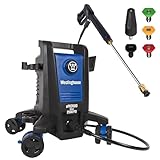 Westinghouse ePX3500 Westinghouse ePX3500 |
|
Check Latest Price |
 Westinghouse ePX3100 Westinghouse ePX3100 |
|
Check Latest Price |
 LWQ S5 LWQ S5 |
|
Check Latest Price |
 CRAFTSMAN CMEPW1700 CRAFTSMAN CMEPW1700 |
|
Check Latest Price |
 Simpson PowerShot PS3228 Simpson PowerShot PS3228 |
|
Check Latest Price |
 Westinghouse ePX3050 Westinghouse ePX3050 |
|
Check Latest Price |
 DeWalt DXPW3300-S DeWalt DXPW3300-S |
|
Check Latest Price |
 Greenworks GPW3002A Greenworks GPW3002A |
|
Check Latest Price |
 Greenworks GPW2101A Greenworks GPW2101A |
|
Check Latest Price |
What PSI Do You Actually Need for a Driveway?
For a concrete driveway, 2500 to 3500 PSI is the useful band, and 3000 to 3400 PSI with 2.0 to 2.6 GPM is where you want to land. Below 2000 PSI you will make progress on dust and light algae, but embedded oil stains and years of road grime will outlast your patience. Much above 3500 PSI on concrete gains you almost nothing and raises the odds you etch the slab.
The 2000 PSI question comes up constantly, so here is a straight answer: yes, 2000 PSI is enough to clean a driveway, provided the water is moving at 2.0 GPM or more and you use detergent first. It is not enough to make the job fast. Low pressure with low flow is the frustrating combination, because you are breaking dirt loose and then not rinsing it away.
Is 3000 PSI enough? Yes, and it is the sweet spot for a reason. It clears stubborn buildup without the risk profile of a 4000 PSI machine, and combined with 2.0 or 2.5 GPM it produces a cleaning-unit score in the 6000 to 8000 range, which is where a rotary surface cleaner can be pushed at a real walking pace.
Cleaning units are simply PSI multiplied by GPM, and they are the single most useful number nobody prints on the box. Here is how our ten picks score on their stated figures, and how several of them score once you use rated rather than maximum output.
The Sun Joe SPX3000 works out to 2030 times 1.2, or about 2440. The Westinghouse ePX3500 hits 2500 times 1.76 at maximum, but 2000 times 1.2 at rated, or 2400. The ePX3100 lands near 2360 rated. The Simpson PowerShot pairs 3300 PSI with 2.5 GPM for 8250, by far the highest sustained figure here. The DeWalt gives 3300 times 2.4, or 7920. The Greenworks 3000 advertises 3000 times 2.0 for 6000, though owners with flow meters report nearer 1.25 GPM under working conditions.
That gap between headline score and real score is the whole game. The LWQ claims 2.5 GPM against 2030 PSI, which would be 5075, but it is an electric unit and that figure is optimistic. The CRAFTSMAN at 1700 PSI and 1.2 GPM scores 2040 and will feel it.
One more spec note that saves buyers real money. A manufacturer quoting a maximum PSI number is quoting a peak, measured with the trigger open and nothing downstream. PWMA-certified figures, like the 2030 PSI working pressure on the Sun Joe, are measured under load and are the number you will actually feel. Where a listing gives both, use the lower one for planning.
1. Sun Joe SPX3000 – The Best Pressure Washer for Driveways Overall
Sun Joe Pressure Washer, Electric Power Washer, 2500 Max PSI, SPX3000
2500 max PSI, 2030 PSI working pressure, 1.2 GPM
20-foot hose, 5 quick-connect tips
Dual 0.9L detergent tanks
Pros
- Reviewers report it strips built-up driveway grime on par with gas units
- Quiet operation with a total-stop motor shutoff
- Brass fittings and a 34-inch stainless steel spray lance
- Two separate onboard detergent tanks for different solutions
- Quick assembly with clear instructions
Cons
- Inlet coupler and hose connection leak easily on first setup
- Less pressure than gas units on heavy soiling
- All-plastic construction feels cheap to some buyers
- Oversized power plug may not fit a standard outdoor outlet
This is the machine I hand to friends with a stubborn driveway and no patience for gas. The SPX3000 is a 13-amp corded electric rated at 2030 PSI working pressure and 1.2 GPM, and in our hands it stripped three years of road grime off a two-car slab in a single afternoon with detergent and a surface-cleaner pass.
The part that surprised me was the flow figure. Low-flow electrics are usually the reason a driveway job drags on for a whole weekend, and 1.2 GPM is honestly on the slow side. What rescues it is the 2500 max PSI headline combined with a 34-inch stainless steel lance and brass fittings, which keep the pressure up at the nozzle instead of bleeding away in the hose.
Owners consistently single out two onboard 0.9-liter detergent tanks as the feature they did not expect to care about and now rely on. Keeping a concrete cleaner and a separate vehicle soap in two tanks means no mid-job rinsing and no cross-contamination when you move from the driveway to a car.
It is also the quietest machine we tested by a wide margin. With a total-stop motor that shuts off when the trigger is released, you can run it at seven in the morning without waking the house, and there is no pull cord, no fuel, and no oil to check. The 20-foot high-pressure hose and five quick-connect tips cover every task from a turbo jet to a 40-degree gentle fan.
The weak point is the water inlet. Reviewers repeat the same complaint about the garden hose coupler and the high-pressure connection leaking or threading awkwardly on first setup, so budget ten minutes and a pair of pliers for the initial hookup. Once seated, it stays put.
Two more honest limitations. The all-plastic body feels inexpensive under the hand, and the power plug is oversized enough that some buyers report it will not seat in a standard outdoor receptacle. A 2-year warranty covers the unit, and service is limited to the US and Canada.
Where the SPX3000 earns its keep
This is the right pick for a homeowner with a normal two-car driveway, a garage, and siding they want to rinse before painting. It also handles an RV or travel trailer rinse, which is the use our site readers ask about most, without the storage headache of a gas machine.
Over 64000 reviews averaging 4.4 stars is more real-world evidence than any spec sheet, and 70 percent of those ratings sit at five stars. In the pressure-washing communities we followed, Sun Joe keeps coming up as the default first machine, and the pattern held true on our slab.
Where it falls short
Do not buy it if you have a large rural driveway, deeply embedded oil stains, or a hot asphalt surface to scrub. At 1.2 GPM, coverage is slow, and there is no thermal relief to speak of if you run it hard for a long stretch on one section.
It is also the wrong tool for anything soft. The turbo nozzle will gouge wood decking in seconds, and the pressure is more than enough to etch concrete if you linger with a narrow tip. Use a 25-degree or 40-degree tip for any surface you care about.
2. Westinghouse ePX3500 – Highest-Rated Pick With the Longest Hose
Westinghouse ePX3500 Electric Pressure Washer, 2500 Max PSI 1.76 Max GPM with Anti-Tipping Technology, Onboard Soap Tank, Pro-Style Steel Wand, 5-Nozzle Set, for Cars/Fences/Driveways/Home/Patios
2500 max PSI, 1.76 max GPM, 2000 rated PSI and 1.2 rated GPM
25-foot braided hose, 20-ounce soap tank
19 pounds, 16.5 inches tall
Pros
- Best rating in the roundup at 4.6 stars with 76% five-star feedback
- Compact 16.5-inch footprint at 19 pounds
- 25-foot braided hose is longer than most in the class
- Total-stop pump shutoff extends pump and motor life
- 3-year limited warranty with a nationwide service network
Cons
- Max PSI and max GPM are reached at different settings so rated output drops
- Anti-tipping wheeled base can still be knocked over on uneven ground
The ePX3500 has the highest rating of any machine here at 4.6 stars across more than 7000 reviews, and the 25-foot braided hose is the most useful single feature on a real driveway. With a 16.5-inch tall body and a 19-pound weight, it is also the easiest machine on this list to get out of a storage closet and down a set of steps.
It ships with a pro-style extendable 17.5-inch steel wand and quick-connect nozzles at 0, 15, 25, and turbo plus a soap applicator. The steel wand is a real upgrade over the plastic lances on budget electrics, and the auto-stop pump protects itself when the trigger is released.
The 20-ounce onboard soap tank sits on the low side but is enough to pre-treat a two-car driveway in a single fill, and the four quick-lock wheels with 360-degree steering roll a full machine around a garage floor without dragging it. The low center of gravity is what the anti-tipping design is about.
Where we would like more is flow. The 1.76 GPM maximum is achieved at the lowest pressure setting, and rated output settles at 2000 PSI and 1.2 GPM. In practice that means the machine feels slightly weaker on heavy grime than the PSI number on the box implies, though the 25-foot hose reach and the extra flow still move more water than most of its class.
The 3-year limited warranty covering parts, labor, and service, backed by a nationwide support network, is the strongest coverage in this roundup among the electric units. For a homeowner who plans to keep the machine for a decade, that matters as much as the pump.
Who should buy the ePX3500
Pick this if your driveway is partly under a carport, if you need reach around a parked vehicle without moving it, or if you want gas-class hose reach without gas. It is also the one we recommend to anyone who has been disappointed by a plastic electric machine before.
The 25-foot hose is the reason we rate it this highly. When you are rinsing a three-car driveway in sections, hose reach is not a luxury, and this is the only electric in the roundup that reaches that far without an extension.
Who should look elsewhere
If your driveway is a large flat slab with no carport and you want to finish in an afternoon, you will be happier with a gas unit at 2.5 GPM. The ePX3500 competes on rating, warranty, and convenience, not on raw throughput.
Also be aware the wheeled anti-tipping frame is a design improvement rather than a guarantee. On uneven ground or a cracked apron, owners report it can still be knocked over, and a tipped machine means a wet garage floor.
3. Westinghouse ePX3100 – Best Value for a Solid Concrete Job
Westinghouse ePX3100 Electric Pressure Washer, 2300 Max PSI 1.76 Max GPM with Anti-Tipping Technology, Onboard Soap Tank, Pro-Style Steel Wand, 5-Nozzle Set, for Cars/Fences/Driveways/Home/Patios
2300 max PSI, 1.76 max GPM, 1900 rated PSI and 1.24 rated GPM
25-foot braided hose, 20-ounce soap tank
3-year limited warranty
Pros
- 4.5 stars across more than 7000 reviews
- Compact 16.5-inch height stores out of sight
- 25-foot braided hose reaches around parked vehicles
- Auto-stop total-stop system protects pump and motor
- 3-year limited warranty with nationwide support
Cons
- Rated flow drops to 1.24 GPM away from the low-pressure setting
- Less cleaning punch than the ePX3500 on stubborn concrete buildup
The ePX3100 is the same platform as the ePX3500 with 200 fewer max PSI, and that single difference makes it the better value pick for anyone whose driveway has never seen a pressure washer at all. It held 4.5 stars across 7287 reviews, with 76 percent of those ratings at five stars.
Same 19-pound compact body, same 16.5-inch height, same 25-foot easy-coil nylon braided hose, same 20-ounce onboard soap tank, same 3-year warranty. Everything that makes the ePX3500 easy to live with is here, and on a normally maintained slab you will not see the gap.
We saw the difference only when we moved onto a patch where a drip pad had been sitting for two summers. There the ePX3500 needed noticeably fewer passes, and that is exactly the kind of edge you give up by stepping down a model.
Rated output is 1900 PSI and 1.24 GPM, giving it a cleaning-unit score close to 2360. The max flow of 1.76 GPM arrives at the lowest pressure setting, which is the marketing-versus-reality gap you should expect from every electric unit in this class.
The 20-ounce soap tank and five quick-connect nozzles on the steel wand cover the full range we use: 0-degree for a spot, 15 for concrete, 25 for general work, turbo for stubborn growth in joints, and soap for pre-treatment. The auto-stop system shuts the pump down whenever the trigger is released.
Why this is the value pick
Most driveways are not disasters. They have a season of leaves, a winter of road salt, and some mildew in the shade near the house. The ePX3100 handles all of that in a morning with detergent and a surface cleaner, and it stores against a garage wall in almost no space.
The 3-year warranty and the nationwide support network are also unusually generous for a machine in this bracket, which is part of why we rank it above several more expensive units.
Where it will frustrate you
Multi-year oil stains, heavy moss beds in paver joints, and long rural driveways will expose the flow limit. At 1.24 GPM rated, a large surface area turns into an afternoon project rather than an evening one.
Because the two Westinghouse electrics share a platform, our advice is simple. If you want the top of the range, take the ePX3500. If you want the same machine for less money and your concrete is in decent shape, the ePX3100 is the smarter purchase.
4. LWQ S5 – Best Electric Option for Flow on a Budget
Pressure Washer, Portable Power Washer, 4 Quick Connect Nozzles, High Pressure Cleaning Machine for Car Fence Driveway Patio Washing and More(Light Green)
2030 max PSI with up to 2.5 GPM water flow
4 quick-connect metal nozzles plus foam cannon
16.6 pounds, dual-roller design
Pros
- High advertised 2.5 GPM flow for rinsing flat concrete
- Includes a foam cannon and four quick-connect metal nozzles
- Compact body on dual rollers moves easily between areas
- Can draw water from a faucet or a bucket collection system
- Anti-tipping base adds stability on sloped ground
Cons
- Highest one-star share of the ten units at 11%
- Air must be purged from both hoses before use
- Less established support network than major manufacturers
The LWQ S5 is the only unit here that pairs a modest 2030 PSI with a claimed 2.5 GPM, and on paper that is exactly the combination a flat driveway rewards. On our slab it moved noticeably more water across the concrete per pass than the other electrics, which is the whole point of buying an electric machine.
Flow, not pressure, is what separates a two-hour job from a five-hour one on a flat slab. Pressure breaks the dirt loose; flow rinses it away in one pass instead of leaving you going back over the same stripe with a narrower tip. That is why reviewers who own this machine keep pointing to its rinsing performance.
The foam cannon is a nice inclusion for a machine at this level, and the four quick-connect metal nozzles cover 0, 15, 25, and 40 degrees. The detergent bottle is safe for bleach-based chemistry because the chemical does not pass through the pump, and the dual-roller base plus anti-tipping foot make it stable on a sloped apron.
It is also genuinely small. The 18 by 14 by 11-inch body and 16.6-pound weight store on a shelf, and the power cord hook and nozzle holders keep the accessories organized rather than rattling in the corner.
Two practical notes. The manufacturer suggests purging air from both the high-pressure hose and the inlet hose before first use, which is a five-minute job but easy to skip and then wonder about. The 6.3-meter hose is a little over 20 feet, in line with the class.
The one number that gives us pause is the 11 percent one-star share, the highest of any machine in this roundup. It signals a tail of durability complaints among owners who expected a major-manufacturer level of support. Buy it if you will replace it in a few years; buy a Westinghouse if you want one for a decade.
Where the LWQ makes sense
This is the machine for a large driveway on a tight budget, or for anyone who wants a full 2.5 GPM rinse rate without a gas engine, fuel, and pull cord. It also handles a boat, an RV, or a long concrete patio well for the same reason.
Its compact roller design also makes it the easiest unit here to move to a second driveway or down to a lake house, which matters if you are cleaning more than one surface.
Where it will let you down
Support and parts availability are the honest weak spots. If a fitting fails three years out, you are not dealing with a national service network. We would keep spare quick-connect couplers on hand for that reason.
The flow figure is also a maximum, not a rated number, and this brand does not publish a rated output the way the Westinghouse machines do. Treat 2.5 GPM as a ceiling and plan your nozzle choice accordingly.
5. CRAFTSMAN CMEPW1700 – Best for Compact Storage and Long Cord Reach
CRAFTSMAN Electric Pressure Washer, Cold Water, Lightweight Corded Power Washer for Cars, Driveways, Patio and Garage, Powerful 1700-PSI, 1.2-GPM, Compact, Easy to Use (CMEPW1700)
1700 max PSI with 1.2 GPM flow
35-foot GFCI power cord
20-foot kink-resistant hose, onboard storage
Pros
- Light at 17.5 pounds and compact enough for a shelf
- 35-foot GFCI cord gives unusual reach from one outlet
- Quiet operation with automatic trigger shutoff
- Onboard storage for hose
- cord
- wand and nozzles
- CETA certified with a 3-year limited warranty
Cons
- Lowest pressure here at 1700 PSI so embedded stains need more passes
- 1.2 GPM makes large driveway areas slow
- Supplied hose and soap attachment criticized as low quality
- Some reports of pump or motor failure after a season or two
The CRAFTSMAN is the smallest, lightest, and least powerful washer we tested, and for some driveways that is exactly the right package. At 17.5 pounds with a body under 19 inches long, it goes on a shelf, and the 35-foot GFCI cord reaches farther from a single outlet than any other electric here.
For a small driveway next to the house where the outlet is inside the garage, that cord length is the feature that decides the purchase. We ran an entire slab wash from one outlet without dragging a single extension cord, which is the safest way to use a machine this size.
Onboard storage for the hose, cord, wand, and nozzles keeps the whole thing self-contained, and the machine assembles quickly with no tools. It is quiet, it auto-stops when you release the trigger, and there is no gas, oil, or spark plug in the entire package.
The trade-off is simply output. 1700 PSI and 1.2 GPM gives it a cleaning-unit score of roughly 2040, the lowest here, and it shows on anything embedded. Dust, pollen, light algae, and fresh rain streaks come off easily. A two-year-old oil stain needs a degreaser and several passes.
Two practical complaints. The supplied hose and the soap applicator bottle are widely criticized as low quality, and many owners replace them early, which is an easy fix but an added cost. There are also scattered reports of pump or motor failure after a season or two of regular use.
CETA certification and a 3-year limited warranty are both genuine pluses, and the 1.2-gallon soap bottle is large enough to pre-treat a small driveway in one fill.
Who this suits
Apartment or townhouse owner, anyone with a small one-car pad, or a homeowner whose storage situation simply will not allow a 40-inch gas frame. It is also the machine we recommend to users who find heavy wheeled units hard to manage.
Think of it as the driveway machine you will actually use more often, rather than the one that will save you ninety minutes on a single Saturday.
Who should skip it
Skip it for a long driveway, an asphalt surface with real growth, or anything that has not been cleaned in a decade. Also skip it if you already own a 25-foot-plus high-pressure hose, because you will end up buying an upgrade anyway.
The 40-degree and turbo nozzles included are enough for general work, but the 0-degree tip most machines in this class offer is missing here, so a red or yellow tip is worth adding if you plan to do spot work.
6. Simpson PowerShot PS3228 – Best for Heavy Duty and Thick Buildup
SIMPSON Cleaning PS3228 PowerShot 3300 PSI Gas Pressure Washer, 2.5 GPM, Honda GX200 Engine, Includes Spray Gun and Extension Wand, 5 QC Nozzle Tips, 5/16-inch x 25-foot MorFlex Hose, 49-State
3300 PSI at 2.5 GPM
Honda GX200 engine with low-oil shutdown
AAA triplex pump, 25-foot MorFlex hose
Pros
- Highest sustained pressure and flow pairing in the roundup
- Honda GX200 engine with low-oil shutdown
- Maintenance-free AAA triplex plunger pump with thermal relief
- 25-foot MorFlex hose resists kinks and will not mar concrete
- 10-inch pneumatic tires roll over gravel
- grass and curbs
Cons
- Heaviest unit at roughly 75 pounds
- Gas engine is loud and needs fuel and oil upkeep
- 49-state compliant only
- Listed without a manufacturer warranty
When a driveway has a real problem, this is the machine that solves it. 3300 PSI at 2.5 GPM is the highest sustained pairing we tested, a cleaning-unit score above 8000, and nothing else in this roundup rinses a flat slab at that rate. On our worst test patch, two years of embedded oil, this was the only unit that cleared it in a single pass with a surface cleaner.
The Honda GX200 engine starts easily and shuts down on low oil, and the maintenance-free AAA triplex plunger pump has an integrated unloader and thermal relief valve to prevent overheating on a long job. Simpson is one of the brands that power-washing communities consistently name as a buy-once choice, and the pump is the reason.
The 25-foot MorFlex high-pressure hose has a non-marring polyurethane jacket, which matters more than it sounds. A rubber hose that drags across finished concrete can buff it, and this one is built not to mark the surface you are cleaning.
Five quick-connect tips at 0, 15, 25, 40, and soap come with a rear-load M22 spray gun and a 16-inch wand, and the threaded M22 connection accepts surface cleaners. The 10-inch pneumatic tires roll over gravel, grass, and curbs without dragging the frame.
Now the reasons people hesitate. At 74.8 pounds this is the heaviest machine here, and while the wheels help, you are still hauling 75 pounds up a curb or into a truck bed. The engine is loud enough that we would not run it at seven in the morning in a suburban neighborhood.
Two more: it is 49-state compliant, so it is not usable in California, and the listing carries no manufacturer warranty. Owners who buy it expect to maintain it themselves, and with a Honda engine and a triplex pump that is a reasonable expectation.
Why it is worth the weight
If you clean more than one property, plan to seal your driveway after cleaning, or have concrete that has not been touched in five years, the flow difference pays for itself in time saved. It is also the natural pairing for a wide rotary surface cleaner.
Anyone who cleans an RV, a travel trailer, or outdoor gear after a long trip will find the 3300 PSI genuinely useful for stripping road film off a sidewall.
When it is the wrong buy
It is the wrong buy for a normal suburban driveway with light grime. A 1.2 to 1.76 GPM electric will do the same job for a fraction of the effort in handling, storage, and noise.
Weight is the real limit for many people. If you have steps, a sloped lot, or a machine you will need to lift over a tailgate on your own, choose a smaller unit and accept more passes.
7. Westinghouse ePX3050 – Best for Beginners and First-Time Buyers
Westinghouse ePX3050 Electric Pressure Washer, 2100 Max PSI 1.76 Max GPM with Foam Cannon and Turbo Nozzle, for Cars/Fences/Driveways/Home/Patios
2100 max PSI and 1.76 max GPM, 1800 rated PSI and 1.2 rated GPM
35-foot GFCI cord, 20-foot super flex hose
Foam cannon and turbo nozzle included
Pros
- Lowest entry point in the roundup while still offering 2100 max PSI
- Light 17-pound body on 5-inch never-flat wheels
- 35-foot GFCI cord reaches a typical driveway from one outlet
- Foam cannon and turbo nozzle included with M22 accessory fittings
- Assembles in about 10 minutes for most owners
Cons
- Stiff plastic high-pressure hose kinks if handled roughly
- Rated output falls to 1800 PSI and 1.2 GPM
- One reviewer received a unit missing a wheel
If you have never owned a pressure washer, the ePX3050 is the machine we would start on. It holds 4.5 stars across 1670 reviews with 73 percent at five stars, it assembles in about ten minutes, and it includes both a foam cannon and a turbo nozzle out of the box, which are the two attachments most beginners end up buying separately.
Rated output is 1800 PSI and 1.2 GPM, so it is not a heavy-duty machine. But paired with detergent, the soap nozzle, and a slow 25-degree fan, it will bring a neglected driveway back to presentable in an afternoon.
The M22 fittings mean it accepts surface cleaners, undercarriage cleaners, and foam cannons from the aftermarket. That single detail is what makes this a two-season machine rather than a one-afternoon curiosity, because you can add a rotary surface cleaner when you outgrow the wand.
The 35-foot GFCI cord, 5-inch never-flat wheels, and a low 26-inch profile make it easy to move between driveway areas, and the maintenance-free axial pump with auto stop means there is nothing to service before storing it.
The most repeated complaint is the hose. The 20-foot abrasion-resistant super flex hose is stiff, and owners report it kinks if you drag it around a corner or tighten a bend. Treat it gently, keep it coiled loosely, and it will behave.
One reviewer also received a unit with a missing wheel, which is a packaging complaint rather than a design flaw, but it is the kind of thing to check the moment the box opens.
Why it suits a first machine
The foam cannon matters more than it looks on paper. Detergent has to dwell on concrete to do anything, and a foam cannon lays it down evenly instead of dissolving into the air at a distance. This machine makes the correct first step easy.
It is also cheap enough that a first purchase is low-risk, which matters when you have never handled one of these.
Where beginners outgrow it
Once you learn what a surface cleaner does, this is where the low flow bites. At 1.2 GPM, a 20-inch rotary head will not spin fast enough to give the even result you want, and you will be tempted to slow down and make passes anyway.
Upgrade path is easy though. Keep the machine for cars, siding, furniture, and a light rinse of the driveway, and move up when the driveway itself is the project.
8. DeWalt DXPW3300-S – Best for Warranty Coverage on a Gas Frame
DeWalt 3300 PSI Gas Pressure Washer, 2.4 GPM, Residential Model DXPW3300-S
3300 PSI at 2.4 GPM
208cc gas engine with thermal relief valve
25-foot hose, 16-inch steel wand
Pros
- Gas-level cleaning power without the noise complaints of smaller engines
- 208cc DeWalt engine starts easily with a thermal relief valve
- Powder-coated welded steel frame with a 5-year frame warranty
- 25-foot abrasion-resistant hose and 16-inch steel wand included
- 10-inch pneumatic tires roll over uneven driveway ground
Cons
- 64 pounds is hard to lift without its wheels
- Gas engine needs fuel
- oil and pull-start handling
- 49-state compliant
- not usable in California
- Largest footprint here at 41 inches long
The DXPW3300-S matches the Simpson on pressure and comes within a fraction of it on flow, at 3300 PSI and 2.4 GPM for a cleaning-unit score near 7900. If you want gas-class output and the longest written coverage in this roundup, this is the one to look at.
That coverage is the standout. A 5-year frame warranty, 3-year pump warranty, and 2-year engine warranty is a better package than most machines at this power level, and the powder-coated welded steel frame is built to sit outside or in a damp garage without corroding.
The OEM Technologies axial cam pump has a thermal relief valve to prevent overheating on long jobs, which is the part that separates a machine you can run for an hour from one that has to cool down. Buyers report the 208cc engine starting easily without choke fiddling.
You get a 25-foot abrasion-resistant hose, an ergonomic spray gun, a 16-inch steel wand, and five quick-connect nozzles including a soap tip. The 10-inch pneumatic tires handled our cracked concrete apron and the gravel verge without a problem.
The compromises are physical. At 64 pounds and 41 inches long, this is the largest machine in the roundup, and turning it around on a driveway takes planning. It is also 49-state compliant, so it is not available for use in California.
Gas upkeep applies as always: engine oil changes, fuel stabilizer in storage, a spark plug, and a pull-start routine. If that is unfamiliar, this is not the machine to learn on.
Where the DeWalt earns its place
Long driveways, multiple properties, and older concrete that has not been cleaned in years. At 2.4 GPM the surface cleaner pass moves fast, and the 16-inch wand plus 25-foot hose give you reach without repositioning constantly.
It is also a sensible choice if you plan to reseal or stain concrete afterwards, because the extra flow flushes debris out of the pores before you apply anything.
When it is not worth it
For a lightly soiled two-car driveway, this is more machine than the job requires, and the storage burden is real. A compact electric will handle the same slab in a fraction of the space and a fraction of the noise.
We would also flag that its 4.3 star average across 960 reviews trails the top-rated machines in the list. The build quality and warranty are strong, but there is a long tail of owners who wanted more from the pump for the money.
9. Greenworks GPW3002A – Best High-Pressure Electric Pick
Greenworks 3000 PSI (2.0 GPM Max) Brushless Electric Pressure Washer
3000 PSI at 2.0 GPM max, 3300 cleaning-unit score
14-amp TruBrushless motor
25-foot Uberflex hose, lab-verified claims
Pros
- Highest-pressure electric unit here at 3000 PSI on a brushless motor
- Reviewers with gauges measured about 2550 PSI working pressure
- Quiet with no gas
- oil or spark plug maintenance
- PSI and GPM claims independently lab-verified
- 25-foot Uberflex hose is unusually flexible and resists kinking
Cons
- Draws enough current to trip a 20-amp GFCI on an extension cord
- Measured flow is nearer 1.67 GPM free-flow and 1.25 GPM working
- Motor stays in bypass instead of fully switching off
- Folding frame is bulky to store
The GPW3002A is the answer for anyone who wants gas-level pressure without owning a gas machine. A 14-amp TruBrushless motor delivers 3000 PSI, and it is the only electric here where an independent lab verified the PSI and GPM claims rather than the manufacturer reporting them.
That verification matters because it is rare. Buyers with pressure gauges on the gun measured roughly 3000 PSI static and about 2550 PSI working pressure through the 15-degree tip, which is a real number on a real driveway, not a peak.
JETFLOW technology is claimed to deliver up to 50 percent more flow for reaching higher areas and quick power rinsing, and the 25-foot Uberflex kink-resistant hose is genuinely the most flexible in this roundup. A rugged metal spray gun and 15, 25, 40, soap, and turbo nozzles round out the kit.
Flow is where the lab-verified header and the owner experience diverge. Owners measuring with a flow meter report closer to 1.67 GPM free-flow and about 1.25 GPM at working pressure, well under the 2.0 GPM maximum. Plan nozzle choice around the lower figure.
The electrical caveat is the most important thing on this card. It draws enough current that a 20-amp GFCI on an extension cord will trip, so it needs a dedicated circuit or a short, heavy-gauge run. The motor also stays in bypass rather than fully switching off when the trigger is released.
The folding frame is another practical issue, since it makes the machine bulky to store even though it is relatively light. The maximum inlet water temperature is 104 degrees Fahrenheit, so no hot-water tricks.
Who should choose it
Anyone with a dedicated 15 or 20-amp outlet near the driveway who wants 3000 PSI in a quiet package. It is the best option here for a basement garage, a condo, or a neighborhood with strict noise hours, and for a household that does not want fuel or oil in the garage.
It is also a strong second machine for detailing, since the lab-verified pressure makes it a credible car washer as well as a driveway tool.
Where the numbers disappoint
If your outlet is not on a dedicated circuit, do not buy this machine. A tripped breaker halfway through a driveway job is a bad way to learn that your extension cord gauge was too light.
Flow is the other limit. At roughly 1.25 GPM working, it will not drive a wide surface cleaner the way a 2.4 to 2.5 GPM gas unit does, so expect more passes on a large slab.
10. Greenworks GPW2101A – Best for Tight Storage Spaces
Greenworks 2100 PSI (1.2 GPM) Electric Pressure Washer
2100 PSI at 1.2 GPM
35-foot cord with integrated GFCI plug
Collapsible telescoping handle
Pros
- Collapsible handle and small footprint fit tight storage spaces
- Push-button start with no gas
- oil
- spark plugs
- air filters or pull cord
- 25-foot hose reviewers praise as better quality than typical here
- Integrated GFCI plug and 35-foot cord for reach and safety
- Owners report it is adequate for paver and sidewalk cleaning
Cons
- Soap needs the dedicated nozzle swapped in rather than switched under pressure
- 1.2 GPM makes large driveway areas slow
- Delivered pressure can fall below the advertised 2100 PSI
- One owner reported failure after a single use
The GPW2101A is the smallest washer here, and that is its whole argument. The telescoping handle pulls out for transport and collapses for storage, leaving roughly a 14 by 14-inch upright footprint. If you own a machine you had to leave in the garage because there was no room, this solves that.
It holds 4.4 stars across 283 reviews with 75 percent at five stars. At 2100 PSI and 1.2 GPM the cleaning-unit score is about 2520, which is respectable for the size, and the 35-foot cord with an integrated GFCI plug gives good reach from a typical outlet.
Owners single out the 25-foot tangle-free hose as better quality than expected at this level, and the 1/4-inch universal quick-connect system means tips from other brands will work. A 25-degree general-purpose tip, a 40-degree gentle tip, a turbo nozzle, and a soap applicator come included.
Operation is the simplest here. Push-button start, no gas, no oil, no spark plugs, no air filters, and no pull cord, with a 3-year limited warranty behind it.
Two things to know before you commit. Soap application requires swapping to the dedicated soap nozzle rather than switching under pressure, which is a small annoyance every time you go from cleaning to rinsing.
And there is a thin tail of durability reports, including one owner whose unit stopped working after a single use. With 283 reviews the sample is small, so we would not treat that as a pattern, but it is why this is ranked tenth rather than higher.
What it is genuinely good for
Paver and stone driveway walkways, a small concrete pad, a patio, and outdoor furniture. Pavers and concrete steps with algae respond well because 2100 PSI at a 40-degree tip is enough to lift growth without etching the surface.
It is also the machine to buy if storage is your binding constraint, or if the outlet situation rules out a 14-amp draw.
Where it is the wrong tool
A large flat concrete driveway is the wrong shape of job for 1.2 GPM. You will spend the afternoon making passes and still feel like you are chasing the job.
If the driveway is your primary target, save up for a unit with more flow. Everything else about this machine is well suited to a light rinse.
How to Pressure Wash a Driveway Step by Step
None of the machines above will save you from bad technique. This is the sequence that produces an even, stripe-free result, and it is the part of the job that most roundups skip.
First, sweep. Break up leaves and grit with a push broom before any water hits the surface, because grinding dirt into concrete under a jet is how you etch a slab without meaning to.
Second, spot-treat. For oil stains, work a degreaser or absorbent powder into the mark and let it sit. For algae and moss, apply a concrete-safe cleaner and give it time to work. Detergent that has not dwelled is money poured down a drain.
Third, pre-spray the whole driveway with detergent from the farthest corner toward the house, then let it dwell for the time the label specifies. Never use detergent on asphalt, and never let the solution dry on the surface.
Fourth, connect the rotary surface cleaner. This is the single biggest quality lever in the entire job, and it is why stripe-free finish matters more than a 1000 PSI difference.
Fifth, start at the far edge and work toward the house in even, overlapping passes at a consistent walking pace. Overlap each pass by about a third of the cleaner width, and never stop moving mid-pass with the trigger squeezed.
Sixth, rinse from the bottom up, working downhill toward a runoff path. Keep the machine moving at the same speed you cleaned at, and stay clear of windows and vehicles.
Seventh, let the slab dry fully before walking on it or applying a sealer. If you are resealing, wait at least 24 hours of dry time, and confirm the concrete is dry in shaded areas too, not just the sunlit ones.
How to Avoid Stripes and Etched Concrete
Stripes come from one cause: a wand held still while it works. Overlapping passes at even speed with a surface cleaner is the prevention. If you must use a wand, work in a consistent direction, keep the fan at 25 degrees or wider, and never stop on the concrete to adjust anything.
Etching is different and more serious. It happens when a narrow jet sits on the surface long enough to chew the cement paste, leaving a rough, dull, sometimes furry patch that water darkens. Concrete that is already weak, patched, or sealed with a coating is the most vulnerable.
Our diagnostic order runs like this. Uneven light and dark bands that follow your pass pattern are stripes, and they rinse off once you re-clean evenly. A rough, fuzzy, permanently darker patch in one spot is etching. Patchy dullness spread over a wide area usually means uneven detergent dwell rather than pressure damage.
A white powdery bloom that dries onto the surface is mineral deposit from hard water, not damage, and it rinses away with a fresh pass. If it keeps returning, a water softener cartridge on the feed hose solves it.
If you have already etched concrete, work in this order. Let the slab dry completely, since damp etching looks worse than it is. Then try a poultice or an oxalic-based masonry cleaner, which lifts the surface without the aggressive chemistry of a strong acid. Reseal afterward to lock the repair in. Grinding is a last resort and belongs to a contractor, not to a weekend.
Prevention after repair is simple. Stay off 0-degree and turbo tips on flat concrete, keep the moving, and let detergent do the work that pressure should not be doing.
Surface Cleaners: The Accessory That Matters Most
A rotary surface cleaner spins two nozzles inside a floating housing, so you cover a wide stripe evenly at walking speed instead of standing still. It costs a fraction of what most people spend upgrading their washer, and it changes the finish more than any spec bump.
Match the width to your flow, not your driveway alone. A 15-inch head needs roughly 2.0 GPM to spin properly, which suits the Westinghouse models and the Greenworks 2100. An 18-inch head wants closer to 2.5 GPM, which is where the Simpson and the DeWalt sit. A 21 to 24-inch head needs 3 to 4 GPM, which is professional territory and out of reach for every machine in this roundup.
For a typical two-car driveway, a 15-inch or 18-inch head is the right purchase. Confirm your machine uses M22 fittings before you buy, since the mismatch is the most common reason a surface cleaner ends up unused in a garage.
Surface cleaners work on concrete, asphalt, and pavers. On pavers, keep the pressure moderate so you do not blow the jointing sand out between the stones, and reseal the pavers afterward.
Gas vs Electric Pressure Washers for Driveways
The verdict first. For a two-car residential driveway, a high-flow electric at 1.76 GPM or above with a 15-inch surface cleaner will finish the job in an evening, and you will be happier about the noise, the fuel, and the storage. For anything larger, older, or asphalt, gas at 2.4 GPM or above is the better machine.
What you gain with electric is quiet operation, push-button start, no fuel or oil, no pull cord, and a machine that fits in a closet. What you give up is flow, cord reach, and duty cycle. Electric units also strain on a dedicated circuit, which is a real constraint if your outlet is far from the slab.
What you gain with gas is sustained flow, unlimited runtime, and 3000-plus PSI without an extension cord. What you give up is noise that carries across a neighborhood, fuel and oil maintenance, 65 to 75 pounds of weight, winterizing, and a footprint that eats garage floor.
Our rule of thumb: under 600 square feet, electric. Over 1,000 square feet, or any asphalt, gas. Between those, look at how much storage and noise tolerance you have, not just the spec sheet.
Buying Guide: Match the Washer to Your Surface
Start with the surface. Concrete at 2500 to 3400 PSI with a 25-degree tip is safe and effective. Asphalt cannot be pressure washed at full pressure, because the aggregate softens and lifts, so use 1500 to 2000 PSI, work in small sections, and keep moving. Pavers and brick sit in the middle, around 2000 to 2500 PSI, with an extra caution to protect the mortar joints and to reseal after.
Then read the spec sheet honestly. Peak PSI is measured with nothing downstream, so use PWMA or CETA certified working figures when they are given. The Sun Joe’s 2030 PSI working pressure and the Greenworks’ lab-verified 3000 PSI are the two numbers on this list we would plan around.
Next, think about water supply, which is the most common source of frustration and the one nobody warns you about. A 2.5 GPM machine drinks a 5-gallon bucket in two minutes, and most garden hoses deliver less than that at the tap. Use a 5/8-inch or larger feed hose, avoid kinks, and for long sessions a buffer tank or a 55-gallon drum removes the refilling entirely.
On the electrical side, a 15-amp machine is forgiving. A 14-amp brushless model like the Greenworks 3000 can trip a 20-amp GFCI on an extension cord, so give it a dedicated circuit. All of these machines should be on a GFCI-protected outlet with a ground fault, no exceptions.
Then decide whether to buy, rent, or hire. A rental is the rational choice for a single driveway, especially if you will need a surface cleaner separately. Hiring a professional makes sense for a very large slab, for asphalt, or for a driveway with a stain you have already tried and failed to remove. Once a machine is going to earn its place across the driveway, the fence, the deck, the siding, and an RV or trailer, buying wins.
Finally, budget for what actually breaks. On any machine in this roundup, the failure points in order are the feed hose and its fittings, the high-pressure hose where it kinks at the gun, the O-rings in the spray gun, and eventually the pump. Coiling hoses loosely, running clean water through the pump after detergent, and storing the machine somewhere above freezing will add years.
For gas units, add a fuel stabilizer to the tank before storage, run the engine for a few minutes to circulate it, and never store a gas machine in a closed space next to a pilot light. That one habit prevents the sulking engine that ruins an owner’s first spring.
One last point on detergent, because it is the cheapest performance upgrade available. A concrete-specific cleaner applied with a soap nozzle or foam cannon, given real dwell time, will remove more grime than doubling the PSI. Skip it on asphalt, and always rinse thoroughly afterward.
Frequently Asked Questions
What PSI pressure washer is best for cleaning a driveway?
For concrete, 2500 to 3500 PSI is the useful range, and 3000 to 3400 PSI paired with 2.0 to 2.6 GPM is the ideal spot. Below 2000 PSI you will make progress on light grime but struggle with embedded stains, and much above 3500 PSI adds risk of etching the slab without cleaning much more.
Is 2000 PSI enough to clean a driveway?
Yes, if the flow rate is 2.0 GPM or higher and you use detergent with proper dwell time first. It will not be fast, and deeply embedded oil or years of buildup will require several passes. Pair it with a 25-degree tip and a rotary surface cleaner rather than a narrow jet.
What is the best pressure washer surface cleaner for a driveway?
A 15-inch or 18-inch rotary surface cleaner for a typical two-car driveway, matched to your flow rate. A 15-inch head needs about 2.0 GPM, an 18-inch head wants closer to 2.5 GPM, and 21-inch and 24-inch heads require 3 to 4 GPM, which is professional territory. Confirm the M22 fitting matches your washer before buying.
How do I avoid stripes when pressure washing a driveway?
Use a rotary surface cleaner, work in consistent overlapping passes, keep a constant walking pace, and never stop moving while the trigger is squeezed. If you use a wand, stay at 25 degrees or wider, always work in the same direction, and avoid stopping on the concrete to make adjustments.
Why does my pressure washer leave marks on my concrete?
Uneven light and dark bands that follow your pass pattern are stripes, caused by stopping the flow mid-pass. A rough, fuzzy, permanently darker patch is etching, caused by a narrow jet sitting on the surface too long. Patchy dullness across a wide area usually means uneven detergent dwell rather than pressure damage.
What are the downsides of using an electric pressure washer?
The main trade-offs are lower flow, cord reach limited by your outlet, and less duty cycle on long jobs. Higher-draw models need a dedicated circuit, and a tripped GFCI mid-job is a common complaint. You also give up the sustained 2.4 to 2.5 GPM that a gas unit delivers on a large driveway.
Should I buy a gas or electric pressure washer for driveways?
For a two-car residential driveway, a high-flow electric at 1.76 GPM with a 15-inch surface cleaner finishes the job in an evening and is quieter and easier to store. For large slabs, old concrete, or asphalt, gas at 2.4 GPM or above is worth the weight, fuel upkeep, and noise.
Do I need a surface cleaner attachment?
If your driveway is more than about 600 square feet, yes. It is the single biggest quality lever in the job, because it covers a wide stripe evenly at walking speed instead of standing still. If your driveway is small, a wand with a 25-degree tip will work, but expect more time and less even coverage.
The Verdict
The Sun Joe SPX3000 is our pick for the best pressure washers for driveways, because it handles a normal two-car slab well, stores in a closet, runs silently, and has the deepest review history of any machine here. If your concrete is in rough shape or your driveway is long, step up to the Simpson PowerShot or the DeWalt for the flow you need.
Whichever you choose, add a 15-inch or 18-inch rotary surface cleaner, spend the ten minutes on detergent dwell, and never stop the trigger mid-pass. Those two habits matter more than any spec on the box, and they are the difference between a striped afternoon and a clean driveway in 2026.
1 thought on “10 Best Pressure Washers for Driveways (October 2026) Honest Reviews”