

Buying the best photo printers for home use is less about chasing the highest resolution number on the box and more about matching the machine to how many prints you actually make. Our team spent weeks with ten home photo printers, printing family albums, school projects, scrapbook pages and a wall of 13×19 art, and tracking what each one cost to run.
The short answer: the KODAK Dock Plus is the best photo printer for home use overall, because a dye-sublimation machine has no ink nozzles to clog and it charges your phone while it prints. If you print far more than a few dozen photos a year, the Epson EcoTank Photo ET-8550 drops the running cost to a few cents per 4×6 and reaches 13×19. If your household needs schoolwork and photos from one box, the tank-based Canon models in this list cost less per page than any cartridge machine.
Before anything else, back up the photos you plan to print. A phone is one dropped screen away from losing a decade of family pictures, so start with our guide to portable photo storage devices and then come back here.
This roundup covers dedicated 4×6 dye-sublimation printers, refillable ink tank all-in-ones, cartridge-based photo inkjets and a portable Wi-Fi model. We look at print quality, running cost, maximum print size, scanning and copying, paper handling and the maintenance habits that decide whether a printer still works after two years. Last updated for October 2026; pricing moves constantly, so use the check buttons rather than any number you remember.
Table of Contents
- Top 3 Picks for Best Home Photo Printing in 2026
- All 10 Home Photo Printers at a Glance (October 2026)
- 1. KODAK Dock Plus 4×6 – Best Overall for Families
- 2. Canon MegaTank G3270 – Best Running Costs for Colour and Photo
- 3. Canon PIXMA TR8620a – Best for a Home Office
- 4. Liene M100 – Highest Rated 4×6 Bundle
- 5. Epson EcoTank Photo ET-8550 – Best Photo Quality at Home
- 6. Epson EcoTank ET-15000 – Best Wide-Format All-in-One for Crafters
- 7. HP Sprocket Studio Plus – Best Portable Printer for Events
- 8. HP Envy Photo 7975 – Best for Homework and Photos Together
- 9. HPRT CP4100 4×6 – Biggest Paper and Ribbon Bundle
- 10. Canon PIXMA TS6520 – Best Budget Pick
- How to Choose a Photo Printer for Home Use
- Keeping Inkjet Print Heads From Clogging
- When You Should Skip a Home Photo Printer
- Frequently Asked Questions
- The Verdict: Which Home Photo Printer Should You Buy in 2026
Top 3 Picks for Best Home Photo Printing in 2026
Three machines stand out once you account for running cost, print size and how often you will realistically print. These are the ones we would put in a home first.
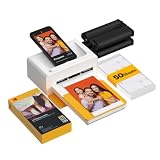
KODAK Dock Plus 4×6
- 4PASS dye sublimation
- Docks and charges your phone
- Borderless 4x6
- About 55 seconds per photo

Epson EcoTank Photo ET-8550
- 6-color Claria ET inks
- 13x19 wide format
- About 4 cents per 4x6
- Flatbed scanner and LCD

Canon MegaTank G3270
- Refillable ink tanks
- Square and standard photo sizes
- Wi-Fi print copy scan
- 1.35 inch LCD
All 10 Home Photo Printers at a Glance (October 2026)
Here is the whole shortlist in one place, with the specification that matters most for photos next to the one that decides your total cost.
| Product | Specifications | Action |
|---|---|---|
| KODAK Dock Plus 4×6 Photo Printer |
|
Check Latest Price |
| Canon MegaTank G3270 All-in-One |
|
Check Latest Price |
 Canon PIXMA TR8620a Wireless 4-in-1 Canon PIXMA TR8620a Wireless 4-in-1 |
|
Check Latest Price |
 Liene M100 4×6 Dye Sublimation Printer Liene M100 4×6 Dye Sublimation Printer |
|
Check Latest Price |
| Epson EcoTank Photo ET-8550 |
|
Check Latest Price |
 Epson EcoTank ET-15000 Wide-Format Epson EcoTank ET-15000 Wide-Format |
|
Check Latest Price |
 HP Sprocket Studio Plus 4×6 HP Sprocket Studio Plus 4×6 |
|
Check Latest Price |
 HP Envy Photo 7975 All-in-One HP Envy Photo 7975 All-in-One |
|
Check Latest Price |
 HPRT 4×6 Photo Printer 108 Sheet Bundle HPRT 4×6 Photo Printer 108 Sheet Bundle |
|
Check Latest Price |
 Canon PIXMA TS6520 Wireless All-in-One Canon PIXMA TS6520 Wireless All-in-One |
|
Check Latest Price |
1. KODAK Dock Plus 4×6 – Best Overall for Families
KODAK Dock Plus 4×6 Photo Printer, Smartphone Docking, 4PASS, 50 Sheets
4PASS dye sublimation
Borderless 4x6 prints
Docks and charges your phone
About 55 seconds per photo
Pros
- Docks and charges the phone while it prints
- App setup most first-time users finish in minutes
- Laminated prints resist water and fingerprints
- Compact desktop footprint for a home shelf
Cons
- Four-pass process makes each photo take about a minute
- Paper jams if more than one sheet is loaded
- Printed documentation is thin and out of step with the app
Our first instinct with any home photo printer is to ask whether it will still work in February after sitting unused for a month. The Dock Plus sidesteps that question entirely. It is a 4PASS dye-sublimation machine, so there is no ink nozzle to dry out, and that single design choice is why it earned the top slot.
The dock is the detail that wins people over. You drop a compatible phone into the cradle, it charges while the photo prints, and you walk away with a finished 4×6 in about 55 seconds. Setup is an app download and a Bluetooth pair, and most first-time users are printing within a few minutes of opening the box.
Output quality is the surprise. Because the dye ribbon lays colour onto a coated sheet and then adds a lamination pass, the finished photo comes out dry to the touch, smudge-proof and water-resistant. Owners consistently report sharp, detailed 4×6 prints with colour that holds up next to lab output, and many have put hundreds of prints through the same unit.
It is not a fast machine, and it is not a flexible one. Four passes mean roughly a minute per photo, so a batch of fifty prints takes close to an hour. Paper capacity is 20 sheets, and if you load more than one the roller can jam. It prints 4×6 only, with no documents, no scanning and no copying.
Who will like the KODAK Dock Plus
Households that print a few dozen snapshots a month and want prints that survive a birthday party, a schoolbook or a bathroom wall. It is also the pick for anyone who travels to a family gathering and wants prints on the spot, since the whole unit is small enough for a shelf or a desk corner. The laminated finish means a print handed to a child does not immediately pick up fingerprints.
If your photo library already lives on a phone, this is the machine with the least friction. The dock-to-print path is the shortest one in this list.
Who should look elsewhere
If you want 8×10 prints, borderless canvases or anything larger than 4×6, this printer simply cannot do it. Batch jobs will test your patience, and the ribbon cartridges are proprietary, so your ongoing media cost is fixed by the vendor rather than by the market.
Documentation is also a weak point. The printed guide is small, incomplete and does not always match the app, so budget an evening with the phone in one hand and the app open. A small number of owners have reported cartridge or print-head failures early in ownership, which is worth knowing given how long you might expect this machine to last.
2. Canon MegaTank G3270 – Best Running Costs for Colour and Photo
Canon MegaTank G3270 All-in-One Wireless Color Printer
Refillable MegaTank ink
Wi-Fi print copy and scan
Square and standard photo sizes
1.35 inch LCD
Pros
- Very low cost per page for colour and photo
- Up to 7700 colour pages per ink set
- Handles square 4x6 5x5 5x7 and 8x10 formats
- 1.35 inch LCD simplifies setup and ink checks
- Compact footprint for a tank-based all-in-one
Cons
- Single-sided printing only with no automatic duplex
- Flatbed scanner with no document feeder
- One tray limits paper handling flexibility
The Canon MegaTank G3270 is the machine we recommend to a family that prints both photographs and school projects in volume. It ships with up to two years of ink in the box and refills from bottles, which is the single biggest lever on your total cost of ownership.
For photos specifically, the format support is better than the price suggests. It handles square prints alongside 4×6, 5×5, 5×7 and 8×10, with borderless printing, so scrapbook pages and Instagram-style layouts work without a separate machine. Reviewers regularly call out the ink savings as the reason they picked it over cartridge models.
It is also a genuine all-in-one. Print, copy and scan run over Wi-Fi or USB, and the 1.35-inch backlit LCD makes setup and ink-level checks quick without opening an app. At 13.2 pounds it is small enough to stay out on a home desk rather than being exiled to a cupboard.
The compromises are mechanical rather than electronic. There is no automatic duplex, so two-sided documents mean flipping the stack by hand, and the scanner is a flatbed with no document feeder for multi-page jobs. One paper tray is not much when you are alternating between plain paper and 8×10 photo sheets.
When the MegaTank G3270 makes sense
If you are printing more than a hundred colour pages or a few hundred photos a year, refillable tanks pay back quickly. Ink cost per page here is a fraction of a cartridge machine, and you are not rationing a small tank out of fear of running dry mid-project.
It is also the pick for anyone who wants a square format printer, which is a genuine gap in most home lineups. Combined with copying and scanning, it covers homework, paperwork and photo albums in one footprint.
Where it falls down
The missing duplex and missing document feeder are the two things owners mention most often. If your household prints a lot of multi-page school assignments, a model with an automatic document feeder will save real time every week.
Photo quality is good for an everyday inkjet but it is a four-colour system, so fine-art work and heavy skin-tone gradients will not match a six-colour photo printer. If your prints are going on a wall rather than into a album, read the ET-8550 section next.
3. Canon PIXMA TR8620a – Best for a Home Office
Canon PIXMA TR8620a – All-in-One Printer Home Office|Copier|Scanner|Fax|Auto Document Feeder | Photo, Document | Airprint (R), Android, Black, Works with Alexa
Wireless 4-in-1 with 20-sheet ADF
Automatic duplex
Five individual ink tanks
15 ipm black and 10 ipm colour
Pros
- Print copy scan and fax with a 20-sheet document feeder
- Automatic duplex plus front and rear paper loading
- Large tilting touch panel that is easy to navigate
- Five individual ink tanks cut waste
- Good-looking colour and photo output on Canon gloss paper
Cons
- Canon mobile app is slow and often fails to find the printer
- Weak Wi-Fi when the printer sits far from the router
- Paper loading is finicky and rejects sheets
- ADF cannot handle double-sided originals
The TR8620a is the pick when one machine has to do office work and photo work without compromise on either. It is a full 4-in-1 with a 20-sheet automatic document feeder, automatic duplex printing and two paper sources that together hold 200 sheets.
Five individual ink tanks mean a single colour running dry does not take the whole printer offline, which is a genuine reliability win in a busy household. Print speeds of 15 pages per minute black and 10 colour handle coursework and paperwork without a fuss, and the tilting touchscreen is one of the more pleasant control panels in this roundup.
Photo output is respectable on Canon glossy paper, and the maximum sheet size of 8.5 by 14 inches means you can go beyond standard letter paper when a craft project needs it. There is also a microSD card slot for direct printing, plus Alexa ink-level notifications and smart reorder support.
The recurring theme in owner feedback is software, not hardware. The Canon mobile app is reported as slow and often fails to detect the printer on the network, and Wi-Fi performance drops when the unit sits more than a few rooms from the router. Paper loading is described as finicky, with sheets occasionally rejected from the tray.
Why this works as an office printer
The document feeder, duplex and fax functions are what separate it from a photo-focused machine. A 20-sheet feeder removes the biggest daily annoyance in a house with school-age children, and automatic duplex on a tank-based inkjet at this size is unusual.
Two paper feeds also solve a real problem: plain paper in the cassette for documents while photo sheets stay loaded in the rear feed, so you are not swapping media every time you switch tasks.
What to watch out for
If your router is in a far room, plan to place the printer close to it or use a wired connection. The ADF also cannot take double-sided originals, so double-sided paperwork has to be scanned face by face.
Some owners also feel the build is cheaper and more plastic than earlier PIXMA models, and a few report difficulty getting true borderless 4×6 output. Check that borderless setting early if photo quality is your main reason for buying.
4. Liene M100 – Highest Rated 4×6 Bundle
Liene M100 4×6” Photo Printer, Phone Printer 100 Sheets & 3 Cartridges, Full-Color Photo, Portable Instant Photo Printer for iPhone Android, Thermal Dye Sublimation, Wi-Fi Picture Printer 100 Papers
Thermal dye sublimation
100 sheets and 3 cartridges included
Built-in Wi-Fi hotspot
59 second first print
Pros
- Bundle includes 100 sheets of paper and three cartridges
- Bright laminated output that resists water and scratches
- Built-in hotspot means no home network needed
- Supports up to five connected devices
- App adds borders filters and ID photo printing
Cons
- Print head needs manual cleaning if output smudges
- Only 20 sheets load at a time
- 300 x 300 dpi trails inkjet photo printers
The Liene M100 arrives with 100 sheets of 4×6 paper and three colour cartridges in the box, which means you can start printing album pages on day one instead of ordering media first. That bundle is a large part of why it holds the highest rating in this group.
Its built-in Wi-Fi hotspot is the feature we did not expect to care about and ended up recommending. You can print from iPhone, Android, Windows or Mac without a router, an account or a Bluetooth pairing, and up to five devices can be connected at once. In a house where the router is busy or the network is locked down, that removes a real obstacle.
Colour output is bright and the lamination layer resists water, scratches and fingerprints, so the prints are scrapbook-safe. The app offers borders, filters, contrast and brightness adjustments, and can produce ID photos, which is handy for school paperwork and club membership.
First print takes about 59 seconds and subsequent prints run at roughly one per minute. The unit weighs 200 grams and stores easily, so it moves between a home office shelf and a craft table without thought.
What makes the M100 worth buying
The consumable bundle is the honest answer. A hundred sheets plus three cartridges is usually several months of family printing, and it removes the single most common buying mistake: buying a printer and then discovering the media is proprietary and expensive.
For gift-givers it is also the least intimidating option. There is no ink tank to fill, no alignment step and no driver to install. The app does the work, and the prints come out already sealed against smudges.
What to plan around
Only 20 sheets load at a time, so a long album session means refilling often. The cartridge has to click into place correctly or prints simply fail, and a few owners have needed to clean the print head manually after smudging appears on output.
At 300 by 300 dpi it will not hold up to a close crop printed on a six-colour inkjet. Treat it as a snapshot and scrapbook printer rather than a gallery printer.
5. Epson EcoTank Photo ET-8550 – Best Photo Quality at Home
Epson EcoTank Photo ET-8550 Wireless Wide-Format All-in-One Tank Printer
6-color Claria ET Premium inks
13x19 wide format
About 4 cents per 4x6
Flatbed scanner and colour LCD
Pros
- 13x19 output with 6-color inks gives top gloss quality here
- Refillable tanks cut 4x6 cost to about 4 cents
- Transparent tanks make ink levels easy to see
- Large colour LCD touchscreen plus flatbed scanner
- Quiet and solidly built for its size
Cons
- Tray 1 prone to false out-of-paper errors
- Automatic tray selection is unreliable
- Long first-time setup with priming and alignment
- Bulky and heavy for a home desk
The ET-8550 is the printer we would put behind a serious amateur photographer or an artist. The Claria ET Premium system uses six inks rather than four, and that extra pair of colours is what separates smooth skin tones and sky gradients from banding in a cheap inkjet.
It also prints up to 13 by 19 inches, so the same machine handles a wallet snapshot and a gallery wall piece. The transparent refillable tanks cut the cost of a 4×6 to about 4 cents with bottled ink, and Epson states up to two years of ink and 6,200 colour pages per tank set, so the running cost stops being a worry.
The hardware is a genuine all-in-one: flatbed scanner, copier, automatic duplex, a large colour LCD touchscreen and wireless printing. Owners who use this for fine art and craft work consistently praise the colour accuracy, and the tank system is a clear improvement over cartridges in both cost and waste.
It is also a 24.5 pound machine occupying 29.8 by 20.6 inches of desk, so plan the space before ordering. Setup is involved: removing packing tape, priming the ink and running alignment, which is a longer first afternoon than a small desktop printer asks of you.
Where the ET-8550 earns its place
If you print monthly or more, the break-even maths is straightforward: at a few cents per 4×6, cartridge machines stop making sense within the first year of moderate use. The tank is also what makes 13×19 affordable, since a single wide sheet uses a lot of ink in any system.
For a family that also needs copies and scans, the built-in flatbed removes a reason to buy a second machine. The 100-sheet main tray and 50-sheet output capacity suit project-sized runs.
What owners complain about
Paper handling is the main theme. Tray 1 gives false out-of-paper and jam errors, automatic tray selection is unreliable enough that many owners disable it and choose the tray manually, and the rear manual feeder is finicky with large sheets. Budget time to get used to the feeding habits.
The flatbed scanner does not handle 11×17 originals and there is no document feeder, so this is not a home office copier. A smaller group of owners have reported clogged heads and ink dropouts over time, which is a known risk for any inkjet used only occasionally. Leave it powered on and print a test page every few weeks and it becomes a non-issue.
6. Epson EcoTank ET-15000 – Best Wide-Format All-in-One for Crafters
Epson EcoTank ET-15000 Wireless All-in-One Wide-Format Supertank Printer
13x19 wide-format all-in-one
Refillable EcoTank inks
250-sheet capacity
17 ppm black and 9 ppm colour
Pros
- Wide-format print copy scan and fax up to 13x19
- Ink cost per page comparable to laser
- Handles large double-sided jobs and heavier media
- Suits posters craft sheets canvas and sublimation transfers
- Wi-Fi setup works from the printer's own panel
Cons
- Only four-colour ink so photo output trails the ET-8550
- 11x17 sheets load in the rear holder with no dedicated tray
- Finicky paper selection and reported jams
- Auto duplex covers letter size only
The ET-15000 is the volume machine in this roundup. It prints, copies, scans and faxes up to 13 by 19 inches, holds 250 sheets, and runs at 17 pages per minute black and 9 colour, with a monthly duty cycle above 30,000 pages for a small business or a serious home project habit.
Its refillable EcoTank system puts ink cost per page close to laser territory while still giving you colour photo output, which is the usual argument for laser in a home office. Owners report the paper handling as flawless for large double-sided jobs and heavier media once you learn its preferences.
Crafters are the group that loves this machine most. Posters, canvas, large craft sheets and sublimation transfers all come out of the same box, and several owners report converting it successfully for transfer work.
The key limitation is ink colour count. It runs a four-colour system, so photo output is good rather than gallery-grade, and it sits a tier below the six-colour ET-8550 on tonal accuracy. That is a fair trade if you make more than you display.
Who should buy the ET-15000
A household that prints a lot of school projects, a small business doing invoices and signage, or a crafter working with large media. The 250-sheet capacity means fewer refills than any other machine here, and the auto document feeder handles paperwork without a flatbed lid.
If your photo output is occasional and mostly 4×6, the running cost advantage makes it a comfortable choice. The three-year ink story also means most owners are not thinking about supplies again after the first refill.
What to know before ordering
Sheets larger than letter need the rear holder, and there is no dedicated 11×17 tray, so wide-format printing involves a manual load each time. Automatic duplex covers letter only, and paper selection is described as finicky with some jam reports. A minority of units have arrived defective with ink lines that never primed.
At 21.4 pounds and nearly 30 inches deep, this is a substantial piece of furniture. Epson support is also reported as difficult to reach, so set it up properly on day one.
7. HP Sprocket Studio Plus – Best Portable Printer for Events
HP Sprocket Studio Plus 4×6 Wireless Instant Photo Printer, 10 Sheets + Cartridge, Wi-Fi, Premium Dye Sublimation, Compact Home Use, Prints Vibrant Color Pictures, Editing App for Creative Photos
Pocketable 4x6 dye sublimation
3 pound body with Wi-Fi
Dry smudge-proof prints
About 61 seconds per photo
Pros
- Compact at 3 pounds and easy to move between rooms
- Prints dry and resist water smudges and tearing
- Wi-Fi setup in the HP Sprocket app takes seconds
- App adds stickers frames filters collages and ID modes
Cons
- Only 10 sheets in the base package
- Print speed about a minute per photo
- Print only with no scanning or copying
- 300 dpi below inkjet photo printers
At 3 pounds and 6 by 5.45 inches, the Sprocket Studio Plus is the printer you can put in a bag. For weddings, birthdays, school fairs and family gatherings, printing photos while the event is happening is worth more than paper size or resolution.
It connects over both Wi-Fi and Bluetooth through the HP Sprocket app, and owners report setup taking seconds. Output is dry to the touch on tear-resistant, smudge-proof and waterproof 4×6 stock, so a print can be handed straight to a guest without a drying pause.
The editing app is the fun part: stickers, frames, filters, collages, photo-booth effects and ID photo modes. For scrapbookers and anyone making small gifts, those extras add more value than a marginal resolution gain would.
Where it stays modest is on the basics. The base package includes 10 sheets and one cartridge, so you will be ordering refills almost immediately, and each photo takes about a minute.
Where it shines
Travel, events and gift printing. If the photos need to exist tonight, an inkjet that takes ten minutes to warm up and risks a clog after a week in a cupboard is the wrong tool, and this is the right one.
Waterproof, tear-resistant output also suits kitchen calendars, door signs and craft projects that will be handled a lot.
Where it will frustrate you
This is a print-only device with no scanning or copying, and 300 dpi will not hold up to an inkjet if you crop a photo tightly. The included 10-sheet pack is a starter, not a supply.
HP ink ribbons and photo paper are proprietary, so the running cost per print is fixed by the vendor. Plan for that in your budget if you intend to print at volume rather than at events.
8. HP Envy Photo 7975 – Best for Homework and Photos Together
HP Envy Photo 7975 Wireless Color Inkjet Photo Printer, Print, scan, Copy, Easy Setup, Mobile Printing, Best-for-Home, 3 Month Instant Ink Trial Included, AI-Enabled (B63K3A)
Print copy scan with auto duplex
2.7-inch touchscreen
35-sheet document feeder
Separate photo tray
Pros
- True-to-screen borderless photos alongside homework
- Automatic duplex plus a 35-sheet document feeder
- 2.7-inch colour touchscreen is easy to navigate
- Separate photo tray simplifies media switching
- HP AI tools clean up web and email layouts
Cons
- HP 64 and 64XL cartridges are among the costlier options
- Photo resolution below dedicated photo printers
- Borderless printing limited to letter-size media
- Some owners report recurring Wi-Fi drops
The Envy Photo 7975 is the family compromise. It does borderless photo printing and it also does automatic duplex, a 35-sheet document feeder and copies, which is the combination most households with school-age children actually need.
The 2.7-inch colour touchscreen makes switching between photo and document modes straightforward, and the separate photo tray means you can keep gloss media loaded while plain paper stays in the main tray. It reaches 10 pages per minute in colour and 15 in black, with a first page out in 22 seconds.
HP’s AI-assisted print layout is a quiet benefit. It trims web pages and emails so you are not fighting stray headers and orphaned fragments on every school worksheet. The mobile and wireless printing setup covers phones and tablets, and a three-month Instant Ink trial is included.
Ink is the catch. HP 64 and 64XL cartridges sit among the costlier consumables on the market, and reviews repeatedly flag that as the dominant complaint. Photo resolution also sits below what a dedicated photo printer delivers, and borderless output is limited to letter-size media.
Best fit for a busy family
If the printer will handle 80 percent schoolwork and 20 percent photos, this is a sensible single-machine answer. The document feeder and duplex alone would justify it, and the photo tray means you are not reloading media for a birthday print.
It suits a home office that is also a homework station, which is a different job from the craft-heavy ET-15000.
What to consider first
Calculate your print volume against cartridge pricing before committing. Owners describe ink cost as the reason they would change machines, and the XL cartridges only make sense if you print regularly enough to use them before they dry.
Some owners also report recurring Wi-Fi connection drops that require re-setup, so position it near the router. And if your photos are going into an album rather than a homework folder, a six-colour or dye-sublimation machine will simply look better.
9. HPRT CP4100 4×6 – Biggest Paper and Ribbon Bundle
HPRT Photo Printer 4×6 with 108 Sheets Photo Paper & 2 Ribbons
108 sheets and two ribbons included
4x6 dye sublimation
Wi-Fi or built-in hotspot
Under 60 seconds per photo
Pros
- Largest consumable bundle here with 108 sheets and two ribbons
- Connects to 2.4GHz Wi-Fi or its own built-in hotspot
- Under 60 seconds with automatic protective coating
- HeyPhoto app adds filters frames and editing
- AR video printing turns a still into a replayable memory
Cons
- Ribbon cartridges raise cost per print as supplies run down
- Print only with no scanning or copying
- 300 x 300 dpi is modest next to inkjets
- Home Wi-Fi support limited to 2.4GHz
The HPRT CP4100 ships with 108 sheets of 4×6 photo paper and two ink ribbons, which is the most complete consumable package in this roundup. Buyers consistently name that bundle, and the low effective cost per print, as the reason to buy.
It connects to a home 2.4GHz Wi-Fi network or to its own built-in hotspot, so it works with or without a router. Prints complete in under 60 seconds with an automatic protective coating against water, scratches and fading, and the HeyPhoto app handles filters, frames and basic editing before printing.
The unusual feature is AR video printing, which links a still print to a replayable memory when scanned with a phone. It is a genuinely different gift format, and it turns the printer into something other than an album filler.
It weighs 1.97 kg and is compact enough to move between rooms, which suits a craft table setup where the phone is often the source.
Why the bundle matters
Media is the hidden cost in small photo printing, and 108 sheets plus two ribbons removes it for a long stretch. If you have a school year, a wedding or a holiday season coming, this is the machine that will be ready for it.
The 4.4 rating on this unit reflects that value, matching the strongest owner profiles in this group.
What the bundle hides
Once the included ribbons run out, cost per print rises because refills are proprietary ribbon cartridges rather than ink tanks. Budget for that before assuming the effective cost stays this low all year.
It is also print-only with no scanning or copying, and 300 by 300 dpi is modest next to an inkjet. Home Wi-Fi support is limited to 2.4GHz networks, so on a 5GHz-only router the built-in hotspot is the route.
10. Canon PIXMA TS6520 – Best Budget Pick
Canon PIXMA TS6520 Wireless Color Inkjet Printer, Duplex Printing, Copier/Scanner, 1.42″ OLED Display, Compact, White
Compact print copy scan
Automatic duplex
Dual-band Wi-Fi
1.42-inch OLED
Pros
- Lowest purchase point here with real print copy and scan
- Automatic two-sided printing
- Dual-band Wi-Fi including 5GHz
- 1.42-inch OLED shows ink levels at a glance
- Compact footprint with a 3-year warranty
Cons
- Two-cartridge system means one empty tank stops all colour
- No automatic document feeder
- 1200 x 1200 dpi below dedicated photo printers
- No separate photo tray
The TS6520 is here as the sensible floor rather than the photo champion. It is the least expensive way to own a real all-in-one with print, copy and scan, automatic duplex, and dual-band Wi-Fi that includes the 5GHz band many budget printers skip.
The 1.42-inch OLED shows ink levels and status without an app, and the whole unit fits a small desk. A 3-year manufacturer warranty is unusually generous at this level, and it works with the Canon PRINT app, Apple AirPrint and Mopria.
Document output is good: 14 pages per minute black, 9 colour, with a first page out in 7.5 seconds black and 9.5 colour. Borderless photo and document printing works up to 8.5 by 11 inches, so 4×6 and letter prints are covered.
The ink system is the limitation. It uses a two-cartridge hybrid arrangement with a pigment black plus a tri-colour dye cartridge, which means a single tri-colour failure stops all colour and photo output until it is replaced. There is also no document feeder and no dedicated photo tray.
When the TS6520 is enough
A home office or a student’s desk that needs sharp documents, occasional colour and the occasional 4×6 print. The duplex and dual-band Wi-Fi are the features you will notice daily, and the warranty gives some long-term peace of mind.
It also works well as a second machine if a bigger all-in-one already handles the heavy photo lifting.
When to step up instead
Do not buy it for photo albums. At 1200 by 1200 dpi with a tri-colour cartridge, image quality is well below a six-colour photo inkjet or a dye-sublimation machine, and the no-ink-nozzle advantage of dye sub also means it will not clog if you only print occasionally.
If your family prints several hundred colour pages a year, the cartridge economics here will cost more than a tank-based Canon such as the MegaTank G3270. The purchase price is not the whole cost.
How to Choose a Photo Printer for Home Use
The fastest way to choose badly is to start with print size and ignore how often you will print. Start with the ink system instead, because that decision sets your running cost for the life of the machine.
Pick the ink system first: cartridge, tank, dye sub or Zink
Cartridge machines have the lowest entry cost and the highest running cost. Tanks refill from bottles and produce a fraction of the cost per page, which is why every high-volume pick here is tank-based. Dye-sublimation machines use a ribbon and coated paper rather than nozzles, so they cannot clog and their output is sealed against water and fingerprints.
The practical break-even is volume. If you print a few dozen photos a year, any machine works and the media cost is irrelevant. If you are printing weekly, a tank printer pays back the difference within a year. If you want prints that survive handling and cannot be bothered with nozzle maintenance, a dye-sub machine is the safer habit.
Choose print size by what you will actually print
4×6 is for albums, wallets and scrapbook pages. 5×7 fits standard frames. 8×10 covers portrait prints and school projects. 11×17 and 13×19 are for gallery walls and posters, and only the tank-based wide-format models in this list reach them.
Buy for the largest size you expect to print regularly, not the largest size on the box. A printer that tops out at 8×10 will never disappoint you with 4×6 work, and it is a fraction of the desk space.
Canon or Epson for photos
Both brands dominate this category and the honest summary is that Epson leans toward resolution and fine detail while Canon leans toward ink-tank economics and all-in-one completeness. Epson’s six-colour Claria systems give smoother gradients; Canon’s tank models give more prints per pound of ink.
Forum users often claim Epson prints look sharper at the same tier, and Canon models get recommended for family use because the tank systems are cheaper to run. Both patterns held up in the owner feedback we read.
Laser or inkjet for photos
Laser wins on documents and loses on photographs. There is no photo-quality colour laser in this roundup, and the photo inkjets here print borderless at a fraction of what a lab would charge per sheet.
A hybrid home office can justify a laser for volume documents, but if photographs are the reason for buying, inkjet or dye sublimation is the answer.
Dye sublimation versus inkjet
Dye sub prints in layers onto coated paper and comes out dry, laminated and long-lasting, with no nozzles to clog. Inkjet sprays microscopic droplets, offers far more ink colours and far more paper and size flexibility, and produces better results on cotton rag and fine-art stocks.
The trade is durability and freedom against quality and versatility. For albums, gifts and event prints, dye sub wins. For wall art, gradients and paper choice, inkjet wins.
Proprietary media and the hidden running cost
Every dye-sub and Zink-style printer on this list locks you into branded ribbons and branded paper. That is not a scam, it is the business model, but it means the running cost is set by the vendor rather than by the ink market, and availability matters in every country.
Inkjet printers vary less because you can often choose third-party pigment and dye cartridges, though doing so voids some warranties and can affect colour consistency. Tank printers are the least locked in and the cheapest per page.
Smartphone workflow and app quality
Every compact printer here is app-driven, and app quality varies more than print quality does. The HP Sprocket app and the Kodak app are reported as quick to set up; Canon’s mobile app is the most commonly criticised for being slow and failing to detect the printer.
Before you buy, check whether the printer supports Apple AirPrint or Mopria. That bypasses the vendor app entirely and gives you a much smoother path from a phone. Inkjet models here also support AirPrint and Mopria in addition to their own apps.
Keeping Inkjet Print Heads From Clogging
Clogged heads are the most repeated complaint on printing forums and the least mentioned by roundups. The mechanism is simple: ink sits in tiny nozzles during the nozzle-clean cycle and eventually dries. The fix is a routine, not a repair.
Leave the printer powered on rather than switched off at the wall. Periodic maintenance cycles keep nozzles moving, and a printer that stays dormant is the one that blocks. If you must store it, unplugging for a month and expecting a clean first print is asking for trouble.
Run the nozzle check every few weeks if you print rarely, and print a single test page rather than waiting months before the first real job. Use manufacturer ink where the warranty matters to you, since third-party fluid can behave differently in the recovery cycle.
If you print only a handful of times a year, a dye-sublimation machine removes the problem entirely because there are no nozzles to dry. That is a genuine reason to choose the Dock Plus or the Sprocket over a better-looking inkjet.
When You Should Skip a Home Photo Printer
If you print fewer than about fifty photos a year and mostly want them in an album, an online lab will beat any home printer on cost and will match it on quality. Nobody in our reading of the forums claimed a home printer pays off at that volume.
Home printing starts to make sense when you need prints on demand, in unusual sizes, on craft media, or in quantities a lab will not do cheaply. That is why the picks here skew to 4×6 dye-sub machines for snapshots and wide-format tanks for wall art.
A second reason to skip: no space. The wide-format tank printers in this list are large and heavy, and a printer that lives in a garage it cannot tolerate is a printer that will fail. If you have no shelf within reach of a Wi-Fi signal, pick a compact 4×6 machine instead.
Frequently Asked Questions
What is the best printer for photo printing at home?
For most households the KODAK Dock Plus is the best photo printer for home use, because dye sublimation cannot clog and it charges your phone while printing. If you print weekly or more, the Epson EcoTank Photo ET-8550 gives six-colour quality up to 13×19 at a few cents per 4×6.
Is Canon or Epson better for photos?
Epson tends to lead on resolution and fine detail with six-colour photo systems, while Canon tends to lead on ink tank economics and all-in-one completeness. Forum users often describe Epson as sharper at the same tier and Canon as cheaper to run, and the owner feedback in this roundup matches both patterns.
Is laser or inkjet better for photos?
Inkjet is better for photos. Laser wins on speed and cost per page for text documents, but there is no photo-quality colour laser in this roundup, and inkjets here print borderless colour photos that a laser cannot match.
Is dye sublimation better than inkjet for photos?
Neither is better at everything. Dye sublimation prints come out dry, laminated, water-resistant and clog-free, which suits albums and event prints. Inkjet offers far more ink colours, paper types and sizes, so it wins for wall art, fine-art paper and gradients.
Why are ink cartridges so expensive right now?
Cartridge pricing reflects the smaller yield, the bundled printhead and the vendor’s own consumable lock rather than the cost of the ink itself. That is why owners of cartridge printers like the HP Envy Photo 7975 report ink cost as their main complaint, and why tank printers dominate the high-volume picks in this guide.
Is it worth having your own photo printer?
It is worth it if you need prints on demand, in unusual sizes, on craft media, or in quantities a lab will not do cheaply. If you print fewer than about fifty photos a year and mostly want them in an album, an online lab is cheaper and just as good.
The Verdict: Which Home Photo Printer Should You Buy in 2026
The best photo printers for home use divide cleanly by how you print. Occasional family snapshots and event prints go to a dye-sublimation machine, and the KODAK Dock Plus is the one we would buy first because it cannot clog and it handles the phone workflow better than anything else in this list.
If you print every week, a tank-based inkjet is the cheaper answer over time. The Epson EcoTank Photo ET-8550 wins on quality and reaches 13×19, while the Canon MegaTank G3270 and Epson ET-15000 win on volume, office functions and craft work.
Whichever you choose, buy the media for it in the same order and keep it plugged in. That habit costs nothing and prevents the single failure that sends people back to the lab.