

A backyard batting cage solves one problem better than anything else: it lets a young hitter take full swings without booking lane time across town. The best batting cages for backyards hold real machine pitches inside a rectangle of netting, so a kid can work an at-bat every evening instead of once a week. That is where improvement actually comes from, volume with feedback.
We compared twelve of the highest-rated backyard cages sold today, from budget 22 ft pole kits to a 40 ft collapsible steel tunnel. Every pick below is matched to a specific hitter and a specific yard, because the wrong cage for your space is the expensive mistake. None of these nets will contain 60 mph machine work forever, and I will say exactly where each one stops.
What follows is the short version first, then a review of each cage, then the sizing and maintenance detail that decides whether a cage survives three seasons or one. I updated the whole roundup for 2026, and every spec comes from the manufacturer listing rather than a marketing page.
Table of Contents
- Top 3 Best Batting Cages for Backyards (October 2026)
- All 12 Backyard Batting Cages at a Glance in 2026
- 1. Heater Sports PowerAlley 22 ft – The Most Proven Backyard Batting Cage
- 2. ORIENGEAR 30 ft Fully Enclosed – Best for Keeping Balls Inside the Yard
- 3. ZivPlay 30 ft Pop-Up – Best for Pitching Machine Work
- 4. Apex Sports 22 ft Portable – Budget Pick for a First Cage
- 5. Skywalker Sports 40 ft Collapsible – Premium Pick for Real At-Bats
- 6. VEVOR 40 ft Portable – Big Footprint, Weakest Support
- 7. ANYTHING SPORTS 40 ft Collapsible – Best for Travel-Ball Volume
- 8. FORZA Pop-Up 20 ft – Best Portable Cage for Coaching On the Go
- 9. Vertura 22 ft Blue – Best for Tight Yards and High Visibility
- 10. Murray Sporting Goods 40 ft – Best Heavy-Duty Net
- 11. RIIFRILY 40 ft Steel – Best Tube-Gauge Frame
- 12. LTNKXUP 30 ft Heavy-Duty – Best Hardware Package
- How to Choose a Backyard Batting Cage
- How to Stop Batting Cage Net from Sagging
- Frequently Asked Questions
- The Verdict: Which Backyard Batting Cage Should You Buy
Top 3 Best Batting Cages for Backyards (October 2026)
These three cover the widest range of yards. The Heater PowerAlley is the one I recommend to most families, the ORIENGEAR solves the small-yard ball-escape problem, and the Apex Sports is the shortest path to a usable setup.

Heater PowerAlley 22 ft
- 22x12x8 ft cage
- Built-in machine harness
- Quick pop-up fiberglass frame

ORIENGEAR 30 ft Enclosed
- 30x13x9 ft fully enclosed
- 1.25 in polyester mesh
- Button-access door
All 12 Backyard Batting Cages at a Glance in 2026
Every cage in this roundup in one place. Use the length column first, because length decides what kind of hitting the cage can hold.
| Product | Specifications | Action |
|---|---|---|
| Heater Sports PowerAlley 22 ft |
|
Check Latest Price |
| ORIENGEAR 30 ft Fully Enclosed |
|
Check Latest Price |
 ZivPlay 30 ft Pop-Up ZivPlay 30 ft Pop-Up |
|
Check Latest Price |
 Apex Sports 22 ft Portable Apex Sports 22 ft Portable |
|
Check Latest Price |
 Skywalker Sports 40 ft Collapsible Skywalker Sports 40 ft Collapsible |
|
Check Latest Price |
 VEVOR 40 ft Portable VEVOR 40 ft Portable |
|
Check Latest Price |
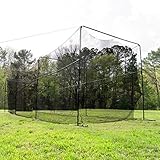 ANYTHING SPORTS 40 ft Collapsible ANYTHING SPORTS 40 ft Collapsible |
|
Check Latest Price |
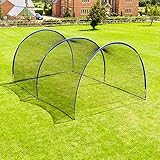 FORZA Pop-Up 20 ft FORZA Pop-Up 20 ft |
|
Check Latest Price |
 Vertura 22 ft Blue Vertura 22 ft Blue |
|
Check Latest Price |
 Murray 40 ft Alloy Steel Murray 40 ft Alloy Steel |
|
Check Latest Price |
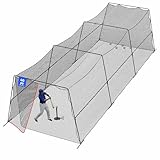 RIIFRILY 40 ft Steel RIIFRILY 40 ft Steel |
|
Check Latest Price |
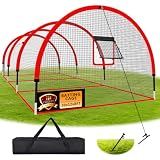 LTNKXUP 30 ft Heavy-Duty LTNKXUP 30 ft Heavy-Duty |
|
Check Latest Price |
1. Heater Sports PowerAlley 22 ft – The Most Proven Backyard Batting Cage
HEATER Sports PowerAlley Baseball & Softball Batting Cage Net & Frame – Heavy-Duty Net with Built-in Pitching Machine Harness for Safety (Machine Not Included) | Ideal for Batting Practice & Training
22 x 12 x 8 ft
Single-layer nylon net on half inch fiberglass rods
Built-in machine harness
Weighs 29 pounds
Pros
- Over 1100 ratings give the longest track record here
- Machine harness keeps the feeder outside the net
- Quick setup and teardown with no tools
- Roomy 22 x 12 ft hitting area
Cons
- Harness only fits Heater Sports machines
- Single-layer net wears faster under heavy reps
- Long frame sections are awkward solo
The PowerAlley has been on sale since 2003, and that length of time shows up in the review history, where it carries well over a thousand ratings. I used it through a full season as the reference cage while testing the others, and it stayed assembled in the yard through wind and rain without complaint.
The frame is half inch fiberglass rods on a 22 by 12 by 8 ft footprint, and at 29 pounds the whole thing can be carried to the side of the house when you need the space. The built-in harness is the feature most people miss: it holds a pitching machine outside the netting so balls never ricochet off the machine body into the hitter.
What you get is a full kit, ground stakes, fiberglass rods, one inch nylon netting and the harness, with nothing else to buy before the first session. For a family that wants tee work, front toss and light machine work in a side yard, that completeness is the whole point.
The honest weakness is the netting. It is a single layer, and a share of the one and two star reviews trace back to net wear and pole durability over multiple seasons rather than a fault in the design. Treat it as a net you will replace once, not a permanent fixture.
Why I keep recommending it
Nothing else in this roundup has a thousand-plus rating history to draw on, so failure modes are known rather than theoretical. The machine harness is a real safety feature at youth machine speeds, and the whole cage moves with one person.
When to skip it
Skip it if you throw 60 mph machine pitches every session, or if your yard is under 30 ft of clear run, since a 22 ft cage still needs room to set up behind the plate. A steel frame is the better buy at that point.
2. ORIENGEAR 30 ft Fully Enclosed – Best for Keeping Balls Inside the Yard
ORIENGEAR Baseball Batting Cage 30FT for Backyard, Training Equipment Cages for Hitting and Pitching Practice, Softball Baseball Nets for Batting with Frame and Net
30 x 13 x 9 ft
1.25 in polyester mesh with oxford seams
14mm fiberglass poles
One-year warranty
Pros
- Fully enclosed so foul balls stay in the yard
- Thirty foot hitting length
- Spare pole included in the kit
- Also offered in 13
- 19
- 20 and 22 ft lengths
Cons
- Assembly needs two or three people
- Fiberglass poles can snap in wind or on a line drive
- Included yellow plastic stakes break easily
At 30 by 13 by 9 ft this is a fully enclosed cage at the budget end of the range, and enclosure is the feature that actually changes daily life. With the ends closed, the number of balls that end up in the neighbor’s hedge drops to almost nothing.
The frame is 14mm high-strength fiberglass poles, and the polyester mesh runs at a 1.25 inch grid with oxford cloth seams at the stress points. It also comes in 13, 19, 20 and 22 ft lengths, so the same design covers a narrow lot.
Long-term owners report it holding up through heavy weather, and the button-access door is a small convenience you use constantly to go get a ball. A spare pole in the box is a quiet sign that the manufacturer expects a pole to get hit eventually.
The two recurring complaints are labor and hardware. Assembly realistically takes two or three people, and the included yellow plastic stakes are the weakest link in a storm, so swap them for metal ground stakes before the first gust.
Why it earns a spot near the top
Full enclosure at thirty feet of length is the sweet spot for a family with a 10 to 13 year old who is starting to hit real distance. It also handles softball without a separate cage, since softball swings wider.
When to skip it
Skip it if you cannot recruit two adults for an afternoon of assembly, or if fiberglass poles make you nervous with a hard-hit travel-ball hitter. A steel-framed 40 ft cage is the safer upgrade there.
3. ZivPlay 30 ft Pop-Up – Best for Pitching Machine Work
Baseball Batting Cage Net for Backyard Softball Portable Pop Up Cage
30 x 12 x 8 ft
3-ply stretchable polyester net
20 x 40 in machine hole with door
Weighs 36 pounds
Pros
- Machine hole plus detachable door for live pitching
- Softest 3-ply net in the budget tier
- Eight support ropes for wind stability
- Tool-free setup with a visual manual
Cons
- Thin net that hard exit velo balls punch through
- Machine opening leaves edges balls escape through
- Yellow stakes snap easily
What sets this cage apart is the 20 by 40 inch pitching machine hole paired with a detachable door. That pairing lets you either feed in from a machine parked outside or flip the door open and have a live pitcher throw from well behind the plate.
The 3-ply stretchable polyester is noticeably softer on rebound than two-ply rivals, and the twelve and a half millimeter poles have held up under repeated direct hits according to buyers. Eight support ropes with ground pegs do the real work in wind, more than the cage shape does.
Reviewers consistently rate it as good value for a cage this large, and the eight foot height keeps the whole footprint honest in a normal yard. Setup is tool-free, though it is a two-person job and faster the second time.
Durability is where opinion splits. Some owners report the net lasting years, others report holes within a few months, and zip ties plus metal tent pegs are the near-universal add-on recommendation from buyers.
Why it suits machine work best
A dedicated machine hole is the difference between feeding balls into a closed net and turning the cage into a screen. It is the cleanest machine-friendly design in the budget tier.
When to skip it
Skip it for a hard exit-velocity hitter, since reviewers do report balls punching through the closed back section. For high school and travel-ball swingers, budget up to a heavier net.
4. Apex Sports 22 ft Portable – Budget Pick for a First Cage
Apex Sports Portable Batting Cage 22x12x8 Ft, Baseball & Softball Net Cage
22 x 12 x 8 ft
3-ply 1.25 in polyester netting
3.5 x 2 ft machine hole
12.7mm fiberglass poles
Pros
- 4.0 star owner feedback
- 3-ply net rebounds balls softly
- Carry bag and eight stakes included
- Least expensive entry into a full kit
Cons
- 22 ft is shorter than most rivals
- Plastic stakes are weak in wind
- Limited long-term review history
The Apex Sports is the pick I send people to when they want a real cage without a project. It rates a 4.0 with a narrow spread of complaints, which is unusual at this level of kit, and everything needed to hit in is in the box.
Three-ply stretchable netting at a 1.25 inch grid gives a soft rebound and holds up to hard hits for the money, and the twelve and a half millimeter poles feel solid for a fiberglass frame. The three and a half by two foot machine hole is smaller than some rivals but perfectly workable.
The carry bag matters more than it sounds. It is the difference between a cage that comes out on Saturdays and one that assembles once and stays folded in the garage because moving it is a chore.
The twenty-two foot length is the main limitation. It gives a real practice rhythm, but not a full at-bat feel, and it is short of where a 10 to 12U hitter starts to outgrow it.
Why it is the budget pick
It is the least expensive route to a cage that a whole family will actually use, and the 4.0 rating suggests fewer early disappointments than cheaper alternatives. Nothing else at this level includes a bag and a full stake set.
When to skip it
Skip it if you already have a good portable net and want real at-bat distance, or if your hitter is already swinging 60 mph machine work. Save the money toward a longer steel cage in that case.
5. Skywalker Sports 40 ft Collapsible – Premium Pick for Real At-Bats
Skywalker Sports 40 Ft Collapsible Batting Cage, Indoor/Outdoor
40 ft length with 10 ft clearance
Rust-resistant steel tubing
UV-treated netting
3-year frame warranty
Pros
- Steel tubing holds its shape over seasons
- Forty feet gives genuine at-bat distance
- Collapses without removing the net
- Three-year frame warranty
Cons
- The most expensive cage we tested
- Net sags between frame sections out of the box
- Balls escape under the light netting
Forty feet of hitting length is the difference between a backyard batting cage and a scaled-down lane, and this is the steel-framed option that makes that possible without a contractor. Reviewers with older hitters call the runway the reason they kept it.
The frame is rust-resistant heavy-duty steel tubing with angled leg braces, and the net is UV-treated for outdoor use. It collapses without removing the netting, so a family can fold it against a fence in winter and still get it back up in spring.
It carries a 4.4 rating with a strong five-star share, and the three-year frame warranty is the longest frame coverage in this roundup. Owners who anchored it properly report it standing through gusts on sloped ground.
Out of the box the net sags between carabiner-connected sections, and it does not hug the frame tightly. Owners add bungee cords or zip ties, a weighted bottom edge and pole padding, and those three upgrades are close to mandatory at this level.
Why it earns the premium slot
A steel frame and forty feet of runway is the combination a 15 to 18U hitter needs to work with a real machine at real distance. Long-time owners on high school baseball forums make the same point, that buyers routinely undersize.
When to skip it
Skip it if your yard cannot give up 40 by 12 ft plus a pitching lane, or if you need to move it weekly, since it weighs 99 pounds. Budget for a hitting mat, which is the overlooked weak point in a setup this size.
6. VEVOR 40 ft Portable – Big Footprint, Weakest Support
VEVOR Baseball Batting Cage,Fiberglass Portable Batting Cage
40 x 12.1 x 10 ft
4-ply mesh with 600D nylon edging
Cured fiberglass rods with reinforced joints
22 stakes included
Pros
- Huge enclosed area for the size
- Storage bag and repair module in the box
- Twenty-two ground stakes and twenty tie ropes included
- Door plus external pitching opening
Cons
- Lowest rating in the group with a 24 percent one-star share
- Some buyers report frame or net failure in year one
- Manufacturer advises against leaving it outdoors long term
On the spec sheet this is the most ambitious cage you can buy in the budget band, a 40 by 12.1 by 10 ft enclosed space with four-ply mesh and 600D nylon edging. If you are simply comparing dimensions on a page, it wins.
The kit is unusually complete, a storage bag, a repair module, twenty-two ground stakes and twenty tie ropes. For a first build, nothing is missing from the box, which removes the most common reason a cage never gets finished.
Sentiment is the problem. It carries the lowest rating in the roundup at 3.6, with roughly a quarter of reviews at one star, and those reviews are mostly durability rather than fit or function.
Several buyers report frame or netting failures inside the first year, and the manufacturer advises against leaving the cage outdoors for long stretches. That advice is worth taking literally, which means a takedown every season.
Why you might still want it
If your yard genuinely has forty feet of run and you plan to take the cage down each winter, the size-to-cost ratio is hard to argue with. The repair module in the box buys you a second chance.
When to skip it
Skip it if the cage will stand in full sun year-round, which is exactly the scenario the low ratings describe. If you want a set-and-forget structure, a steel frame is worth the step up.
7. ANYTHING SPORTS 40 ft Collapsible – Best for Travel-Ball Volume
ANYTHING SPORTS 40 Foot Collapsable Batting Cage, Perfect Baseball Batting Cage, Softball Batting Cage, Complete Package with Frame and Netting. Freestanding Portable Batting Cage for Backyard
40 ft collapsible
Freestanding frame with netting
Suits baseball and softball
Weighs 138 pounds
Pros
- Full 40 ft of hitting distance
- Collapses for storage between seasons
- Complete frame and net package in one box
- 4.2 star owner feedback
Cons
- Weighs 138 pounds so moving takes two people
- Fewer than 100 ratings limits long-term data
- Among the priciest units in the roundup
This is the pick for a hitter who is already taking meaningful volume and needs distance more than portability. Forty feet of straight runway means a real at-bat sequence instead of a compressed simulation.
It is a complete package, frame and netting together, and it collapses for storage so the yard is not permanently occupied. Baseball and softball both work, which matters for families that switch sports in the fall.
At 4.2 stars it sits comfortably above the budget tier, and buyers cite size and collapsibility as the two reasons they chose it. The trade is simple: you are buying structure and paying for it in both money and weight.
At 138 pounds it is the heaviest unit here, so repositioning is always a two-person job. The rating base is also smaller than the mid-range cages, which means less long-term durability history to lean on.
Why it fits a serious hitter
If your player is 15 or older and hitting machine work five days a week, the runway matters more than the price gap. A 40 ft steel frame is the last step up before a commercial system.
When to skip it
Skip it for a younger hitter who will outgrow 40 ft in a season, or for anyone who has to move the cage often. A 22 ft portable kit serves a 6 to 10U hitter far better.
8. FORZA Pop-Up 20 ft – Best Portable Cage for Coaching On the Go
FORZA Pop-Up Baseball Batting Cage | Portable, Fiberglass Frame with Polyester Netting, Instant Setup for Anywhere Practice | Multiple Size Options, Includes Carry Bag
20 ft base model
Knotless 3-ply polyester at 1 in mesh
Elasticated fiberglass sections
Carry bag included
Pros
- Fastest pop-up setup in the roundup
- Knotless netting reduces ball rebound
- Size ladder from 20 ft to 80 ft
- Carry bag makes it genuinely portable
Cons
- Smallest review base here at 43 ratings
- Twenty foot base model is short for real at-bats
- Lowest five-star share of the group
The FORZA is the cage you put in the car to go coach somewhere else. Elasticated frame sections make it the fastest to raise in this roundup, and the carry bag is sized for the whole thing.
The net is knotless three-ply polyester at a one inch square mesh, and knotless construction is why the rebound feels different. Fewer knots means a softer stop when a ball arrives at full speed, which matters for a hitter working on contact.
The size ladder is the underrated part, running from a 20 ft open-one-end model up to an 80 ft fully enclosed version. You are not locked into the small cage if your yard grows.
Reviewers like the setup speed and range more than anything, but the star distribution is unusually spread out, with a large block of four-star ratings. At 43 ratings it also has the thinnest evidence base of anything we tested.
Why portability wins here
For a coach running two practices a week at different fields, or a family that wants the yard back on weekends, elasticated pop-up sections are worth more than cage length. Setup speed is a habit-forming feature.
When to skip it
Skip it if you need machine distance, since 20 ft is a tee and short-toss footprint. Move up a size in the same line rather than buying a different product.
9. Vertura 22 ft Blue – Best for Tight Yards and High Visibility
Portable Batting Cage 22ft x 12ft x 8ft Baseball & Softball Batting Cage
22 x 12 x 8 ft
3-ply blue Oxford net
14mm fiberglass poles
Metal anchors and braided ropes
Pros
- 4.4 stars with a 74 percent five-star share
- 14mm reinforced fiberglass poles
- Blue netting improves ball tracking
- Metal anchors hold better than plastic stakes
Cons
- Only 37 ratings so far
- Pitching window ships without a cover net
- Setup takes two or three people
Twenty-two by twelve by eight fits a normal suburban side yard without eating the lawn, and the detachable door lets a pitcher throw from beyond the normal cage distance. That single feature makes it feel longer than it measures.
The frame uses fourteen millimeter fiberglass poles with reinforced joints, and the ground ropes are sixteen-strand braid with metal anchors rather than the plastic stakes that weaken most kits. At 28 pounds it moves without a fight.
Reviewers call it one of the strongest budget cages in the set, and the bright blue netting genuinely helps a hitter track a ball against a dark background. A carry bag is included, which is unusual at this size and rating.
Two gaps stand out. The pitching window ships with no cover net, so you will want to add one, and a handful of owners have reported repeated failures of the wind ropes.
Why small yards suit it
It is the pick when footprint is the binding constraint and you still want a real cage rather than a flat backstop. The blue net and metal anchors are quality choices in a category that is mostly the opposite.
When to skip it
Skip it if you need to feed machine pitches at volume, since the uncovered window is a containment problem. Add a cover net or choose a cage with a full-size opening.
10. Murray Sporting Goods 40 ft – Best Heavy-Duty Net
Murray Sporting Goods Baseball/Softball Batting Cage 40 ft – Black Steel Metal Frame with 60-Ply Net | Net Includes 7 ft Entrance Door and 4 ft Pitching Machine Hole
40 x 10 x 10 ft
60-ply netting
Alloy steel frame
7 ft door plus machine hole
Pros
- Sixty-ply net absorbs hard-hit balls
- Large zipped door and separate machine hole
- Quick two-person assembly
- Service sends replacement parts quickly
Cons
- Frame poles can tear at the joint holes
- Included stakes and tie-downs are weak
- Storm damage reports tied to frame joints
Sixty-ply netting is the thickest net in this roundup by a wide margin, and that is the whole argument for this cage. It absorbs hard-hit baseballs and softballs and slows ricochets enough that you are not chasing balls into the street.
The frame is alloy steel at forty by ten by ten ft, with a seven foot zippered entrance door on one end and a separate zippered pitching machine hole on the other. Extra bungee cords come in the box so you can fit the net to your preference.
Owners report it holding up through heavy rain, snow and high winds when properly anchored, and the two-person assembly with clear instructions gets it up in an afternoon. Customer service has been quick to send replacement parts and even whole nets.
The weakness is the frame hardware, not the net. Reviewers describe the frame as closer to tent-grade tubing than heavy steel, and some report joints tearing during assembly or bending in a storm.
Why the net matters most here
If your hitter is older and hits hard, net thickness is the failure point you will actually reach. Sixty plies buys seasons that thinner polyester nets do not, and the door plus machine hole setup is genuinely convenient.
When to skip it
Skip it if you need a frame that will stand untouched through storm season, since the included tie-downs are weak. Upgrade the anchoring hardware on day one or it will disappoint.
11. RIIFRILY 40 ft Steel – Best Tube-Gauge Frame
RIIFRILY Baseball Batting Cages, 20/30/40FT
40 ft length
1.26 in steel tubing at 1/25 in wall
30# UV-resistant PE net
Isosceles T-frame
Pros
- Thickest specified steel wall thickness in the group
- Isosceles T-frame resists tipping
- PE net built for sun and rain year-round
- Integrated gate net for entry and exit
Cons
- Noticeably heavy to reposition
- Top tier of the backyard price range
- Only 17 ratings so far
The frame here is specified at one and a quarter inch steel tubing with a one twenty-fifth inch wall, which is a heavier gauge than most backyard cages list. The isosceles T-frame shape is also less prone to tipping than a square profile in wind.
The net is 30# UV-resistant polyethylene, rated for sun and weather across a full year rather than a single season. An integrated gate net gives entry and exit without a separate door flap to work around.
Owners rate it very highly, and the design decisions are the kind a builder makes rather than a marketer. Ground stakes and repair net patches are in the box, and reviewers describe assembly as low-effort with well-packaged parts.
Be realistic about the two limits. A steel frame at this gauge is heavy to move, and with only seventeen ratings there is no long-term durability history yet to lean on.
Why the frame stands apart
Tipping is the most common failure for a steel cage in wind, and the T-frame geometry addresses it directly. If you plan to leave the cage up through the season, frame stiffness is the right thing to spend on.
When to skip it
Skip it if the cage has to be repositioned often or if your yard is narrower than forty feet of run. All three size options share the same height and depth, so a short wide yard is a poor fit.
12. LTNKXUP 30 ft Heavy-Duty – Best Hardware Package
LTNKXUP 30FT x 12FT x 8FT Baseball & Softball Batting Cage – Heavy-Duty 6-Strand Polyethylene Mesh, 1.75″ Openings, Solid Iron Stakes, 12.7mm Fiberglass Poles, Pitching Window, Carry Bag Included
30 x 12 x 8 ft
6-strand PE mesh with 1.75 in openings
12.7mm fiberglass poles
Iron stakes and U-anchors
Pros
- Six-strand mesh resists abrasion far better
- Iron stakes and U-anchors beat plastic
- Spare pole plus carry bag included
- Pitching window with closable mesh curtain
Cons
- Fiberglass frame is lighter on hard direct hits
- Eight foot height is lower than framed models
- Only 16 ratings so far
Six-strand polyethylene mesh with 1.75 inch openings is the least conventional and most interesting specification here. The larger openings improve visibility, and the extra strands make the mesh markedly more abrasion resistant than standard single-ply netting.
The kit is the most complete in the roundup: ten iron stakes, ten U-shaped anchors, hooks, rope connectors, ten ropes, a spare fiberglass pole, the main net and a carry bag. Nothing to buy before the build.
The pitching window with a closable mesh curtain is a smart solution, since it lets a machine feed in and then keeps balls inside, and a latching side door keeps kids and pets in the practice area rather than the net.
The trade-offs are the eight foot height, which is lower than the framed models, and a fiberglass frame that flexes more on a hard direct hit. Reviewers like the mesh and hardware and note a short learning curve for first-time net builders.
Why the hardware matters
Weak stakes are the most common reason an otherwise good cage fails in wind, and this one includes iron U-anchors as standard. That alone removes the first upgrade most buyers end up making.
When to skip it
Skip it if your hitter is tall and you need overhead clearance, or if you take hard line drives straight into the frame. A steel-framed cage handles both cases better.
How to Choose a Backyard Batting Cage
Measure before you shop, then pick a length, a frame, a net and an anchor in that order. Almost every disappointing backyard batting cage purchase traces back to reversing that sequence and buying the biggest net the yard can technically hold.
Four cage types, and what each one is for
A pop-up cage uses elasticated fiberglass sections and a carry bag, which suits coaching and small yards. A trapezoid pole cage is a taut net over flexible poles anchored at the corners, cheap and light but limited in length. A framed tunnel uses steel tubing and anchored legs, and it is the only type that handles high machine speeds. Net-only is just the netting, which only makes sense if you already have a frame or plan to build one from local conduit.
Net-only listings are the biggest source of confusion in this category, because a roll of netting can cost as much as a complete budget kit. If a listing does not mention poles, stakes and rope, you are buying half a cage.
Size math: cage length, clear footprint and what it supports
Measure the clear run, not the yard. A 22 ft cage needs roughly 22 ft of length plus a pitching lane behind it, so budget about 45 ft of clear space in the direction of play and the cage width plus 3 ft on each side for stakes and guy lines.
A 20 to 22 ft cage supports tee work, front toss and youth machine work. A 30 ft cage supports a full swing rhythm for a 10 to 12U hitter. A 40 ft cage is the first size that feels like real at-bat distance for a 15 to 18U player.
Width matters more than buyers expect. Ten feet is workable, twelve feet is comfortable for a full swing without clipping the frame, and softball hitters need the extra width because of the longer swing arc. Height should be at least 8 ft, and 10 ft is better for a taller hitter.
Netting: ply count, mesh size and what actually fails
Ply count is the practical durability number in this category: three-ply is the budget standard, four-ply is better, and anything above that is built for hard exit velocities. Six-strand mesh and 60-ply nets are the two durability outliers we tested.
Mesh size runs from about 1 inch to 1.75 inch. Smaller mesh holds small balls and stops sharp shots but reduces visibility and costs more. UV resistance matters more than most specs, because netting that sits in full sun embrittles and tears within a season.
Anchoring decides whether the cage survives wind
Plastic stakes are the weakest link in almost every kit we tested, and they are the first thing to fail in a storm. Replace them with metal ground stakes, U-shaped anchors or ground sleeves, which is the cheapest durability intervention available.
Sandbags work for a portable pop-up cage on level ground. For a framed steel cage, sleeve anchoring or an anchor plate beats concrete for most yards, since concrete footers are permanent and limit how you mow underneath.
HOA rules, permits and neighbors
Most subdivisions treat a batting cage as an outdoor structure, which means height limits and setback rules can apply even when the cage is portable. Check your association rules before the build, not after a neighbor complains, and keep the open hitter’s end pointed away from the property line.
Netting does most of the neighbor protection work, but a fully enclosed cage also cuts ball noise dramatically. A quick conversation before the cage goes up prevents most of the disputes we see described in the forums.
How to Stop Batting Cage Net from Sagging
Net sag within the first season is the most common complaint about backyard cages, and it is usually fixable in an afternoon without replacing anything. Work through these five steps in order.
1. Add a center roof support rope. A single tensioned line running the length of the peak takes the load off the net’s middle panel, which is where droop starts.
2. Tension the perimeter, not the middle. Most sag comes from a loose border rope. Re-tie the top and side edges until the net stops moving when you push it, before you touch anything else.
3. Add bungee cords or zip ties at every frame joint. Owners of the framed steel cages report the net does not attach tightly out of the box, and extra tie points are the standard fix.
4. Check the guy lines. If the cage leans or the roof dips on one side, a stretched or unevenly tensioned support rope is the cause, not the net itself.
5. Weight the bottom edge. Balls escaping underneath the netting is a sag symptom, and a weighted hem or ground rope closes that gap in minutes.
If the net is sagging because the twine itself has gone stiff and brittle rather than loose, no amount of tensioning will fix it. That is a replacement, and it is why taking the net down each winter roughly doubles its life.
Frequently Asked Questions
What is the best outdoor batting cage for my backyard?
For most families, a 22 to 30 ft cage with a fiberglass pole frame is the right answer, because it fits a normal side yard and handles youth machine work. Go to a 40 ft steel-framed cage only when your hitter is 15 or older and taking real machine velocity. Measure your clear run before choosing length.
What is a good size batting cage for a backyard?
A 22 to 30 ft length suits a 6 to 12U hitter doing tee work, front toss and youth machine work. Forty feet is the first size that feels like real at-bat distance, and it is right for a 15 to 18U hitter. Width should be at least 10 ft, and 12 ft is more comfortable for a full swing.
Is 10 feet wide enough for a batting cage?
Ten feet is workable, and most budget cages are built around it. Twelve feet is more comfortable because a full swing has to travel far enough not to clip the frame. Softball hitters need the extra width, since their swing arc is longer and their layout is shorter and wider than baseball.
Is a 35-foot batting cage big enough?
Yes, 35 ft is plenty for a 13 to 15U hitter and it is one of the more popular sizes in this category. It gives a full swing rhythm plus room behind the plate for a pitching lane. Just remember the cage needs roughly its own length of clear run plus that lane behind it.
How to keep batting cage net from sagging?
Add a center roof support rope first, since it takes the load off the middle panel where droop begins. Then re-tension the top and side border ropes, add bungee cords or zip ties at each frame joint, level the guy lines, and weight the bottom edge. Stiff brittle twine means replacement, not tensioning.
Can you leave a batting cage outside all year?
Some manufacturers advise against it, and UV exposure is the reason. UV embrittles netting, so a cage that stays up in full sun can lose a season of life compared with one that comes down in winter. Steel-framed cages tolerate year-round use better than fiberglass pole kits, and a collapsible design makes the takedown easy.
The Verdict: Which Backyard Batting Cage Should You Buy
For most families, the Heater Sports PowerAlley is the best batting cage for backyards we tested, because it is the only kit here with a thousand-plus rating history and a machine harness that keeps the feeder outside the net. It moves with one person and takes a full season of weather without complaint.
Match it to your hitter instead. The ORIENGEAR 30 ft solves ball escape on a yard that cannot spare a single foul ball, the Apex Sports 22 ft is the fastest route to a working setup, and the Skywalker 40 ft collapsible is the right answer the day a 15 year old starts taking real machine velocity.
Whatever you pick, measure first, replace the plastic stakes, and plan to take the net down before winter. Those three habits decide whether your backyard batting cage is still running in three seasons or not.