

Clay soil turns a cheap aerator into a disappointment. The hollow tines fill with wet clay after a few feet, the coring action turns into smearing, and half an acre suddenly feels like a week of work. After comparing ten manual, rolling, and tow-behind machines against the specs owners actually care about on clay — tine depth, weight capacity, clog behaviour — these are the best plug aerators for clay soil you can buy in 2026.
Short answer: yes, you can use a plug aerator on clay soil, and clay is exactly where core aeration pays off most. A core aerator pulls plugs of soil out of the turf, opening channels that let air, water, and fertilizer reach roots that a compacted clay lawn has strangled. The catch is timing: aerate only when the soil is moist enough to crumble but firm enough that your wheels do not sink, because working clay that is too wet packs it tighter and creates ruts.
That single distinction — dry clay will not core, wet clay will not core either — decides everything else on this page. I spent the last few weeks working through ten machines, reading owner reports on r/lawncare and TheLawnForum, and comparing the numbers that actually predict performance on heavy ground: how long the tines are, how much ballast the tray takes, whether the tine design ejects plugs or jams, and how wide the machine is when you try to get it through a gate.
What follows is a clay-first roundup, not a generic lawn tool list. Every pick below is judged on how it behaves in compacted clay, including the failure modes: clogging, smearing, rutting, and the shallow puncture that looks like aeration but leaves almost nothing behind.
Table of Contents
- Top 3 Picks for Best Plug Aerators for Clay Soil (October 2026)
- Best Plug Aerators for Clay Soil in 2026
- Why Clay Clogs an Aerator and How to Fix It
- Plug vs Spike Aerators on Clay Soil
- 1. Yard Butler ID-6C Coring Aerator — Best Manual Aerator for Clay
- 2. Agri-Fab 48 Inch Tow-Behind Plug Aerator — Best Value for Large Clay Lawns
- 3. Brinly 40 Inch Tow-Behind Plug Aerator — Best Premium Tow-Behind for Clay
- 4. Landzie 42 Inch Hollow Tine Core Aerator — Best Non-Clog Manual Design
- 5. Dolibest 4 Plug Coring Aerator With Tray — Most Versatile for Small Clay Patches
- 6. LawnVigor Non-Clogging Hollow Tine Aerator — Best for Very Small Clay Lawns
- 7. K.D STONEDGE Patented Rolling Core Aerator — Best Rolling Design for Mid-Size Clay Lawns
- 8. Xuperace Alloy Steel Core Aerator — Best for Hard, Rocky Clay Ground
- 9. hugeneroy Heavy Duty Hollow Tine Core Aerator — Best Clay-Specific Coring Depth
- 10. Zalawn Non-Clogging Core Aerator — Best Deep Coring on a Budget
- How to Aerate Clay Soil Correctly
- 1. Diagnose whether you have compaction or just clay
- 2. Mow, then water, then wait
- 3. Run the squeeze test in several spots
- 4. Check for rutting before you start
- 5. Add ballast gradually on tow-behinds
- 6. Make overlapping passes in two directions
- 7. How many passes should you make on clay?
- 8. Let the plugs dry, then break them up
- 9. Overseed and topdress within a couple of weeks
- 10. Clean the tool before you put it away
- How to Choose a Plug Aerator for Clay Soil
- When Not to Aerate Clay Soil
- Frequently Asked Questions
- Conclusion
Top 3 Picks for Best Plug Aerators for Clay Soil (October 2026)

Yard Butler ID-6C Coring Aerator
- Dual hollow plugs
- Long 38 inch handle
- Powder-coated steel
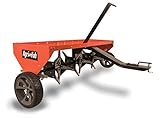
Agri-Fab 48 Inch Tow-Behind Aerator
- 32 galvanized knives
- Plugs up to 3 inches
- 175 lb weight tray

Brinly 40 Inch Tow-Behind Aerator
- 24 heat-treated spoons
- 150 lb enclosed tray
- 3 rotating tine sections
The Yard Butler is the pick most clay owners land on, and the one a r/lawncare owner named directly when asked which manual aerator survived their soil: the model was described as more solidly built than the alternatives. The Agri-Fab and Brinly tow-behinds cover the same job at lawn scale, with the Brinly offering the narrower frame and the rotating tine sections that are kinder to a lawn full of beds and paths.
Best Plug Aerators for Clay Soil in 2026
| Product | Specifications | Action |
|---|---|---|
| Yard Butler ID-6C Coring Aerator |
|
Check Latest Price |
| Agri-Fab 48 Inch Tow-Behind Aerator |
|
Check Latest Price |
| Brinly 40 Inch Tow-Behind Aerator |
|
Check Latest Price |
 Landzie 42 Inch Hollow Tine Core Aerator Landzie 42 Inch Hollow Tine Core Aerator |
|
Check Latest Price |
 Dolibest 4 Plug Coring Aerator Dolibest 4 Plug Coring Aerator |
|
Check Latest Price |
 LawnVigor Non-Clogging Hollow Tine Aerator LawnVigor Non-Clogging Hollow Tine Aerator |
|
Check Latest Price |
 K.D STONEDGE Rolling Core Aerator K.D STONEDGE Rolling Core Aerator |
|
Check Latest Price |
 Xuperace Alloy Steel Core Aerator Xuperace Alloy Steel Core Aerator |
|
Check Latest Price |
 hugeneroy Heavy Duty Hollow Tine Aerator hugeneroy Heavy Duty Hollow Tine Aerator |
|
Check Latest Price |
 Zalawn Non-Clogging Core Aerator Zalawn Non-Clogging Core Aerator |
|
Check Latest Price |
Why Clay Clogs an Aerator and How to Fix It
Clay has tiny particles that swell when wet and shrink when dry, and that movement is the whole problem. When the pores collapse under traffic, water sits in the low spots. Walk an aerator into that and the hollow tines act like a piston, packing the same wet clay tighter inside the spoon and then smearing it along the hole wall instead of lifting a clean core.
The fix is not a better machine, it is a moisture window. A MyTractorForum poster put it plainly years ago: the most important thing for good plug aerating is soil moisture for your particular soil type — not too wet, especially for clay owners, and not too dry. That advice still holds, and it is why almost every clay-specific complaint in the forums traces back to timing rather than hardware.
The squeeze test takes ten seconds and prevents most clay mistakes
Squeeze a handful of soil hard. If it crumbles into dust the moment you open your hand, the ground is too dry and the tines will skip off the surface. If it forms a slick ribbon that smears between your fingers, it is too wet and you will compact it. You want a core that holds its shape when squeezed and then breaks apart with a tap — that is the window where a plug comes out clean.
A second tell is your footprint. Walk the lawn and look behind you. If the soil holds a sharp shoe print with raised edges, wait. If the print softens and slumps within a minute, you are in the window and you should start that day.
What owners report about clogging, smearing, and rutting
Owners on r/lawncare describe the same pattern repeatedly. The tines pack with wet clay, the pass stops pulling cores, and the operator ends up dragging a full spoon through the turf. The fix is to stop, knock the spoons out, and reassess moisture before continuing — not to add more passes and hope.
Rutting is the more damaging failure. When a tow-behind aerator is pulled across clay that is too wet, the mower tires sink and add compaction to the exact area you are trying to fix. This is the one failure mode where aeration makes a lawn worse, and it is entirely avoidable with the squeeze test.
One r/lawncare owner described a common first-timer confusion: it feels like hitting rocks. That is often clay hardness rather than buried stone, and the honest answer is that some hand tools simply cannot generate enough force. If your spoons will not enter the ground, you need ballast on a tow-behind, a rolling drum machine, or a hired professional — not more effort with a step-on tool.
Ballast: how much weight clay actually needs
On heavy clay, weight is the difference between coring and decorating. The two tow-behinds in this roundup are built for it: the Agri-Fab tray accepts up to 175 pounds and the Brinly tray is fully enclosed and rated for 150 pounds. Start below the maximum, add ballast in stages, and do a short test strip each time.
More weight is not always better. Owners warn that overloading a tray makes steering and braking worse and can tip a machine on a slope. It also drives the spoons deeper than the frame can absorb, which bends tines on anything with stones in it. A concrete block or a couple of sand bags is the usual answer, and r/lawncare owners specifically recommend checking your rated tray capacity before going near it.
Plug vs Spike Aerators on Clay Soil
A plug aerator is the right tool for clay; a spike aerator is the wrong one. A spike makes narrow punctures and pushes soil sideways, which is compaction in miniature. A hollow-tine core aerator lifts a cylinder of soil out and leaves an open macropore, which is the only way to actually relieve a dense clay profile.
Soil removed: a plug aerator lifts a full core and ejects it, while a spike aerator removes nothing and pushes soil sideways. Compaction relief: only a plug aerator physically opens pore space; a spike makes narrow punctures that can worsen density at depth. Best soil: clay, loam, and compacted new-build for plugs; loose sandy soil with a thatch problem for spikes. Clay clog risk: moderate and manageable inside the moisture window for plugs, low for spikes because nothing loads up, but the holes smear shut in clay either way. Follow-up work: open holes accept overseeding and topdressing; the small holes a spike leaves give seed almost nothing to work with.
The thatch question is a separate one and gets confused with compaction constantly. Thatch is dead organic matter sitting on top of the soil, and a dethatcher or scarifier with blades is the tool that removes it. Compaction is a density problem below the surface, and only a core aerator reaches it. Most heavy-clay lawns have both, and they need different tools in different weeks.
Liquid aeration exists too, and it is a legitimate option on a small clay lawn where a machine would be a nuisance. It is slower, effectiveness varies, and it does not remove a single plug — so it never made our list, but it is a reasonable alternative to renting a heavy machine for a few hundred square feet.
1. Yard Butler ID-6C Coring Aerator — Best Manual Aerator for Clay
Yard Butler Manual Lawn Coring Aerator, ID-6C – Lawn Care Tool for Aerating – Long-Handled – Power-Coated Steel Construction – Comfortable Cushioned Handles Garden Tool – Easy to Use
Dual hollow plugs
38 inch powder-coated steel
1.77 lb foot bar design
Manual step-on
Pros
- Named the clay winner by r/lawncare owners
- Dual plug design pulls real cores
- Long handle keeps your back straight
- Powder-coated steel resists rust in wet clay
Cons
- Demanding on the body over anything but a small lawn
- Only 11 inches of working width
- No weight tray to add penetration force
The Yard Butler ID-6C is the tool I would hand someone with a heavy clay yard and an eighth of an acre to do. It weighs just 1.77 pounds, stands 38 inches long, and uses a dual-plug design on a simple foot bar that gives you a great deal of turning force for such a light tool. The long handle is the detail that matters most on clay: you can put your weight over the tines without bending at the waist.
On properly moist clay it does what a manual tool should do. Owners describe the dual plugs as effective for aeration and the cushioned handles as genuinely reducing hand fatigue across a long afternoon. The powder-coated steel construction is the part that earns trust with wet soil, since corrosion is what kills cheap hand tools after a season or two.
Real owner experience is the strongest argument for this one. In a r/lawncare clay thread, an owner said they had tried several manual aerators and that the only one that ended up working was the Yard Butler, calling it more solidly built. Another thread describes the ideal manual behavior owners are chasing: clean plugs pulled from close to 4 inches deep, averaging around 3 inches once the soil builds up on the tines.
That is the honest expectation to set. A 1.77-pound hand tool cannot generate the force of a 175-pound loaded tray, and on bone-dry clay it will barely scratch. Inside the moisture window, though, this design has more owner history behind it on clay than anything else you can buy.
What to check before you buy the Yard Butler
Measure your lawn area honestly. This is a tool for a front yard, a patch, or a lawn with a lot of beds and obstacles. On a full acre of open clay you will be out there for a full weekend, and most of that weekend will be your arms and back rather than the aeration itself.
Check the tine length and think about the second and third season. Clay is abrasive on hollow spoons, and a bent plug means the tool quietly stops coring. Yard Butler sells the coring aerator alongside spike, compost, and aerator-and-irrigator variants, so read the listing carefully to confirm you have the coring model with hollow plugs.
Where the Yard Butler is the wrong choice
If your clay is dry and rock-hard, this tool will frustrate you. Manual step aerators work by transferring your body weight through a foot bar, and a small person on compacted clay generates far less force than the problem demands. The right answer there is a tow-behind with ballast, not a bigger workout.
It is also the wrong pick for anyone with back or knee issues. For every step you take forward, you are pulling two hollow plugs through resistance. On soft, sandy soil that is easy. On clay it is a repeated full-body movement, and the cushioned handles do not change the mechanics of it.
2. Agri-Fab 48 Inch Tow-Behind Plug Aerator — Best Value for Large Clay Lawns
Agri-Fab 48 In Tow Behind Lawn Plug Aerator with 32 Galvanized Knives and Universal Hitch
32 galvanized self-sharpening knives
Plug depth up to 3 inches
Weight tray rated to 175 lb
Flat-free tires
Pros
- Deepest advertised coring in the roundup at 3 inches
- Largest weight tray capacity we found
- Self-sharpening galvanized knives resist clay abrasion
- Single-pin universal hitch fits most tractors
Cons
- Weighs 94 pounds and needs a tractor or ATV
- 60 inch overall width will not fit a narrow gate
- Needs a tractor with a socket to raise and lower it
The Agri-Fab 48 inch is the default tow-behind recommendation among owners, and a TheLawnForum poster picked exactly this model after comparing several options. On clay it is the most forceful tool in this roundup: 32 galvanized self-sharpening knives, plugs pulled up to 3 inches deep, and a weight tray that accepts up to 175 pounds of ballast.
That tray capacity is the headline number. Owners on lawn forums consistently say a towed aerator needs a lot of weight on it to do its job properly, and 175 pounds is the highest ceiling here. It is the difference between coring hard-packed clay at 3 inches and dragging shallow punctures across the surface.
Built in Sullivan, Illinois, the galvanizing matters more than it sounds. Clay is wet, acidic, and full of iron and manganese, and that combination eats untreated steel. Self-sharpening knives on a galvanized frame resist that abrasion far better than the light-gauge steel used on manual tools, which is why this machine has a long working life on clay specifically.
Transport details are handled well for a machine this size. Flat-free tires remove the flat-tire failure that plagues tow-behinds, and the cantilever transport handle lets you raise and lower the tine section from the seat, which matters when you are lining up overlapping passes on a full acre.
What to check before you buy the Agri-Fab
Measure your gates before anything else. The unit is 60 inches across overall and 36 inches tall, and plenty of side-yard gates are narrower than 60 inches. If your access is tight, the Brinly below is meaningfully smaller at 51 inches across, and that difference decides the purchase for a lot of clay owners.
Plan your ballast. A 94-pound machine plus up to 175 pounds of ballast is a substantial trailer, and on a slope that is a genuine handling consideration. Start with concrete blocks, test a strip, and only load it further if the cores are coming up short.
Where the Agri-Fab is the wrong choice
It is the wrong tool for a small patch. A 48-inch working width on a lawn with a garden bed, a tree, and a path is more trouble than the job, and the weight makes repositioning a two-person job. For anything under a quarter acre, a manual machine will get you there faster and store in a closet.
It is also the wrong tool on very wet clay with a small tractor. The combination of 94 pounds of machine, ballast, and a light mower on saturated ground is the exact rutting scenario you want to avoid. Respect the moisture window or do not run it at all that day.
3. Brinly 40 Inch Tow-Behind Plug Aerator — Best Premium Tow-Behind for Clay
Brinly Tow Behind Plug Aerator with Universal Hitch, 40″ – Flat Black
24 heat-treated 16-gauge steel spoons
Plug depth up to 3 inches
Fully enclosed 150 lb tray
Three rotating tine sections
Pros
- Narrower spoons punch into clay more easily
- Independently rotating tine sections reduce turf damage on turns
- Semi-pneumatic 10 inch tires will not go flat
- Enclosed tray keeps ballast contained
Cons
- Weighs 63.9 pounds and needs a tractor or ATV
- 51 inch overall width still needs gate clearance
- Spade handles get tiring on uneven clay
The Brinly 40 inch is the most considered tow-behind here for clay, and it carries the highest rating of the three big machines in the group. The technical detail that matters most is the narrower plug design with sharpened ends, paired with 24 heat-treated 16-gauge steel plugging spoons that remove cores up to 3 inches deep.
Narrower spoons are the answer to a specific clay problem. Fewer, slimmer cores mean less soil volume per pass, which means the tine clears its own core more reliably in sticky ground. The heat treatment is what keeps those thin spoons from bending when they meet a buried stone or a dry hardpan seam.
Three independently rotating welded tine sections is the feature owners notice most in practice. On a clay lawn with a lot of beds and turns, a fixed tine section drags turf when you pivot. A rotating section lets the spoons lift clear instead, and it noticeably reduces the torn-up mess at the end of each row.
The fully enclosed weight tray holds up to 150 pounds, just under the Agri-Fab’s 175. The enclosure is a genuine improvement on a clay job because loose ballast shifting to one corner on a turn changes how the machine tracks, and a bag of sand sliding around is worse than nothing.
What to check before you buy the Brinly
Do the same gate math as the Agri-Fab, with better numbers. At 37 by 51 by 28 inches, the Brinly is the easier machine to store and to move through a side yard, but it is still not a narrow-gate machine. Measure first and be honest about the number.
Check that your tractor or ATV has the right hitch. The single-pin universal hitch is genuinely universal across most lawn tractors, zero-turn riders, and ATVs, but it does need a working drawbar or receiver and a socket for the lift lever.
Where the Brinly is the wrong choice
The 150-pound tray is 25 pounds short of the Agri-Fab, and on the hardest, driest clay that gap is real. If you have genuine hardpan rather than typical compaction, the extra capacity is worth the wider footprint.
It is also the wrong pick if your lawn is full of tight corners and no straight runs. Forty inches is narrower, but it is still a wide machine, and clay that has never been cored will be slow going on turns. A manual tool handles that geometry far better.
4. Landzie 42 Inch Hollow Tine Core Aerator — Best Non-Clog Manual Design
Landzie – Lawn Aerator Tool 42″, Hollow Tine Core Aerator
Three solid stainless beveled tines
Clog-free core ejection
Powder-coated steel frame
42 inch overall length
Pros
- Stainless steel tines resist rust and bending in wet clay
- Beveled tines designed to shed cores instead of packing
- No assembly needed
- Removable tines for cleaning
Cons
- Five pounds is heavier than most hand aerators
- Only three tines means slow coverage
- Exhausting on anything beyond a small lawn
The Landzie takes a different approach to the clog problem than most manual aerators. Instead of relying on a step to eject the core, its three solid stainless steel beveled tines are shaped so cores push the old material up and out as the tool moves. On clay, where packing is the number one complaint, that geometry is the point of the tool.
Stainless steel is the other reason it earns a place on a clay lawn. Wet clay is a corrosive combination, and stainless tines will outlast powder-coated plain steel on a job where the tool is routinely rinsed with a hose afterward.
Owners report it works well on compacted clay when the soil is moist. That caveat is on the spec sheet and in the reviews, and it is the correct one. No manual tool coring clay effectively in dry conditions, and the ones that claim to are producing punctures rather than cores.
At 42 inches long and 5.6 pounds, it sits at the tall end of the hand-tool category, which means an upright working posture. That reduces back strain relative to a short tool, though it does nothing for the shoulder and forearm load of the actual coring motion.
What to check before you buy the Landzie
Check the variant listing carefully. Landzie sells hollow tine, spike tine, and combined versions, plus separate replacement tines, and the listings are easy to confuse. You want the hollow tine core aerator for clay; a spike version is the wrong tool for this job.
Plan the cleanup. The removable tines are a real convenience on clay because you will want to rinse them mid-job, and a design that requires disassembly to clean turns a slow job into a miserable one.
Where the Landzie is the wrong choice
It is wrong on a large lawn, full stop. Three tines at 5.6 pounds of tool plus 3-plus pounds of wet clay in each spoon is heavy work, and owners are candid that it becomes exhausting well before the lawn is finished.
It is also the wrong choice for very hard, dry clay. Solid stainless tines are strong, but strength is not the same as force. Nothing hand-powered generates enough downward pressure to enter hardpan without leverage, and this design does not have a weight tray for that reason.
5. Dolibest 4 Plug Coring Aerator With Tray — Most Versatile for Small Clay Patches
Dolibest Lawn Coring Aerator, Manual Lawn Aerator,4 Stainless Steel Corer Plug Aerator with Soil Core Storage Tray, Pre-Assembled Manual Grass Aerating Tool & Clean Hand Tool, Improving Lawn Health
4 SUS 304 stainless coring plugs
Integrated soil core storage tray
Soft rubber grip
12 inch weeding tool included
Pros
- Four coring plugs cover more ground per push than most
- SUS 304 stainless steel will not rust
- Elevated crossbar stops your shoe blocking ejection
- Includes a 12 inch hand tool for clearing and weeding
Cons
- Reported to clog unless the soil is very wet
- Cores sometimes need a screwdriver to clear
- Two-minute assembly required before first use
The Dolibest is the most interesting budget design in the list, mostly because of the soil core storage tray. Four SUS 304 stainless coring plugs eject their cores upward into a stainless tray instead of dropping them on the ground, which on a clay lawn means you are not stopping every few steps to kick plugs out of the turf.
Four plugs is more coverage per push than the three-tine tools in this roundup, and the elevated crossbar is a genuinely thoughtful detail: it keeps your shoe from fouling the plug on the way down, which is a problem on shorter tools where your foot lands right where the core ejects.
The stainless is real 304 grade rather than plated steel, and the included tray is stainless too, which prevents the rust and deformation that turns a plastic tray into a liability after a season of wet clay work. The soft rubber grip takes some of the sting out, and the 12 inch weeding tool doubles as a plug-clearing wand.
There is an important caveat here. Owners report that this tool can clog in less-than-extremely-wet conditions and that some people find soil gets stuck in the tines and needs a screwdriver to clear. On clay that means the moisture window is the whole game with this machine.
What to check before you buy the Dolibest
Check which variant you are getting. There are 3-plug and 4-plug versions, with and without the storage tray, and they are listed as separate variants. The 4-plug version with the tray is the one that makes this design work as intended.
Budget for the assembly. It is three parts and screws and takes about two minutes, but it is not a tool you can grab and use in the yard on impulse.
Where the Dolibest is the wrong choice
If your clay is on the dry side, pass. The clog reports cluster around anything other than very wet soil, and dry clay will simply not enter the plugs. This is a tool for a specific moisture condition, not a general-purpose clay solution.
It is also the wrong choice for a lawn bigger than a few hundred square feet. The storage tray fills up, the emptying adds steps, and four narrow plugs simply do not cover ground quickly enough to justify the time.
6. LawnVigor Non-Clogging Hollow Tine Aerator — Best for Very Small Clay Lawns
Manual Lawn Core Aerator for Compacted Soil with Non-Clogging Hollow Tines
3 heat-treated hollow tines
Non-clogging core removal
Replaceable tine design
Plastic insert plug release
Pros
- Highest rating among the compact hand tools
- Replaceable tines extend the tool's working life
- White plastic inserts help release soil plugs
- Allen and combination wrenches included
Cons
- Only three tines so coverage per push is small
- Handle covers can loosen or spin during use
- Short overall height means more bending
The LawnVigor is the compact option, and it holds a 4.5 rating from owners who mostly use it exactly where it shines: small lawns, high-traffic patches, and the bare spot by the front path where clay gets compressed worst. It ranks second in its category in the current bestseller list, which tells you how many people reach for it first.
The design is a three-tine hollow corer with heat-treated replaceable tines and white plastic inserts that help the soil plugs release. The replaceable tine design is the underrated part. On clay, spoons wear, bend, and eventually stop cutting cleanly, and being able to swap them rather than replace the whole tool is real longevity.
Owners call out the build quality and the included hardware specifically, which matters on a clay job where you are applying real downward force to a joint. A drain hole in the tubing is also a sensible detail: it lets you rinse the tool out instead of letting clay bake inside the frame.
The honest limitation is coverage. Three tines over a 15 by 10 inch footprint means many more steps than a four-plug or a rolling design, and on clay every step costs you more than on soft soil. For a front patch it is ideal; for a full lawn it is a poor use of a Saturday.
What to check before you buy the LawnVigor
Keep the white plastic inserts in place. Owners note they are part of how the plug releases from the tine, and losing them turns a non-clogging design into a jamming one. If they loosen, reseat them before a job rather than after.
Measure your step. At 15 inches long, this is a low tool, so if you are tall you will be bent over it for most of a session. That is fine for ten minutes on a patch and miserable for two hours.
Where the LawnVigor is the wrong choice
Any lawn over roughly a thousand square feet of clay. The arithmetic does not work: a rolling or four-plug design will cover the same ground in a fraction of the steps, and your hands will thank you.
It is also the wrong choice for hardpan. Hollow tines at this scale cannot generate meaningful penetration into rock-hard clay, so on a genuinely dry hard lawn you will just be scratching the surface and calling it aeration.
7. K.D STONEDGE Patented Rolling Core Aerator — Best Rolling Design for Mid-Size Clay Lawns
Patented Rolling Lawn Aerator Manual Coring Tool Compacted Soil Loosening
Patented rotary coring action
43.7 lb balanced push weight
60 inch length
Manual push operation
Pros
- Patented rotary design keeps pulling plugs as you walk
- Balanced weight does the coring work instead of your arms
- Covers ground far faster than any step-on model
- Extracts plugs well across open lawn
Cons
- Weighs 43.7 pounds so it is hard to reposition
- 60 inch length needs a real storage spot
- Manual push still asks for effort on the hardest clay
The rolling design is the answer to the middle ground between a step-on tool and a tow-behind. A 43.7 pound unit with a patented rotary coring action is pushed across the lawn, and the drums rotate as they go, so the spoons are continuously entering and ejecting rather than being driven once per step.
That rotary action is why it covers ground so much faster than any hand tool. Owners note the balanced weight does most of the work, which is a meaningful difference when the soil is heavy and every spoon full of wet clay adds resistance.
On a mid-size clay lawn, this is often the most sensible machine you can own. It needs no tractor, no hitch, and no fuel, and it does not require you to be standing on a manual foot bar at every step. Owners also point out the secondary benefit of the process, which is that pushing it is a workout in itself.
The catch is honest and worth saying plainly. Forty-three pounds is a lot to maneuver, and lifting or turning it at the end of a row is a genuine effort rather than a casual pivot. It suits an open lawn with straight runs, not a yard full of beds and trees.
What to check before you buy the K.D STONEDGE
Find out where you will store it. At 60 by 17 by 11 inches, it is a long object that will not go in a normal garden shed without planning. Owners flag the footprint as a real cost of ownership, and it needs somewhere dry because clay plus a steel drum plus damp storage is how steel machines end up pitted.
Test the turning circle before you commit. If your lawn has a fenced corner or a narrow side yard, simulate a turn with any heavy object of similar shape and see whether the length is workable for you.
Where the K.D STONEDGE is the wrong choice
It is wrong for a small lawn with obstacles. The length is an advantage on open ground and a nuisance everywhere else, and there is no way to lift and reposition it with one hand once it starts to dig in.
It is also the wrong tool for very wet clay. A 43.7 pound machine plus the weight of the tractor-less push is a lot of downward force on saturated ground, which is precisely the condition that produces the ruts you were trying to avoid.
8. Xuperace Alloy Steel Core Aerator — Best for Hard, Rocky Clay Ground
Xuperace Lawn Aerator Tool, Core Aerator Lawn Tool with Alloy Steel Material, Sturdy Grass Aerator for Lawn Health Soil Yard Aerator
3 hollow tines with side-ejection ramp
Alloy steel integrally formed frame
Dual downtubes for knee clearance
Replaceable tines
Pros
- Highest rated tool in the roundup at 4.6
- Patented side-ejection ramp solves plugging at the source
- Alloy steel with an integrally formed frame resists bending
- Center tine can be removed for harder ground
Cons
- Costs more than the basic manual models
- Sharp tines need careful handling
- Some owners report screws loosening over time
The Xuperace is the highest-rated tool we reviewed, and the design decisions are aimed squarely at hard clay. The core feature is a patented side-ejection ramp on each of the three hollow tines. Instead of relying on your foot to knock a core loose upward, the ramp lets the plug slide out sideways as the tool lifts.
On clay that matters more than it sounds. The upward ejection used by most manual aerators is exactly where plugging happens — the core sticks, the tool bounces, and you start dragging. A side ramp keeps the ejection path clear, and owners report no jamming with this design.
The frame is high-strength alloy steel, integrally formed rather than welded from separate pieces, and that is what earns the durability claims on hard ground. The dual downtube design is a comfort feature that turns out to be a practical one: it channels your downward force to the center tine without your knee getting in the way, which is the position most people naturally adopt on a step-on tool.
At 42 inches long with a 37 inch working height, it is tall enough to work upright. And for genuinely hard ground, you can remove the center tine, which reduces the force needed to get the outer two spoons into the soil.
What to check before you buy the Xuperace
Look at the middle tine before you start. On hard clay it is the tine that finds the buried stone first, and owners note that removing it makes entry easier at the cost of coverage. Decide in advance whether you want that trade, because swapping tines mid-job is annoying.
Check the fastener torque on a first use. The tines attach with screws and a blue loctite tube is included, which is the right way to do it, but a few owners have reported screws loosening. A quick check after the first row is cheap insurance.
Where the Xuperace is the wrong choice
It costs more than the basic manual aerators, and for a large lawn that premium compounds into a poor value proposition. The side-ejection ramp is a genuine improvement, but it does not change how many steps you have to take.
It is also the wrong choice if you are not comfortable handling sharp hollow tines at knee height for hours. The tines are sharp by necessity, and a design that keeps them working hard is not one to fumble around with on a tired evening.
9. hugeneroy Heavy Duty Hollow Tine Core Aerator — Best Clay-Specific Coring Depth
Heavy Duty Steel Hollow Tine Core Aerator for Clay Soil, Non-Clog – Blue
3 tempered hollow tines
Tine length about 4.3 inches
Tine diameter about 0.98 inches
Replaceable tine design
Pros
- Longest tines in the manual group at about 4.3 inches
- Thick hollow tines cut a substantial core
- Replaceable tines and tempered steel
- Comfort-grip handle reduces fatigue
Cons
- Tine tops are not sealed so debris can enter
- Some handle twist reported out of the box
- Connection bolts can catch a knee depending on height
The hugeneroy is the only hand tool in this roundup built explicitly around long hollow tines, and the numbers explain why. Its three tempered hollow tines measure roughly 4.3 inches long and about 0.98 inches in diameter, which is a longer and fatter core than most of the hand tools here produce.
That diameter is the clay-specific detail. A wide tine displaces more soil and lifts a heavier core, which is what opens real channels in dense clay, but it also means the tool needs more force to withdraw. Owners report it extracting cores effectively on compacted clay when the soil is moist.
The build quality comes through in reviews more than with the cheaper hand tools. Owners mention reinforced welds, the included assembly tools with a spare bolt and nut, and an easy-grip handle. Industrial-strength steel with replaceable tines means a bent tine is a five-minute fix rather than a replacement.
There are some design gaps to know about. The tops of the tines are not sealed, so owners report that debris can get inside the tool and that thorough cleaning means disassembly and a hose. That is annoying but manageable if you rinse the tool after each session rather than waiting.
What to check before you buy the hugeneroy
Check the handle for twist as soon as it arrives. A few owners found a slight clockwise twist out of the box, and on a clay job where you are leaning hard on the tool, a twisted handle puts asymmetric load on the frame over time.
Test the knee clearance with the assembly bolts. Depending on your height, the bolts can catch your leg as you step in, and that is uncomfortable on a long session. It is a fit issue rather than a defect, but it is worth knowing before you start.
Where the hugeneroy is the wrong choice
Long, thick tines need a firm, moist soil. In dry hard clay the 0.98 inch diameter tine will bind rather than cut, and you will get a lot of force for very little core.
It is also the wrong choice for anyone who will not rinse it out. The unsealed tine tops mean clay dries inside the frame if you leave it, and dried clay in a hollow tine is the fastest way to turn a good tool into a plugged one.
10. Zalawn Non-Clogging Core Aerator — Best Deep Coring on a Budget
Zalawn Manual Core Aerator Lawn Tool, Lawn Aerator Tool with 3 Non-Clogging Hollow Tines, Yard Grass Aerator with Ergonomic Rubber Grip, Reinforced Welding for Compacted Soil Lawn Care – Blue
3 hollow tines reaching up to 4 inches
Heat-treated steel tines
Reinforced connection joints
Replaceable tines
Pros
- Deepest advertised core depth in the roundup at 4 inches
- Heat-treated tines resist bending on hard ground
- Reinforced joints at the connection points
- Wide foot bar puts your body weight into the tines
Cons
- Some reports of shallow welds cracking under normal use
- Handle height suits shorter users poorly
- Welder and seller communication can be inconsistent
The Zalawn claims the deepest coring depth on the page: three sharp hollow tines that reach up to 4 inches. Treat that as an advertised figure rather than a guarantee, since actual pull on clay depends on moisture and how much weight you put on the foot bar, but the tine length itself is genuinely long and it is the deepest design in the group.
Heat-treated steel tines are the second thing worth noting. Heat treatment is what resists the bending and snapping that ruins thin tines when they meet a hardpan layer or a buried stone, and it is a spec you rarely see at this end of the price range.
The anti-clog mechanism and fully replaceable tines cover the failure mode that matters on clay, and the wide, stable foot bar is designed so your body weight goes straight down through the tines. Owners like the rubber grips, and the semi-assembled format means setup is close to a two-minute job.
The serious caution is weld quality. Alongside the positive reviews there are reports of shallow welds that ground flat and cracked under normal use, and complaints about seller communication. If you buy this, inspect the joints carefully before the first pass on clay and check them again after.
What to check before you buy the Zalawn
Inspect every weld. This is the one recommendation we would repeat twice for this model. Run a fingernail along the seams at the tine connections and the crossbar, and if any feel thin or flat, return it before it gets near your clay.
Check your height against the handle. Taller users report having to hunch, which is a real problem on a tool that asks you to drive downward with your body. If you are tall, a longer 42 inch model will serve you better.
Where the Zalawn is the wrong choice
It is the wrong pick if you are hard on equipment. Fine-welded budget construction and clay is a punishing combination, because clay loads a tool continuously and resists the withdrawal of every core.
It is also the wrong choice for a large lawn. Three tines, however deep they reach, cover ground slowly, and the weight you have to put on a short tool makes that worse rather than better.
How to Aerate Clay Soil Correctly
The order of operations matters more than the machine on a clay lawn. Get it wrong and you will compact your lawn, waste an afternoon, and conclude that aeration does not work. Get it right and the same afternoon fixes a season of problems.
1. Diagnose whether you have compaction or just clay
This is the step first-timers skip, and it is asked over and over on lawn forums. Push a screwdriver or a garden fork into the lawn in several spots. If it goes in easily in some places and hits a wall in others, you have compaction pockets. If it hits a wall everywhere with no variation, you probably have clay that needs soil amendment more than aeration.
2. Mow, then water, then wait
Mow the lawn a few days before so the grass is short and you can see the cores you pull. Water if the soil is dry, but stop a day or two ahead — you are aiming for naturally moist soil, not a soaked lawn.
3. Run the squeeze test in several spots
Take a handful from a low corner, a high spot, and a shaded area. Each should hold its shape under pressure and crumble with a tap. If any of the three behaves differently, that area is not ready and you should either water it or wait.
4. Check for rutting before you start
Walk the route you plan to pull. If your shoes sink and leave crisp prints with raised edges, do not take a machine out there. That is the exact condition that produces ruts under mower tires.
5. Add ballast gradually on tow-behinds
Start with a moderate load, run a ten-foot test strip, and look at the cores. Are they three inches or are they shallow punctures? Add more weight in stages until you get clean cores, and stop before you approach the tray rating. Owners are consistent that handling and braking degrade long before the maximum number.
6. Make overlapping passes in two directions
Run the lawn in one direction, then at a right angle to it, with about a third of the width overlapping. The second pass is what turns a decorative pattern into real coverage, and it is the step people skip when they are tired.
7. How many passes should you make on clay?
Two crossing passes is the standard answer for a healthy but compacted clay lawn. A third pass is justified where soil is severely compacted, on high-traffic lanes, or on a lawn that has never been cored. Beyond that you are usually removing more soil than the lawn needs to lose in one year.
8. Let the plugs dry, then break them up
Leave the cores on the lawn for a few days so they can dry. Break them up with a rake, a roller, or a mower set high, and let the fragments settle back into the holes. Owners are split on whether to rake everything: one r/lawncare poster argued that on clay you should rake and remove the plugs and just keep plugging away, while most advice is to break them up and leave the fines. A light dry day lets you break them without dragging wet clay around.
9. Overseed and topdress within a couple of weeks
Fresh open holes are the best seed-to-soil contact you will ever get. Overseed bare patches while the holes are still visible, and topdress with compost or screened topsoil to add the organic matter that clay lacks.
10. Clean the tool before you put it away
On clay, cleanup is not optional. Rinse the tines and dry them before storage, and on the hand tools with removable tines, take them off so dried clay does not set inside the hollows.
How to Choose a Plug Aerator for Clay Soil
Choosing on price or on brand reputation is how clay owners end up disappointed. These are the specs that actually predict whether a machine will core your particular soil.
Tine type: hollow coring, always
Start by eliminating anything that is not a hollow-tine corer. Solid spike tines and rolling spike drums are wrong tools for clay, because they push soil sideways instead of removing it. Several aerators sold in this category are spikes wearing an aerator label, so read the tine description before the product name.
Tine design matters more than tine count
More tines means more coverage per pass and more clay to drag. Side-ejection and beveled designs, as on the Xuperace and the Landzie, keep plugs moving and are worth more on clay than an extra spoon. Heat-treated steel resists bending in hard ground, and replaceable tines matter because clay wears them out.
Weight tray capacity: the number that decides clay performance
For tow-behinds, tray capacity is the number to compare. The Agri-Fab takes 175 pounds and the Brinly 150. Anything far below that will struggle on genuine hardpan, because you are trying to push tines into dry-packed clay with a lightweight frame. For hand tools, the equivalent is body weight and mechanical advantage, which is why step-on tools have a natural ceiling on hard soil.
Core depth: advertised versus actual
Advertised depth is measured on ideal soil and rarely achieved on clay. The two tow-behinds here claim plugs up to 3 inches, and that is a realistic figure in the correct moisture window with ballast. Treat a 4 inch claim on a hand tool as a maximum, not an expectation, and test a strip before you commit to a full lawn.
Working width versus overall width
This is the most common disappointment with tow-behinds. Overall width includes the wheels, frame, and handle, and it is what has to fit through your gate. The Agri-Fab measures 60 inches across overall, the Brinly 51, and both are far wider than a 48 or 40 inch working width would suggest. Measure your narrowest gate before you order.
Class, lawn size, and honesty about the job
Step-on tools suit patches up to a few thousand square feet. Rolling machines suit a mid-size open lawn. Tow-behinds suit a quarter acre and up, or any lawn you drive a tractor over. Owners report about four hours start to finish for roughly half an acre with a good tow-behind, so set your weekend expectations accordingly. And if you only need it once, renting or hiring a service is often the better call than storing a 94 pound machine for a decade.
When Not to Aerate Clay Soil
Core aeration is genuinely powerful on clay, and it is also not the answer to every problem a clay lawn has. In four situations, spending your money on an aerator is a mistake.
Standing water that does not drain after a day
If water sits in your lawn for more than a day after rain, aeration will not fix it. That is a drainage problem, and it usually needs regrading, a French drain, or a dry creek bed. Coring a waterlogged lawn can spread the problem across a wider area.
Grading that sends runoff toward the house
Where water collects by design, or runs off the property in one channel, the answer is to change the grade. Aeration improves pore structure in the soil, but it cannot move water that never soaks in.
Bedrooms that have not been amended
Raw clay bed soil does not become good soil through aeration alone. If you are building a new lawn, the answer is topsoil and compost, not coring. A hollow tine will happily pull up raw subsoil and spread it across your yard, which makes the problem worse.
Immediately after laying sod or fresh seed
New sod needs to knit into the soil below it, and rolling a corer over it damages the bond you are trying to create. Wait a full season before coring new sod.
Frequently Asked Questions
Can I use an aerator on clay soil?
Yes, and clay is where core aeration helps most. A plug aerator pulls cylinders of soil out of the turf, opening channels for air, water, and fertilizer to reach roots in dense, low-porosity clay. The one rule is moisture: aerate when the soil holds its shape when squeezed and crumbles with a tap. Too dry and the tines skip off the surface. Too wet and they pack with clay, stop coring, and your wheels can rut the lawn while making compaction worse.
What is the best aerator for clay soil?
A tow-behind core aerator with a high weight tray capacity is best for a large clay lawn, and a hollow-tine step-on tool is best for a small patch. On tow-behinds, tray capacity is the decisive number, and 150 to 175 pounds covers even hard-packed clay. On hand tools, tine design matters most: beveled or side-ejection hollow tines shed plugs instead of packing with wet clay. Avoid solid spike aerators, which push soil sideways and can worsen compaction.
How many passes should I make with a plug aerator?
Two overlapping passes at right angles is the standard for a compacted clay lawn. A third pass is worth it on high-traffic lanes, on a lawn that has never been cored, or where soil is severely compacted. Keep about a third of the width overlapping between rows. More than three passes in one season usually removes more soil than the lawn can afford to lose at once.
Should lawn aeration plugs be removed?
Break them up, but you do not have to collect them. Let the cores dry for a few days, then rake, roll, or mow them so the fragments settle back into the holes and add organic matter. Some owners on r/lawncare argue that on clay you should rake and remove them, and the honest answer is that it depends on how dry the soil is when you get to them. Raking wet clay plugs just spreads the problem around.
Will a plug aerator work in wet clay?
No. Wet clay is the worst possible condition for a plug aerator. The hollow tines act like a piston, packing the wet clay tighter inside the spoon and smearing it along the hole wall instead of lifting a core. A tow-behind under load on saturated ground is worse still, because the mower tires sink and add compaction to the area you are trying to fix. Use the squeeze test and wait if the soil smears between your fingers.
Conclusion
The Yard Butler ID-6C is our pick as the best plug aerator for clay soil overall, because it has more owner history on heavy ground than anything else in the category, and r/lawncare owners name it specifically when the question is which manual tool survives clay. For a lawn over a quarter acre, the Agri-Fab 48 inch covers the most ground with the deepest weight tray, while the Brinly 40 inch is the smarter buy if your gates are tight or your lawn is full of beds and turns.
Whatever you choose, the machine matters less than the moisture window. Clay that crumbles in your hand cores cleanly; clay that ribbons smears and ruts. Check three spots, make two crossing passes, break up the plugs, and overseed before the holes close. Get those four things right in 2026 and the cheapest tool on this list will outperform the most expensive one used on the wrong day.