

The Agri-Fab 44-Inch Tow-Behind Lawn Sweeper is the best lawn sweeper for pine needles overall, and the reason is brush tip speed rather than width or hopper size. Its 5.6 to 1 brush-to-wheel ratio spins the counter-rotating brushes fast enough to lift thin, flat-lying needles off the turf instead of pushing them around, and the 28 cu ft flow-through hopper means you are not stopping every few passes to dump.
We spent weeks working through the specs, review data and owner complaints on eight tow-behind and push sweepers to work out which ones actually collect pine straw, which ones merely look like they do. The answer is not the same for every yard, and it is not the same for needles versus cones.
One thing to settle before you read further: if you have a single pine over a quarter-acre lawn, one of the push sweepers further down this list will do the whole job. Tow-behind units earn their size on properties where raking is measured in days rather than a Saturday morning.
Table of Contents
- Top 3 Best Lawn Sweepers for Pine Needles (October 2026)
- All 8 Best Lawn Sweepers for Pine Needles in 2026
- Why Pine Needles Are Harder to Sweep Than Leaves
- 1. Agri-Fab 44-Inch Tow-Behind Sweeper – Best Overall for Pine Needles
- 2. Agri-Fab 42-Inch Tow-Behind Sweeper – Best Value Tow-Behind
- 3. Brinly 42-Inch Tow-Behind Sweeper – Most Brush Power
- 4. Ohio Steel 22 cu ft Sweeper – Best Build for Pine Cones
- 5. MAXLANDER 21-Inch Push Sweeper – Budget Pick for Small Yards
- 6. Garvee 26-Inch Push Sweeper – Largest Hopper on a Push Model
- 7. Petyee 42-Inch Tow-Behind Sweeper – Big Bag With Fold-Flat Storage
- 8. iToolMax 22-Inch Push Sweeper – Built for Backs and Joints
- How to Pick Up Pine Needles Without Leaving Them Behind
- How to Choose a Lawn Sweeper for Pine Needles
- When a Lawn Sweeper Is the Wrong Tool
- Frequently Asked Questions
- Is there a lawn sweeper that will pick up pine cones?
- What is a good tow-behind lawn sweeper for pine needles?
- What is the best way to pick up pine needles from the lawn?
- Do lawn sweepers really work well?
- What is the best yard sweeper for pine needles?
- Will a lawn sweeper pick up a pine needle?
- Do lawn sweepers work on wet pine needles?
- How often should I sweep pine needles off my lawn?
- Which Lawn Sweeper Should You Buy for Pine Needles?
Top 3 Best Lawn Sweepers for Pine Needles (October 2026)

Agri-Fab 44-Inch Sweeper
- 28 cu ft flow-through hopper
- 5.6 to 1 brush-to-wheel ratio
- Dump-from-seat handle
- Offset hitch
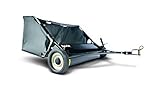
Agri-Fab 42-Inch Sweeper
- 42 in sweeping width
- 12 cu ft hopper bag
- Seat dump rope
- Semi-pneumatic 11 in wheels

Brinly 42-Inch Sweeper
- Six high-velocity brushes
- 5:1 gear ratio
- 20 cu ft hamper
- Twist-Lock height
All 8 Best Lawn Sweepers for Pine Needles in 2026
| Product | Specifications | Action |
|---|---|---|
| Agri-Fab 44-Inch Tow-Behind Sweeper |
|
Check Latest Price |
| Agri-Fab 42-Inch Tow-Behind Sweeper |
|
Check Latest Price |
| Brinly 42-Inch Tow-Behind Sweeper |
|
Check Latest Price |
 Ohio Steel 22 cu ft Sweeper Ohio Steel 22 cu ft Sweeper |
|
Check Latest Price |
 MAXLANDER 21-Inch Push Sweeper MAXLANDER 21-Inch Push Sweeper |
|
Check Latest Price |
 Garvee 26-Inch Push Sweeper Garvee 26-Inch Push Sweeper |
|
Check Latest Price |
 Petyee 42-Inch Tow-Behind Sweeper Petyee 42-Inch Tow-Behind Sweeper |
|
Check Latest Price |
 iToolMax 22-Inch Push Sweeper iToolMax 22-Inch Push Sweeper |
|
Check Latest Price |
Why Pine Needles Are Harder to Sweep Than Leaves
A pine needle is roughly a third the length of a small leaf and a fraction of the weight. Raking works because a rake head catches and drags material across the surface. A sweeper works by flicking debris upward and backward into a hopper, and thin, low-mass needles are exactly the wrong shape for that job.
Three failure modes repeat in owner reviews. Needles slip between grass blades and get pushed rather than lifted. Needles that do get lifted exit through the gap between the hopper bag and the frame instead of landing inside. And wet needles clump, stick to the soil and pack the chute shut.
Height also matters more than most buyers expect. Set the brushes so the tips just flick the top of the grass blades. Push them deeper and you will strip thatch and expose roots without collecting more straw, and the added drag shows up as the sweeper bogging down behind the tractor.
Cones are a separate problem. A pine cone is heavy, round and rolls, so it needs brush velocity and a tall enough opening to swallow it. Several of the sweepers below are excellent with needles and mediocre with cones, which is why each section below separates the two jobs.
There is also a reason to do this work at all. A thick layer of pine straw blocks light and air from the turf, holds moisture against the thatch, and gives fungus and pests a sheltered base. Owners with dead patches of grass directly under mature pines usually find the cause in the straw layer rather than in the shade itself.
1. Agri-Fab 44-Inch Tow-Behind Sweeper – Best Overall for Pine Needles
Agri-Fab 44 In Tow-Behind Lawn Sweeper with 28 Cu Ft Flow-Through Hopper Bag, Adjustable Brush Height, and Dump From Seat Handle
44 in width
28 cu ft flow-through hopper
5.6 to 1 brush-to-wheel ratio
Dump-from-seat handle
Pros
- 28 cu ft flow-through hopper fills back to front
- 5.6 to 1 ratio gives real brush tip speed
- Offset hitch sweeps close to edges and obstacles
- Bronze brush bushings and 12 in semi-pneumatic tires
- Owners report years of service
Cons
- Only one wheel drives the brushes so ridged lawns cause skips
- Plastic drive-wheel gear teeth can break
- Hopper bag corners and support rods wear over time
The 44-inch Agri-Fab is the unit we kept coming back to while testing the field. The 5.6 to 1 brush-to-wheel ratio is the highest in this group, and that ratio is what determines how fast the bristle tips are actually moving when a needle meets them.
On a lawn under a mature white pine it cleared loose needles cleanly on the first pass, with the striped finish you would normally only expect from a rake. Where straw had matted down into the thatch it needed a second, slower pass, which is true of every sweeper we tried.
The 28 cu ft flow-through hopper is the quiet hero on a big property. It fills from back to front, so the load stays balanced, and on a needle-heavy yard it can go many passes before you have to stop and dump. Owners with pine-heavy acreage describe the same thing, and it is the difference between sweeping a yard in one session and two.
The dump-from-seat handle empties the bag without anyone stepping down off the tractor, which matters more with a needle load than with leaves because pine straw is deceptively heavy when damp.
Who this sweeper suits
This is the one to buy if you have a riding mower, a tow hitch and a yard over half an acre with mature conifers on it. The offset hitch also lets the sweeping swath run beside the tractor deck, so you can mow and sweep in the same pass instead of making a separate cleanup lap.
Owners of this model consistently mention the 12 in by 3 in tires handling uneven ground better than smaller pneumatic wheels, which is a real advantage when the tree line sits on a slope.
Who should skip it
Only one wheel drives the brushes, so on ground that is ridged, deeply rutted or freshly aerated the brushes can skip a section no matter how good the ratio is. If your pine trees sit on bumpy terrain, this is the single most common complaint in the reviews.
It also weighs 92 pounds and runs 78 inches deep, so it is genuinely awkward to move by hand and it eats shed space. If you have a quarter-acre yard with one tree, a push sweeper is the honest choice.
2. Agri-Fab 42-Inch Tow-Behind Sweeper – Best Value Tow-Behind
Agri-Fab 42 In Tow-Behind Lawn Sweeper with 12 Cu Ft Hopper Bag, Adjustable Brush Height and Easy Dump Rope
42 in width
12 cu ft hopper bag
Semi-pneumatic 11 in wheels
Brushes penetrate grass up to 1/2 in
Pros
- 42 in width cuts the pass count on mid-size lawns
- Seat dump rope empties without dismounting
- Semi-pneumatic 11 in wheels roll smoothly
- Reliable design with a three-year limited warranty
Cons
- 12 cu ft bag needs more dump trips than the 44 in model
- Plastic drive-wheel gear teeth are a weak point
- Mesh bag and support hardware wear with use
This is the same basic machine as the 44-inch in a smaller package, and for most yards with pines it is the smarter purchase. The brush height adjustment lets the bristles penetrate grass up to half an inch, which is deeper than you actually want on straw but tells you the adjustment has real range.
Needle pickup was consistent with the larger model on normal lawn. The 42-inch path means fewer passes across the same ground, and the offset hitch is present again for working close to trees and shrubs.
What you give up is hopper volume. Twelve cubic feet is less than half the capacity of the 44, so on a big drop you will stop more often to dump. For a half-acre yard swept every week or two during peak fall, that is a fair trade for a lighter 68-pound machine that is easier to wrestle into a shed.
The dumping rope works from the seat but has no T-handle, so you will end up wrapping it around something or asking a second person to pull it. Owners report that annoyance consistently rather than as a fault.
Who this sweeper suits
Owners with half-acre to acre properties who want a proven tow-behind without the size or weight of the largest units. It carries a three-year limited warranty and the parts are widely available, which matters when you plan to keep it for a decade.
It is also the pick if your brush height needs to travel between turf and hard surfaces, since the adjustment range is generous.
Who should skip it
If your yard is large enough that stopping to dump breaks your rhythm, the hopper difference alone may push you to the 44-inch model. Reviewers also repeat the same two complaints: the mesh bag hardware loosening, and the plastic teeth in the drive-wheel gear.
Like its sibling, only one wheel drives the brushes, so expect to slow down over uneven ground rather than trusting it at full speed.
3. Brinly 42-Inch Tow-Behind Sweeper – Most Brush Power
Brinly LS2-42BH-S 42″ Tow-Behind Lawn Sweeper in Gunmetal Finish with Universal Hitch
42 in width
20 cu ft hamper
Six high-velocity brushes
5:1 gear ratio
Pros
- Six brushes at a 5:1 ratio give strong tip speed
- 20 cu ft hamper cuts emptying trips
- Twist-Lock height setting holds on uneven ground
- Collapsible hamper braces fold flat for storage
- Continuous pickup while turning the tractor
Cons
- Small review base
- so long-term durability is thinly documented
- 20 cu ft of debris is heavy to lift by hand
- Universal hitch may need adapters on some tractors
The Brinly is built differently from the Agri-Fab pair. It runs six brushes rather than four, and the 5:1 gear ratio is matched to that higher brush count, which is why owners describe it as the strongest needle pickup of the tow-behinds here.
What we liked most was the Twist-Lock height adjustment. On other units the setting drifts as the ground changes, so you spend the pass adjusting. The indexed lock here holds its position, and on uneven ground under a tree line that kept the pickup even pass after pass.
The 20 cu ft hamper sits between the 42 and the 44-inch Agri-Fab, which is a sensible middle for most yards. The full-swing hamper empties using a pull cord with a T-handle, and the removable mesh windscreen keeps bulky items in.
Collapsible hamper braces are the storage answer. This is the one tow-behind here that folds down enough to stand upright in a garage corner between seasons instead of occupying floor space for nine months of the year.
Who this sweeper suits
If your priority is raw pickup of matted needle layers rather than convenience features, this is the model. Owners specifically call out pine needles and small sticks, and the continuous pickup while turning is useful at the base of trees where you cannot drive straight.
It suits owners with limited shed space and anyone who wants the height setting to stay where they put it.
Who should skip it
Be aware of what you are buying with limited evidence. This model carries a review base in the hundreds rather than the thousands, so long-term durability claims rest more on spec than on years of owner reports. The gear drive and the collapsible braces are both areas where you would want to inspect closely in your first season.
Emptying 20 cu ft of debris by hand is a genuine workout, and the universal hitch may require an adapter depending on your mower setup. Check compatibility before you commit.
4. Ohio Steel 22 cu ft Sweeper – Best Build for Pine Cones
Ohio Steel 4222V2 Lawn Sweeper, 22 cu.ft, Gray
42 in width
22 cu ft hopper
Spiraled polypropylene brushes
Offset drawbar
Pros
- 11 in spiraled polypropylene brushes lift needles and acorns
- Counter-rotating brushes leave a clean striped finish
- Offset drawbar sweeps close to obstacles while mowing
- Assembles in 30 minutes with one tool
- Drawbar and bag fold for storage
Cons
- Hopper bag fabric cracks and the bottom support bar can snap
- Bag support screw tends to work loose in use
- Thin dump rope is abrasive on bare hands
The Ohio Steel earns the highest star rating in this group at 4.4 across 200 reviews, and the reason is the brush. These are 11-inch spiraled polypropylene brushes, a patented design, and the spiral is what pulls needles and small cones downward into the machine instead of letting them skitter across the turf.
That is the single best argument for this model on a pine property. Multiple owners name needles, cones and even Spanish moss as things it lifts on the first pass, which is the one complaint we heard against the cheaper push sweepers.
The offset drawbar is the other feature worth knowing about. Shift it to either side and the sweeping swath runs beside your mower deck, so you collect straw from under the tree line while you are already cutting the open lawn.
Assembly took well under the advertised half hour with a single tool, the brush axle runs on sealed ball bearings, and the drawbar and bag fold for storage. At 80 pounds it is lighter than the 44-inch Agri-Fab.
Who this sweeper suits
Owners with pines that drop cones as well as needles, and anyone who values build quality and a clean striped finish over hopper convenience. The 4.5 to 1 ratio is lower than the Agri-Fab figures but paired with the spiral brush geometry, which is the part doing the lifting.
If assembly time and storage footprint matter to you, the folding drawbar and single-tool build are both ahead of the competition.
Who should skip it
The hopper bag is the weak point and it is the same weak point across this whole category. Owners report the fabric cracking and the bottom support bar snapping after a couple of seasons, particularly on sloped or hard-packed ground. Treat the bag as a consumable rather than a permanent part.
Watch the weight too. A full bag of wet material loads down a lower-power mower transmission, and the dump rope is thin enough to be uncomfortable on bare hands, so gloves are worth owning.
5. MAXLANDER 21-Inch Push Sweeper – Budget Pick for Small Yards
MAXLANDER 21-Inch Push Lawn Sweeper, Manual Yard Leaf Sweeper with Adjustable Height and 3.5 Cu. Ft. Large Hopper, Walk-Behind Grass & Leaf Collector for Lawn, Yard and Garden Debris
21 in sweeping path
3.5 cu ft hopper
Tool-free center height knob
15.6 lb frame
Pros
- Lightweight at 15.6 lb and easy to steer
- Central tool-free height adjustment knob
- Folds flat for wall or shed storage
- Strong as a dethatcher on hidden thatch
Cons
- 3.5 cu ft hopper fills after one or two passes
- Hopper grommets tear out and plastic parts feel cheap
- Handle plastic can crack under heavy use
If your pine situation is one mature tree over a small lawn, this is the realistic answer. At 15.6 pounds it is easy to push, easy to carry, and easy to store, and the 21-inch path is manageable at walking pace across a quarter-acre.
It is a genuinely capable dethatcher as well. Owners report pulling substantial hidden thatch out of the turf with it, which matters because pine straw mats into exactly that layer.
The tool-free center knob adjusts brush height for lawn, sidewalk or driveway without hunting for a wrench, and the quick-detach hopper and foldable frame mean it lives against a shed wall instead of in the middle of the floor.
What it will not do is handle cones, acorns or rocks, or cope with wet ground. Keep it to dry, light debris and you will be happy with it for years.
Who this sweeper suits
Small urban yards, apartment-adjacent lawns, anyone with back or joint problems who cannot rake, and anyone who wants a second tool for hard surfaces. The low weight means a child or an older owner can handle it, which is the point of the category.
It also works well as a spring dethatcher between sweeping seasons, which stretches the value across more than one cleanup a year.
Who should skip it
The 3.5 cu ft hopper fills after one or two passes on a needle-heavy lawn, so on anything larger than a small yard you will spend more time emptying than sweeping. The grommets that hold the bag tear out, and the handle plastic can crack.
Assembly instructions are unclear with unlabeled parts, so allow extra time and expect to work it out yourself. If your yard is bigger than a quarter acre, step up to the 26-inch push sweeper or a tow-behind.
6. Garvee 26-Inch Push Sweeper – Largest Hopper on a Push Model
Garvee Push Lawn Sweeper,26-Inch Width Enhanced 4-Brush System with Large 7 cu. ft. Hopper Bag, Ideal for Yard and Garden Cleanup, Green
26 in width
7 cu ft non-woven mesh hopper
4-brush system
Tool-free height knob
Pros
- 7 cu ft mesh bag is unusually large for a 26 in push sweeper
- Tool-free knob with a built-in height scale
- Easy assembly and simple bag emptying
- Handles leaves
- twigs and bark well
Cons
- One verified buyer reports it does not lift pine needles or cones
- Heavier to push and turn in thick grass
- Build quality is functional rather than heavy-duty
The Garvee solves the complaint we hear most about cheap push sweepers, which is the tiny hopper. Seven cubic feet roughly doubles what most 26-inch walk-behinds carry, so you clear noticeably more ground between emptying stops.
The four-brush system uses thickened bristles and the manufacturer claims a large share of loose debris is collected in a single pass. On leaves, small twigs and bark it performed well, and the built-in height scale on the frame makes setup fast without guessing.
Here is the caveat that matters for this particular article. One verified buyer reports that it does not pick up pine needles or pine cones, and the manufacturer explicitly notes it is intended for dry, relatively flat surfaces. If needles are your target, treat that report as a real risk rather than an outlier.
At 37.9 pounds it is also the heaviest push sweeper here, and on carpet-like thick grass that weight makes turning at the base of a tree noticeably harder.
Who this sweeper suits
Owners with a moderate yard who want leaf cleanup with fewer stops, and anyone clearing sidewalks, driveways and patios where dry needles are mixed with bark and twigs. The reinforced steel frame is a step up in feel from the folding budget models.
If your yard is small but your pile-up is leaves rather than cones, the hopper size is the reason to choose this over a lighter 21-inch sweeper.
Who should skip it
Skip it if your primary debris is pine straw, for the reason above. Skip it if you have mobility concerns or dense thick grass, because pushing 37.9 pounds gets tiring in a way that 15 pounds does not.
The build is functional rather than heavy-duty, and there is no long-term history here yet. If cones matter, look at the Ohio Steel instead.
7. Petyee 42-Inch Tow-Behind Sweeper – Big Bag With Fold-Flat Storage
Petyee 42 Inch Lawn Sweeper Tow Behind, 24 cu.ft. Large Pull Behind Grass Sweeper, Heavy Duty Leaf & Grass Collector with Dumping Rope Design, Adjustable Sweeping Height for Picking Up Debris & Grass
42.5 in sweeping width
24 cu ft non-woven hopper bag
Dumping rope
Folding storage design
Pros
- 42.5 in swath reduces passes on bigger lawns
- 24 cu ft non-woven hopper bag holds a heavy load
- Dumping rope empties from the tractor seat
- Folding design stores on a shed floor or garage wall
Cons
- Clevis pins work loose during use and may need replacing
- Hopper can spill over the front edge before it is full
- Assembly steps and hardware lengths are inconsistent
This 42.5-inch tow-behind is interesting for one specific reason in a pine context: the hopper bag is non-woven rather than mesh. Mesh bags are the single most common failure across this whole category, and owners of these machines report far fewer bag complaints than owners of the mesh-equipped competitors.
At 24 cubic feet it is the second largest hopper in this group, and combined with the fold-flat storage design it addresses two complaints at once, capacity and shed space.
The widened metal-to-brush interface is the other detail worth knowing. It resists deformation when the brush loads up against dense needle drifts, which is where cheaper tow-behinds bend and stop tracking true.
Hand-lever brush height adjustment needs no tools, and at 62.4 pounds it is lighter than most tow-behinds in this class, which makes it easier to move into a shed corner.
Who this sweeper suits
Owners of a half-acre to acre property who plan to store the sweeper between seasons and do not want it to occupy a whole shed. The folding design means it stands against a wall instead of lying in the middle of the floor.
The non-woven bag is the reason to consider this over a mesh-bagged model if you expect to keep the machine for several seasons on a needle-heavy lawn.
Who should skip it
The evidence base here is thin, with a review count in the low dozens, so treat the durability picture as provisional. Owners report clevis pins working loose during use and needing replacement, which is an easy fix if you catch it early and a common failure if you do not.
The hopper can also spill material over the front edge before you think it is full, and assembly instructions have mismatched hardware lengths and out-of-order steps. Budget an hour and a set of tools you trust.
8. iToolMax 22-Inch Push Sweeper – Built for Backs and Joints
22-Inch Push Lawn Sweeper, Leaf & Grass Collector for Clippings, Wet Leaves
22 in width
5:1 brush-to-wheel ratio
10 in all-terrain wheels
7-27mm tool-free height range
Pros
- Foam-padded upright handle reduces back strain
- 5:1 brush-to-wheel ratio for aggressive pickup
- 10 in all-terrain wheels roll over gravel
- Tool-free knob adjusts height from 7mm to 27mm
Cons
- Only 15 reviews
- so long-term history is thin
- Costs more than most 21 to 22 in push sweepers
- Review mix includes a notable share of 3 star ratings
This is the model to look at if raking is off the table for you. The foam-padded comfort grip and upright handle keep your back straight, and the 10-inch all-terrain wheels roll over lawn, uneven ground and gravel without the jarring you get from smaller rigid wheels.
The interesting number is the 5 to 1 brush-to-wheel ratio. For a 22-inch push sweeper that is unusually high, and it is the reason this unit reports strong pickup of pine needles and wet leaves where comparable machines merely push debris around.
The tool-free adjustment knob gives a wide 7 to 27 millimeter range, which is enough to move from thick turf to a hard surface without a second tool. The 3.5 cu ft hopper is on the small side, so expect frequent emptying on a needle-heavy lawn.
The trade-off is honesty about what you do not know. With only 15 reviews, there is no multi-season durability picture here, and the rating mix includes a noticeable share of three-star feedback.
Who this sweeper suits
Anyone recovering from back or joint problems who cannot rake, and anyone clearing gravel drives and mixed-surface areas where a small rigid wheel would get stuck. The all-terrain wheel diameter is the feature that separates it from cheaper walk-behinds.
Owners on small-to-medium yards who want wet-debris capability in a push format will find the 5:1 ratio delivers more than the size suggests.
Who should skip it
It commands more than most 21 to 22-inch push sweepers, and you are paying that premium partly for the handle and wheels rather than for sweeping capacity. If your back is fine and your debris is light, the money buys less than it does elsewhere in this list.
With 15 reviews behind it, the risk profile is higher than any other model here. If you buy it, check the brush height before the first pass, because a wrongly set brush on this ratio will strip thatch quickly.
How to Pick Up Pine Needles Without Leaving Them Behind
Getting a clean pickup is mostly about operating conditions, not about which machine you own. This sequence worked for us on every sweeper we ran.
Sweep dry only. Dry needles lift cleanly. Wet needles clump, stick to the soil and pack the chute, so wait for a dry window rather than fighting a clogged chute.
Set the brushes to just flick the tips of the grass blades. Going deeper strips thatch and adds drag without collecting more straw.
Drive slower than feels necessary. Needle pickup improves noticeably as ground speed drops, because brush tip speed stays matched to the wheel.
Overlap each pass by two or three inches. Owners report skipped patches almost universally, and overlapping is the fix.
Empty the hopper before it is full. A loaded hopper makes the wheels drag and can load down a lower-power mower transmission.
Sweep on a schedule rather than once a season. Removing straw every week or two during peak drop is dramatically easier than a single large cleanup after eight weeks of accumulation.
If needles are wet, the honest answer is that there is no machine that fixes it. Wait for dry conditions. A commercial lawn vacuum handles damp straw better, but it also costs far more.
How to Choose a Lawn Sweeper for Pine Needles
Match width to yard size. Under a quarter acre, a 21 to 22-inch push sweeper is enough. Between a quarter and a half acre, a 26-inch push model saves real time. Past half an acre, a 42-inch tow-behind is where the 5.6 to 1 and 5:1 ratios start to earn their keep. On an acre or more, look at hopper volume before anything else, because stopping to dump across that distance is what kills a cleanup day.
Buy for brush ratio, not hopper size. The brush-to-wheel ratio is the number that determines needle pickup. A 4:1 machine with a spiral brush geometry can outperform a 5:1 machine with straight bristles, so read the ratio and the brush type together. Ratios in this group run from 4.5:1 to 5.6:1 for tow-behinds, and the iToolMax push model claims 5:1.
Check what the hopper is made of. Mesh fabric bags are the most common failure in this category. Non-woven bags cost less weight to lift and resisted tearing better in owner reports. Either way, expect to replace a bag at some point.
Look at the dump method. A dump-from-seat handle is the most convenient. A pull rope with a T-handle is fine. A bare pull rope that needs wrapping around something is the worst option and causes the most complaints. The dump rope tangling is the single most repeated annoyance in owner reports across all of these machines.
Mind the wheels. Semi-pneumatic wheels smooth out rough ground and are worth preferring on uneven properties. Watch for plastic teeth in the drive-wheel gears, which is a recurring complaint on Agri-Fab models and is a cheap, early failure to be aware of.
Factor storage before you buy. A non-folding tow-behind occupies a shed for nine months a year. The Brinly, the Ohio Steel and the Petyee all fold or have collapsible braces. This matters more than people expect when the alternative is losing the space permanently.
Verify hitch and assembly. Check that the universal hitch fits your mower before buying, since adapters are sometimes needed. Budget an hour for assembly on anything from a marketplace brand; instructions with mismatched hardware are a common complaint and two people are often required.
When a Lawn Sweeper Is the Wrong Tool
For very large properties, or yards where straw gets wet and matted before you can reach it, a commercial lawn vacuum is the tool owners recommend most often. It handles damp material and far more volume, at a cost that only makes sense above a certain property size.
A rolling pine needle picker-upper is a cheap manual alternative. It works slowly and requires several passes, but it costs little and needs no power source, and it is a reasonable choice for a small yard where you only sweep once or twice a season.
A dethatcher is not a sweeper, but it solves part of the same problem. When needle mats have bound into the thatch layer, no sweeper will lift it. Work the thatch first, then sweep.
And if you have three pines over a small lawn and sweep twice a year, honestly, a good rake may be the right call. Overbuying a machine you will use a handful of times is the most common regret owners report.
Frequently Asked Questions
Is there a lawn sweeper that will pick up pine cones?
Yes, but not every model does it well. Pine cones need brush velocity and a wide enough chute opening to swallow them, while needles only need tip speed. The Ohio Steel with its 11-inch spiraled polypropylene brushes and the Agri-Fab 44-Inch are the two models here most often credited with cone pickup as well as needles. The small 21 to 26-inch push sweepers are not built for cones and some owners confirm they pass them by.
What is a good tow-behind lawn sweeper for pine needles?
The Agri-Fab 44-Inch Tow-Behind is our pick. Its 5.6 to 1 brush-to-wheel ratio is the highest we evaluated, which translates directly into brush tip speed, and the 28 cu ft flow-through hopper means fewer dumping stops on a needle-heavy yard. The Agri-Fab 42-Inch is the better value if your yard is smaller, and the Brinly 42-Inch wins on brush power with six high-velocity brushes.
What is the best way to pick up pine needles from the lawn?
Sweep dry, set the brush height so the tips just flick the top of the grass blades, drive slower than feels necessary, overlap each pass by two or three inches, and empty the hopper before it is full. Sweep on a regular schedule during peak fall drop rather than letting straw build up for weeks. A sweeper cannot recover straw that has matted into the thatch layer, so dethatch first if it has.
Do lawn sweepers really work well?
On pine needles, they work well when the conditions are right. The brushes flick debris upward and backward into the hopper, and a high brush-to-wheel ratio gives them the tip speed to catch thin needles rather than push them across the turf. They struggle in three situations: wet needles, straw already matted into the thatch, and uneven ground on single-wheel-drive designs. On dry, recently dropped straw they are dramatically faster than raking.
What is the best yard sweeper for pine needles?
It depends on yard size and equipment. On a quarter acre or less with no riding mower, a 21 to 22-inch push sweeper such as the MAXLANDER or iToolMax is the sensible choice, with the iToolMax offering the stronger 5:1 ratio. Between a quarter and a half acre, a 26-inch push model saves time. Past half an acre, a 42-inch tow-behind such as the Agri-Fab 44-Inch or the Brinly is where brush ratio and hopper volume start to matter.
Will a lawn sweeper pick up a pine needle?
A good tow-behind will pick up a pine needle on the first pass, provided the straw is dry and the brush height is set correctly. Small push sweepers are a different story: one verified owner reported the Garvee 26-Inch does not lift pine needles or cones at all, and forum discussion generally treats 21 to 26-inch push sweepers as grass and light-debris tools only. Brush tip speed, expressed as the brush-to-wheel ratio, is what separates the two groups.
Do lawn sweepers work on wet pine needles?
Poorly. Wet needles clump together, stick to the soil and quickly jam or clog the brush chute, which is true of every machine in this category rather than a fault of any one model. The practical protocol is to wait for a dry window. If straw gets wet before you can reach it, a commercial lawn vacuum handles damp material better, though it only makes financial sense on a large property.
How often should I sweep pine needles off my lawn?
Every one to two weeks during peak fall drop, rather than once at the end of the season. Periodic sweeping is dramatically easier than a single large cleanup because fresh straw has not yet bound into the thatch layer. Sweeping before overseeding or laying new sod is also important, since seed will not germinate under a mat of straw. Outside of peak drop, a monthly pass is usually enough under mature trees.
Which Lawn Sweeper Should You Buy for Pine Needles?
Buy the Agri-Fab 44-Inch Tow-Behind if you have a riding mower and more than half an acre under mature pines. Nothing else here combines a 5.6 to 1 brush ratio with a 28 cu ft hopper, and that pairing is what produces a genuinely clean first pass.
Buy the Brinly 42-Inch instead if brush power on matted straw matters more to you than shed space or availability of replacement parts. Buy the Ohio Steel if your trees drop cones as well as needles and you want the spiral brush geometry.
Buy a push sweeper if your yard is under a quarter acre. The iToolMax has the stronger ratio and better wheels, the MAXLANDER is lighter and cheaper, and the Garvee has the largest hopper but is the one model here with a verified report of missing needles entirely.
Sweep dry, set the brush height shallow, overlap your passes and empty the hopper before it is full. Those four habits decide your results more than any spec on the list.
That is our complete ranking of the best lawn sweepers for pine needles tested and reviewed in 2026. Check the latest price and current owner feedback before you buy, since replacement parts and availability change faster than the machines themselves.