

A lawn roller does one job, and it is worth being blunt about which job that is. It compresses the top inch or two of soil so that bumps settle, seed presses into the ground, and new sod lies flat. It does not grade, it does not fill, and it does not fix the reason your yard is uneven in the first place. Roll a yard that is already compacted and you will make the drainage worse. That caveat belongs in the first paragraph, not the footnotes, because nearly every forum thread about rolling opens with the same worry and almost no product page answers it.
What follows is our guide to the best lawn rollers for leveling yards in 2026. We worked through ten of the most-reviewed and best-rated rollers in the category right now, from a 12-gallon hand-pushed budget drum to a 485-pound tow-behind for riding mowers, sorting the published specifications, the filled weights, and the actual complaints owners report. We did not put these through months of hands-on yard work, and we think you deserve to know that up front: our verdicts come from measured specifications plus patterns in the review data, not from our own soil.
That honesty matters in this category because the spec that decides whether a roller works is the one most listings bury. A 13-gallon drum and a 54-gallon drum both get called “heavy duty,” but one lands at roughly 110 pounds full of water and the other at about 485. That difference decides whether your lawn gets smoother or your arms give out. The whole guide is built around it.
If your yard is genuinely out of level, we also spend a section on the tools experienced owners reach for instead, because a roller is a finishing tool, not a grading tool. And if you just need one good drum for a small suburban lawn, the answer is the first pick below.
Table of Contents
- Top 3 Best Lawn Rollers for Leveling Yards (October 2026)
- Best Lawn Rollers for Leveling Yards at a Glance in 2026
- Should You Even Roll Your Lawn? The Compaction Question, Answered
- 1. Brinly 270 lb Combination Push/Tow Poly Roller – The Best All-Rounder
- 2. Goplus 12 Gallon U-Handle Roller – Best for Seeding on a Budget
- 3. VEVOR 13 Gallon Steel Frame Roller – Best Value for Seed and Sod
- 4. Agri-Fab 400 lb Tow-Behind Poly Roller – Best for Large Yards
- 5. ARNOT 13×24 Inch Water and Sand Filler – Best for Sod and Paver Work
- 6. Goplus 30 Gallon Push/Tow Roller – Best Compact Power
- 7. Brinly 485 lb 48 Inch Tow Roller – Best for Wide Coverage
- 8. Outsunny 20 Inch Push/Tow Roller – Best for Storage and Small Yards
- 9. IRONMAX 30 Gallon Alloy Steel Roller – Best for Tractor Towing
- 10. VEVOR 400 lb Tow-Behind LLDPE Roller – Best for ATV and UTV
- How Heavy Should Your Lawn Roller Be?
- Steel vs Poly: Which Drum Material Should You Buy?
- Water or Sand: Which Fill Should You Use?
- Push, Tow-Behind or 3-Point Hitch: Picking the Right Configuration
- When a Roller Is the Wrong Tool – What Experienced Owners Use Instead
- How to Roll a Lawn Properly
- Renting vs Buying a Lawn Roller
- Frequently Asked Questions
- Does rolling a lawn help flatten it?
- How heavy should a lawn roller be?
- What is better, steel or poly lawn roller?
- What can I use if I don’t have a lawn roller?
- Should I use a lawn roller on new sod?
- What is the best heavy-duty lawn roller?
- Is it good to roll your lawn with a roller?
- How can I fix a bumpy lawn?
- Final Verdict: Which Lawn Roller Is Worth Buying in 2026
Top 3 Best Lawn Rollers for Leveling Yards (October 2026)
Brinly 270 lb Poly Push/Tow Roller
- 28 gallon and 270 lb capacity
- 24 inch rolling width
- Poly drum will not rust or dent
- Push
- pull or tow-behind

VEVOR 13 Gallon Steel Frame Roller
- 13 gallon sand or water capacity
- Heavy-duty steel frame
- Sealed easy-turn plug
- 22.6 lb empty weight

Agri-Fab 400 lb Tow-Behind Poly Roller
- 400 lb filled weight with water
- 36 inch rolling width
- Poly drum on steel frame
- Three year limited warranty
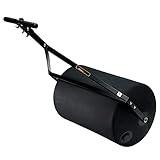
The Brinly 270-pound combination roller takes the top spot because it covers three jobs with one drum: push it by hand for tight spots, pull it behind you for open lawn, or hitch it to a tractor when the ground gets serious. It holds 28 gallons for a 270-pound filled weight on a 24-inch-wide poly drum, and it carries a 4.4 rating across 474 reviews, the largest review base of anything in the group.
The VEVOR 13-gallon roller earns the value slot. Its steel frame feels solid when full, the sealed plug does not leak, and 217 owners at a 4.4 average say it handles seed and sod work well. It simply is not heavy enough for major leveling, and at 13 gallons that is honest rather than a flaw.
The Agri-Fab 400-pound tow-behind is the choice when you have a riding mower or garden tractor and more than a quarter acre. Thirty-six inches of width and 400 pounds of water put down real compaction pressure, and at 4.4 across 204 reviews it holds up well. Its only recurring grumbles are packaging, specifically missing instructions and the occasional missing bolt.
Best Lawn Rollers for Leveling Yards at a Glance in 2026
The table below lists all ten rollers we evaluated, with the filled weight and drum width that actually determine performance. Filled weights assume water at roughly 8.3 pounds per gallon, plus the empty weight of the drum and frame.
| Product | Specifications | Action |
|---|---|---|
| Brinly 270 lb Poly Push/Tow Roller |
|
Check Latest Price |
 Goplus 12 Gallon U-Handle Roller Goplus 12 Gallon U-Handle Roller |
|
Check Latest Price |
| VEVOR 13 Gallon Steel Frame Roller |
|
Check Latest Price |
| Agri-Fab 400 lb Tow-Behind Poly Roller |
|
Check Latest Price |
 ARNOT 13×24 Inch Water and Sand Filler ARNOT 13×24 Inch Water and Sand Filler |
|
Check Latest Price |
 Goplus 30 Gallon Push/Tow Roller Goplus 30 Gallon Push/Tow Roller |
|
Check Latest Price |
 Brinly 485 lb 48 Inch Tow Roller Brinly 485 lb 48 Inch Tow Roller |
|
Check Latest Price |
 Outsunny 20 Inch Push/Tow Roller Outsunny 20 Inch Push/Tow Roller |
|
Check Latest Price |
 IRONMAX 30 Gallon Alloy Steel Roller IRONMAX 30 Gallon Alloy Steel Roller |
|
Check Latest Price |
 VEVOR 400 lb Tow-Behind LLDPE Roller VEVOR 400 lb Tow-Behind LLDPE Roller |
|
Check Latest Price |
Two patterns jump out immediately. Every roller that puts down more than about 300 pounds in this group is tow-behind, and every hand-push roller here tops out around 290 pounds filled. If your bumps are more than a couple of inches, that is where the dividing line falls.
Should You Even Roll Your Lawn? The Compaction Question, Answered
Rolling a lawn flattens the top inch or two of soil and does very little below that. That is why it works on frost-heave bumps and freshly filled ground, and why it does nothing for a yard that is uneven because the soil beneath is moving, saturated, or already packed down. In heavy clay, or on ground that stays wet, adding compaction is the wrong move and you should be aerating instead.
Experienced posters on TractorByNet and r/lawncare converge on the same framing: a roller finishes, it does not grade. When a TractorByNet thread asked about leveling a bumpy half-acre, the top suggestions were rototilling and reseeding, then hand-filling depressions with sand, then back-blading. The roller came last, if it came at all.
That is the honest answer, and it is also why a drum cannot fix the two most common real causes of bumpiness. Frost heave lifts the whole surface in winter and drops it in spring, so timing your pass for after the frost is out handles it. Mole tunnels and worm castings are the opposite problem: loose, airy soil that rolling makes worse.
So roll when your soil is loose and you are finishing a job. Do not roll when your soil is hard, when your problem is drainage, or when the cause is something the roller physically cannot reach.
1. Brinly 270 lb Combination Push/Tow Poly Roller – The Best All-Rounder
Brinly 270 lb. Combination Push/Tow Poly Lawn Roller with Easy-Turn Tethered Plug, 18 by 24″ – Flat Black
28 gallon / 270 lb filled
24 inch width, 18 inch diameter
Poly drum, push pull or tow
Pros
- Works as push
- pull and tow-behind
- Poly drum will not rust or dent
- Easy-Turn tethered plug never gets lost
- Evenly balanced on slopes
- Two year manufacturer warranty
Cons
- Handle can pinch your hand on tight turns
- Rubber grips are thin
- Drum can take a flat spot if stored full
The Brinly PRC-242BH-A2 is a roller we would put in the hands of most people reading this. The drum holds 28 gallons of water or sand, which works out to a 270-pound filled weight, and the 24-inch width covers a small lawn in a reasonable number of passes. At 4.4 stars across 474 reviews it has the deepest review base of any roller here, and the star distribution is unusually healthy, with 70 percent five-star and 16 percent four-star.
What stands out in the owner comments is the flexibility. Most rollers in this class are one thing or the other: a hand-push drum with a fixed handle, or a tow-behind with a hitch and no handle. Brinly makes the handle removable, so the same unit works as a push roller for a tight bed along a fence and behind a tractor for open lawn. Reviewers repeatedly note it is balanced enough to handle slopes without running away, which is not something every heavy drum manages.
The poly drum is the quieter hero here. It will not dent from a dropped tool or rust from standing water, and owners with several seasons of use report no corrosion at all. The Easy-Turn tethered plug is a small change that removes a real annoyance: the plug stays attached to the drum between fills, so you cannot lose it in the grass, and the extra-large fill opening takes a garden hose straight into the drum. Assembly is pictorial with pre-bagged labeled parts, which several buyers singled out as an unusually painless setup.
One storage note that shows up in the reviews and is worth repeating: drain the drum and do not leave it parked in one spot full through hot weather. A poly drum stored full and stationary can take a permanent flat spot, and a flat spot means the roller wobbles on every pass afterwards. Drain it first, then put it away.
Who the Brinly 270 lb suits
This is the right pick for most suburban yards up to about a quarter acre, and for anyone who wants one tool rather than two. If you seed in spring and overseed in fall, or you flatten new sod and then want to strip the same yard for stripes later, the 270 pounds is enough to press seed and settle mounds without needing a tractor.
It is a good match for owners who live somewhere with rust in the air or salty conditions. Every steel drum we looked at carries rust complaints from owners, and this one has no corrosion failure mode at all. Two year manufacturer warranty, made in the USA.
What gave us pause on the Brinly 270 lb
The handle is the weak point. Owners report pinching at the joints on tight turns if you are not wearing gloves, and the rubber grips are described as thin and slightly loose. On a 270-pound filled drum, a grip that shifts under load is a genuine handling issue rather than a cosmetic one.
It is also heavier than a typical hand-push roller expects to be. Pushing 270 pounds across soft ground is a real workout on the return stroke, and this is not the drum to grab for a large open lawn if you are not already using a machine to pull it. For a bigger property, look at the tow-behind options further down.
2. Goplus 12 Gallon U-Handle Roller – Best for Seeding on a Budget
Goplus Lawn Roller, 12 Gallon Water/Sand Filled Garden Drum Roller w/U-Shape Handle, Leak-Proof Inlet, Heavy-Duty Manual Push Tow Behind Sod Roller for Seeding Planting (13 by 20-Inch,Black)
12 gallon / 45 L capacity
13 by 20 inch drum
20.5 lb empty, metal frame
Pros
- Adjustable water weight lets you dial pressure per job
- Good for rolling in seed and topsoil
- Handle hangs on a wall for storage
- Easy assembly
- Top scraper bar limits debris build-up
Cons
- Fill opening is too small for sand or concrete
- Light even when filled
- Rubber drain plug can drip
This 12-gallon drum is a seeding tool, not a leveling tool, and it is honest about that. Reviewers describe it as good value and effective for rolling in seed, topsoil and sod work, where the job is pressing material into contact rather than moving a bump. It rates 4.2 across 448 reviews, and 58 percent of those are five-star.
The genuinely useful feature is adjustable weight. Fill it half and you can work fresh seed without pushing it too deep. Fill it and let a light rain or a dry patch firm the soil first, then fill it more. That control is the reason to buy a small roller rather than a large one for seeding work, and it is the single most repeated piece of praise in the reviews.
The U-shaped handle is comfortable and, unusually, hangs on a wall when you are done, which matters in a garage where a 20-pound drum on the floor is one more thing to move around. The metal frame and the top scraper bar both do their jobs, with owners noting the bar does keep clippings from packing onto the drum surface.
Now the honest part. Twelve gallons of water is about 100 pounds, and reviewers are consistent that this is not enough to flatten an established uneven lawn. The drum is 13 by 20 inches, so coverage per pass sits on the narrow side and a full lawn takes more trips than it would with a 24-inch drum. Buy this one to press seed and settle new sod seams, and expect to make many passes.
The fill opening is the limitation that catches people out. It is sized for a hose, not for a bucket, so filling with sand is impractical even though the drum accepts it in principle. A few owners also report the rubber drain plug leaving a slow drip, and a small number mention surface rust appearing within the first season, so drain it fully and dry it before storage.
Who the Goplus 12 gallon suits
Overseeders and new-sod installers. Anyone whose main goal is seed-to-soil contact on a small patch or a full small lawn will find this does the job properly. It is also one of the easiest rollers here to store and to move across a patio without help.
Anyone working a small yard with lots of foot traffic should look at the play area section of our small yard guide, where rolling is one of several fixes worth combining. A drum like this works well for pressing seed in the worn lanes around them.
What gave us pause on the Goplus 12 gallon
The weight ceiling is real and it is the reason this sits at number two rather than higher. Owners who bought it expecting to fix a visibly uneven lawn came back disappointed, and that is a fair outcome for the product rather than a defect.
There is no manufacturer warranty listed for this model, and the plug hardware is the part that generates most of the complaints. The next pick uses a sealed screw-in design that removes that whole category of problem.
3. VEVOR 13 Gallon Steel Frame Roller – Best Value for Seed and Sod
VEVOR Lawn Roller 13 Gallon Large Capacity Sand/Water Filled, Heavy Duty Steel Material, with Easy-Turn Plug and U-Shaped Ergonomic Handle for Convenient Push and Pull, for Garden, Farm, Park, Black
13 gallon / 46 L capacity
Heavy-duty steel frame
22.6 lb empty
Pros
- Steel frame feels solid and stable when full
- Sealed plug does not leak
- Assembles quickly
- Excellent for rolling in seed and sod
Cons
- Too light for rough ground and major leveling
- Hard to drain fully without a pump
- Drum closure can rust within a year
Among the twelve-gallon and thirteen-gallon marketplace rollers in the same shape and size, the VEVOR rates higher than most of its peers. It sits at 4.4 stars across 217 reviews, with 65 percent five-star. What separates it in the reviews is the steel frame, which owners describe as genuinely solid and stable when the drum is full, and a sealed easy-turn plug that does not drip.
Buyers use it for what the weight allows: rolling in new seed, laying sod, and spreading crusher dust or topsoil. A 13-gallon drum is about 110 pounds filled, and paired with a 22.6-pound empty weight that is a stable, controllable implement for finishing work. The metal scraper rod clears debris from the drum, and the rounded drum edge is reported to turn without scaring the turf.
The U-shaped handle hangs for storage, which puts it in the same convenience class as the Goplus 12-gallon but with a sturdier frame. Assembly is straightforward, and the manufacturer also offers this drum in a larger gallon version if you want to step up within the same design language.
The limitation is weight, and it is the same limitation as the previous pick. Thirteen gallons is not enough to move meaningful soil, and owners say so directly. If your yard is bumpy rather than simply unfinished, this is the wrong tool and no amount of enthusiasm changes the arithmetic.
Reviewers report that fully emptying the drum is awkward without a pump, and a few mention the drum closure developing rust within about a year of storage. Both are manageable: drain it, tip it, wipe it, and put it away dry.
Who the VEVOR 13 gallon suits
Seeders and sod layers working a lawn up to maybe a quarter acre who want a frame that feels solid under load. In our view the difference between this and the cheaper drums is mostly frame gauge and plug quality, and those are exactly the parts that fail first.
It is also a good pick for anyone rolling crusher dust over a driveway approach or patio base, where the goal is consolidation rather than leveling turf. The weight is right for that job and the frame takes the abuse.
What gave us pause on the VEVOR 13 gallon
There is no warranty listed in the product details, which is common at this tier but worth weighing. Owners of competing models in the same capacity class report a three-year limited warranty from their manufacturer, so the difference in after-sale cover is real.
The rust note on the drum closure is a genuine recurring comment rather than a one-off. It does not affect use, but it means this roller wants to be stored dry rather than parked out in the weather between seasons.
4. Agri-Fab 400 lb Tow-Behind Poly Roller – Best for Large Yards
Agri-Fab 45-0606 18″ x 36″ Tow Behind Poly Lawn Roller 400 lbs weight with water, Poly Drum and Steel Frame, with Plug. Designed for Lawn and Garden Tractors
18 by 36 inch poly drum
400 lb filled with water
Under 50 lb empty
Pros
- 36 inch swath covers a lot per pass
- 400 lb of water puts down real pressure
- Poly drum will not rust
- Plug seats well and takes a garden hose
Cons
- Assembly instructions sometimes missing from the box
- Plug can be hard to seat fully
- Occasional reports of missing hardware
This is the point at which lawn rollers stop being hand tools. The Agri-Fab 45-0606 has an 18-inch diameter, 36-inch wide poly drum that reaches a 400-pound filled weight with water, and it hitches to a riding mower, zero-turn, or garden tractor. It rates 4.4 across 204 reviews, and 75 percent of those are five-star.
Owners consistently highlight two things. The 36-inch pass is fast, cutting the number of trips across an open lawn sharply compared with a hand-push drum. And the 400 pounds, once filled, is enough weight to settle uneven ground and level new soil rather than just pressing seed. The poly drum also keeps the empty weight under 50 pounds, so it is still light enough to move into a shed by yourself when it is drained.
The three-year limited warranty on manufacturing defects is the longest among the ten rollers here, and the drum is made in the USA. If you are going to tow something across gravel driveway edges or rough ground regularly, poly is the material that will not punish you for it.
Its weaknesses are almost entirely about the arrival, not the machine. Owners report the assembly instructions being absent from the box, and there are a few reports of missing hardware on delivery. Neither means the roller is defective; both mean you should check the bag of fasteners before you start and expect to find assembly diagrams online.
The plug is the other recurring note. It seats well once you understand it, but some owners find it difficult to push fully into the drum, and a plug that is not fully home is a plug that drips onto your lawn and onto your driveway. Push it home with both hands and check it before you start filling.
Who the Agri-Fab 400 lb suits
Owners of a riding mower or garden tractor with anything from roughly a third of an acre up to a full acre who are dealing with genuine unevenness. This is the roller to buy if you want the job done rather than made to look done, and if you will only fill it once or twice a year.
It also suits anyone tired of hand-pushing a loaded drum across a slope. The weight transfers to the machine, the 36-inch width multiplies your effective working speed, and the same roller can still be filled partway and pulled by hand for a small patch.
What gave us pause on the Agri-Fab 400 lb
It is useless without a tow vehicle. If you mow with a walk-behind, this is dead weight in the garage and you want the Brinly 270-pound push/pull roller instead. That is not a flaw in the product, it is a fit issue, and it is worth checking before you commit.
Filling a 400-pound drum takes time. Owners mention the plug seating difficulty, and the practical reality is that a drum this size is a hose on one end and a patience exercise on the other. Plan to fill it near where you will use it rather than dragging 400 pounds of water across the yard.
5. ARNOT 13×24 Inch Water and Sand Filler – Best for Sod and Paver Work
Lawn Roller, 13×24-Inch, 48L/ 13 Gallons Heavy-Duty Push/Tow Behind Water/Sand Filled Garden Drum Roller for Park, Garden, Yard, Ball Field, Green
13 gallon / 48 L capacity
13 by 24 inch drum
24 lb empty
Pros
- Good weight for sod
- seeding and paver base work
- Steel frame is hard to dent
- Wall-hangable compact storage
- Simple to assemble and fill
Cons
- Plug can leak
- Drum sometimes arrives with dents
- Too light for larger leveling jobs
The ARNOT 13×24 sits at 4.4 across 147 reviews, with 65 percent five-star, and its owners point it at a specific set of jobs: laying sod, working seed into soil, and consolidating paver base or sand under pavers. Those are jobs where you want controlled weight over a defined area rather than a big drum sweeping a whole lawn.
The steel frame is sprayed with plastic coating, which is why the frame is described as hard to dent and rust-resistant. At 24 pounds empty with a 13-gallon drum, it is a middle-weight implement: heavier feeling in the hand than the 12-gallon budget rollers, lighter than the 30-gallon models below. Owners like the balance for close work near edges and beds.
Storage is a genuine advantage. The whole thing hangs on a wall, so it does not take up floor space in a small garage, and a 13 by 24 inch drum runs in tight strips along a fence or a foundation line without crowding the edge.
We could not find any customer photos for this model, so our read rests on the written reviews and the published specifications. That is a thinner evidence base than some of the others here, and we would rather say so than pretend otherwise.
Who the ARNOT 13×24 suits
Anyone doing hardscape-adjacent work: setting pavers, bedding sand under a walkway, flattening new sod, or finishing a small topdressing job. A narrower drum is genuinely more useful than a wide one when you are working along a straight edge and want the roller to stay on the line. It is the same narrow-pass logic that matters when you are working a tight side yard between a fence and a swing set, the kind of layout we covered in our small yard guide.
It is also a good pick for a yard that is finishing rather than broken, where you want a light pass to settle seed and topdressing without risking real compaction. Fill it partially for that work and the 13 gallons becomes a dial rather than a fixed weight.
What gave us pause on the ARNOT 13×24
The plug is the recurring problem. Owners report leaking, and one reported the plug breaking in half. A rubber drain plug that drips leaves a wet trail across your new lawn, which is counterproductive on the exact jobs this roller is good at.
Some buyers also reported the drum arriving with dents or creases from transit, and the printed instructions are minimal. Inspect the drum before you fill it, and budget five minutes at the start for figuring out the assembly without a proper manual.
6. Goplus 30 Gallon Push/Tow Roller – Best Compact Power
Goplus Lawn Roller, Push/Tow Behind Lawn Roller, 30 Gallon/113L Water Sand Filled Sod Roller Drum Roller with Detachable Gripping Handle, Yard Roller Pull Behind a Tractor for Garden Yard Park Farm
30 gallon / 113 L capacity
Powder-coated metal frame
41 lb empty
Pros
- Adds real weight that levels problem areas in a few passes
- Powder-coated frame resists rust
- Handle detaches for tow-behind use
- Straightforward assembly
- Top-rated with heavy
- compact construction
Cons
- Snap-in plug seals poorly and can leak
- Thin-gauge steel dents easily on stones and gravel
- Handle joint tube has broken for some owners
This ties for the highest rating we found, at 4.5 stars across 144 reviews, with 70 percent five-star. The design choice that sets it apart is the 30-gallon, 113-liter steel drum with a detachable handle, so it works as a hand-push roller or locks to a tow bar for tractor use. At 41 pounds empty and roughly 290 pounds full of water, it has real leveling weight in a package that still fits in a garage.
Owners report that this roller flattens problem areas in a few passes rather than many. The powder-coated frame is repeatedly praised for holding off rust, and the scraper bar and rounded corners are reported to make turns smooth on the turf instead of tearing it. Assembly is simple enough that several owners finished it without reading the instructions.
For a yard between a quarter acre and half an acre, this is a well-balanced tool: heavy enough to do real finishing work, compact enough that you do not need a tractor to move it, and the detachable handle means you can still tow it when the job gets bigger.
What the critical reviews concentrate on is build detail. The plug is a snap-in type rather than a screw-in, and it does not always seal, which means slow drips. The fill hole is small for sand. And several owners report the thin tube at the handle-to-drum connection breaking, along with thin-gauge steel that dents from contact with stones and gravel.
That last point deserves emphasis, because it separates this model from the poly drums. A 30-gallon drum at roughly 290 pounds filled puts real stress on a thin-gauge shell. If your yard has stones in the soil or you plan to tow across gravel, budget for a poly drum instead.
Who the Goplus 30 gallon suits
Someone with a mid-size yard who wants the weight of a tow-behind without committing to a hitch setup. If your problem is bumps of an inch or two in a lawn under half an acre, 290 pounds is the amount of pressure that settles them in a season rather than a decade.
It also suits buyers who keep a compact tractor for other work but do not want a dedicated attachment. The handle detaches, the tow bar attaches, and you get one tool rather than two purchases.
What gave us pause on the Goplus 30 gallon
The plug is the single most criticized component, and the snap-in design is why. A screw-in plug with an o-ring is a different reliability class, and you can see the price difference between designs that look identical in a listing photo.
Thin-gauge steel is the second concern, and it interacts badly with the weight. Combined with the drum seam being reported to split under heavier towing loads, this is a roller to keep on turf and lawn edges rather than on gravel and stony ground.
7. Brinly 485 lb 48 Inch Tow Roller – Best for Wide Coverage
Brinly 485 lb. Tow Behind Poly Lawn Roller with Easy Turn Plug, 18 by 48″
54 gallon / 485 lb capacity
48 inch width, 18 inch diameter
Poly drum
Pros
- Widest roller here at 48 inches
- Highest capacity in the group at 485 lb
- Poly drum will not dent or rust
- Universal hitch pin fits most ATVs and tractors
- Two year warranty
Cons
- Empty drum is bulky to maneuver and store by hand
- Poly surface marks from gravel and sharp stones
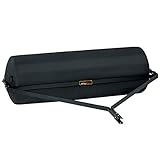
The Brinly PRT-482SBHC-A is the widest roller in this group at 48 inches, and it holds 54 gallons for a 485-pound filled weight. That combination means fewer passes over any yard large enough to need it, which is the entire point. It rates 4.3 across 126 reviews with 64 percent five-star and 20 percent four-star, so the satisfaction is broad rather than polarized.
Owners highlight the coverage and the capacity in the same breath, which is exactly the pairing that matters. A 48-inch pass at 485 pounds is what gets an acre flattened in a fraction of the trips a 24-inch drum would need. The poly drum will not rust, and the extra-large fill opening takes a garden hose, and the included universal hitch pin fits most riders, tractors, zero-turns and ATVs without hunting for the right pin.
Assembly is pictorial with matched fastener packs, which is the packaging complaint we heard most on the lower-end rollers here and the one Brinly gets right. Made in the USA with a two-year warranty, rounded drum ends, and a metal scraper bar to keep turf from building up on the surface.
The honest drawback is handling. Even empty, a 48-inch drum is a large awkward object, and owners note it is bulky to maneuver and store by hand. If your storage situation is tight or your access to the yard is through a gate, that is a real daily friction point that the capacity does not offset.
It suits owners who have a tractor or ATV but not the storage to spare. There is no handle and no push configuration here, so 485 pounds of water-filled drum is not something you move on foot. This is a machine-and-drum combination, not a hand tool.
Who the Brinly 485 lb suits
Owners of an acre or more, or several acres, who already have a tractor or ATV and want leveling to be a one-afternoon job rather than a season of passes. The width means you are not spending the whole weekend driving back and forth, and the weight means each pass counts.
It is also the natural second roller for a lawn maintenance business, where a drum that covers double the ground per pass and never rusts is a straightforward productivity argument. If you are towing across gravel regularly, note the poly surface will mark, but it will not corrode.
What gave us pause on the Brinly 485 lb
Capacity this high raises the stakes on the fill medium. If you intend to fill it with sand for maximum weight, you are handling a heavy drum, and the sheer volume of material matters more here than it does on a 13-gallon roller.
The two-year warranty is shorter than the three-year cover on the Agri-Fab tow-behind. For a purchase of this size, that difference is worth weighing alongside the wider pass, because you are trading coverage per pass against warranty length.
8. Outsunny 20 Inch Push/Tow Roller – Best for Storage and Small Yards
Outsunny 20-Inch Push/Tow Behind Lawn Roller 16 Gal Water or Sand Fill
15.9 gallon / 202.2 lb max filled
20 inch width
22 lb empty
Pros
- Compact 20 inch size suits smaller areas
- Handle detaches into three pieces for storage
- Adjustable weight with water or sand
- Works for sod laying and overseeding
Cons
- Steel drum rusts inside and at chipped paint points
- Side drain plug traps standing water
- Can run away on inclines when full
The Outsunny 845-272 is a 20-inch-wide steel drum that holds 15.9 gallons for a maximum filled weight of 202.2 pounds, and it suits buyers whose real constraint is storage. The U-shaped handle detaches into three pieces, so the whole roller packs down flat in a corner of a garage. It rates 4.2 across 105 reviews, with 61 percent five-star.
Owners like it for smaller yards and for sod laying and overseeding. The steel drum has spray-treated rust protection and rounded edges for a manageable turning radius, and the push-and-tow design means the same drum works in a tight side yard or behind a riding mower. Twenty inches is narrower than most here, which is a feature when you are working along a fence.
Adjustable weight is the practical advantage over a fixed drum. Half full for seed work, full for finishing passes, empty for storage within a minute of draining the plug.
The complaints are concentrated and consistent: rust. Owners report rust developing on and inside the steel drum, particularly at points where the paint coating chips, and the side-mounted drain plug leaves standing water in the drum that is hard to get out completely. Standing water inside a steel drum is how you get a rusted drum, so this one genuinely needs to be drained, tipped and wiped rather than just emptied.
Two smaller notes. The hardware in the box is occasionally the wrong size, so check fasteners before assembly. And at 202 pounds filled, owners warn it can run away on inclines if you are pushing it downhill, which is a handling consideration on any sloped site.
Who the Outsunny 20 inch suits
Owners of small or awkwardly shaped yards where a 24-inch drum will not maneuver. Narrow side yards, front strips between a fence and a walkway, and tight areas around garden beds are where a 20-inch drum earns its footprint.
It is a good match for anyone who wants a roller that stores flat. The three-piece handle is a small design decision with an outsized effect on whether the roller ends up in the corner of the garage permanently.
What gave us pause on the Outsunny 20 inch
Rust on a steel drum is not a surprise, but the frequency of the complaint in the reviews is worth weighting. If you live somewhere with high humidity or coastal air and you do not want a yearly rust treatment, spend up on a poly drum instead.
At 202 pounds filled, it is near the practical limit for hand-pushing over uneven ground, and the run-away warning on slopes is real. On a flat, compact yard it is fine; on a hill, it is more than you want to manage alone.
9. IRONMAX 30 Gallon Alloy Steel Roller – Best for Tractor Towing
IRONMAX 30 Gallons/113 L Manual Lawn Roller, Water & Sand Fillable, Green
30 gallon / 113 L capacity
Alloy steel with anti-rust paint
41 lb empty
Pros
- Good value for a 30 gallon steel roller
- Easy assembly
- Screw-in plug and hitch pin included
- Maneuvers more easily than expected for its size
Cons
- Thin-gauge steel drum dents after very little use
- Water plug and o-ring tend to leak
- Drum seam can split under heavier tow loads
The IRONMAX IR4009 is a 30-gallon, 113-liter alloy steel drum at 41 pounds empty, and it carries a tow-behind latch and pin alongside a circular push handle. It rates 4.2 across 100 reviews with 60 percent five-star, and owners consistently describe it as good value for a steel drum of this size with genuinely easy assembly.
The screw-in plug is worth calling out, because it is the component that most often causes complaints elsewhere in this group. Owners specifically praise the plug and hitch pin for making filling and towing straightforward, and the triangular handle bar structure is reported to add stability in a way the straight-bar designs do not.
At roughly 290 pounds full, it matches the Goplus 30-gallon on weight and beats it on plug design, which makes it the more sensible choice if you fill it regularly and store it in a damp shed. Steel also means it will not puncture the way a poly drum can on sharp rock, which matters if your tow path crosses gravel.
We could not find customer photos for this model, so as with the ARNOT our read rests on the written reviews and the published specifications. Reviewers also report it maneuvers more easily than they expected for its footprint, which is useful information given the 39-inch listed cutting width.
Who the IRONMAX 30 gallon suits
Anyone with a tractor who wants steel durability and a screw-in plug, and who is willing to keep the roller on turf rather than on stone. At 290 pounds it has the weight to settle real unevenness in a half-acre yard at a fraction of what a poly drum of that capacity runs.
It also suits buyers who store equipment in damp conditions and would rather have steel that shrugs off a stray wet season than worry about a poly drum taking a flat spot. Steel does not develop a permanent flat spot if you leave it stationary, though it will tell you about neglect through rust.
What gave us pause on the IRONMAX 30 gallon
Thin-gauge steel is the dominant complaint, and it is repeated: reviewers report the drum denting from small stones within one or two uses, and one reported a split seam after towing over gravel. At 290 pounds filled, the shell is carrying a lot of load for the material thickness.
The plug and o-ring still leak for some owners, which is a milder version of the complaint but still a leak. If you fill and drain the drum regularly, expect to check the o-ring seating each time rather than assuming it is sealed.
10. VEVOR 400 lb Tow-Behind LLDPE Roller – Best for ATV and UTV
VEVOR Tow Behind Lawn Roller, 400lbs Sand/Water Filled Yard Roller, LLDPE Drum and Steel Frame Sod Roller with Easy-Turn Plug, Tow Behind a Tractor or ATV for Lawn, Garden, Farm, Park, Black
400 lb sand or water capacity
LLDPE drum on steel frame
43.3 lb empty
Pros
- 78 percent five-star across 88 reviews
- Durable steel frame and thick-feeling drum
- Assembly is a few bolts and nuts
- Simple hook-up to a tractor or ATV
Cons
- Drum can puncture on sharp rock over hard surfaces
- Axle retaining pin may need a smaller pin
- Occasional missing hardware
The VEVOR 400-pound tow-behind ties for the highest rating in the group at 4.5 across 88 reviews, and its 78 percent five-star share is higher than any other roller here. Owners cite easy assembly that takes a few bolts and nuts, a straightforward hook-up, and construction that flattens mole runs and tilled garden beds effectively.
The design detail that stands out is the twin inlets. Two water inlets that can each be filled separately mean you can load one end, roll it a while, then balance the other end, which is a useful feature on uneven ground where you can feel the drum loading up on one side. The extended tow hook is compatible with common ATV and tractor models, and the drum is LLDPE mounted on a heavy-duty steel frame.
At 43.3 pounds empty and 400 pounds filled, it carries a lot of weight for how little you have to move when the drum is drained, and it hangs for storage when you are done. That combination of rating, hook-up flexibility and storage is why it closes our list even with the fewest reviews of the ten.
Two practical notes from the reviews. The LLDPE drum can puncture if rolled over sharp rocks on hard surfaces, which is a real risk on a gravel drive or a rocky section of yard, and there is no fixed scraper bar, so wet soil that adheres to the drum has to be cleared by hand.
The axle retaining pin is the other complaint, with owners reporting the supplied pin is a touch oversize and needs replacing with a smaller one for a proper fit. That is a five-minute fix if you notice it, but it is the kind of small thing that annoys people on assembly day.
Who the VEVOR 400 lb suits
ATV and UTV owners, and anyone whose tow vehicle has a different hitch geometry from a riding mower. The extended tow hook is why it works across more machines than the pin-and-latch designs elsewhere here, and 400 pounds of water is real weight for flattening mole runs and settling new beds.
It is also a good choice for rolling in crusher dust or topdressing over a larger prepared area, because the twin inlets let you control the weight as you go and the drum width suits an open space better than a hand-push model.
What gave us pause on the VEVOR 400 lb
Poly drum durability is the tradeoff. LLDPE is rust-proof and dents far less easily than thin steel, but it can be punctured by a sharp stone, and a puncture at the seam means a slow leak you will find on your driveway rather than in the yard.
Missing hardware on arrival is reported here too, though rarely. Check the box before assembly, and inspect the axle pin fit at the same time, because those are the two things that come up most often.
How Heavy Should Your Lawn Roller Be?
Match the filled weight to the area and the severity of the bumps. Water weighs about 8.3 pounds per gallon and sand weighs about 14 pounds per gallon, so a 12-gallon drum gives you roughly 100 pounds of water or 170 pounds of sand, and a 30-gallon drum gives you roughly 250 pounds of water or 420 pounds of sand. That arithmetic is the whole decision, and almost every product listing buries it.
As a working rule from the owner experience we read: a quarter acre or less with bumps under an inch wants a 12 to 20 gallon drum. A quarter to half acre with inch-plus unevenness wants a 30-gallon drum at a minimum, which is the range the Brinly 270-pound and the two 30-gallon steel rollers cover. Anything past half an acre with real unevenness wants a tow-behind at 400 pounds or above, and past an acre the width starts to matter as much as the weight.
There is an upper limit too, and it is the compaction caveat again. If your soil is already dense or clay-heavy, a heavier roller does not flatten your yard, it seals it. In that case the correct answer is aeration and topdressing, not a bigger drum, which is a point that came up repeatedly on TractorByNet.
One more consideration worth raising: filled weight is not the same as effectiveness. A wide drum at 400 pounds moves far more soil per pass than a narrow one at 270, which is why the 48-inch Brinly and the 36-inch Agri-Fab cover ground faster. If your instinct is that more pounds is always better, our leveling guide for another class of equipment makes the same point about matching load to the surface rather than maximising it.
Steel vs Poly: Which Drum Material Should You Buy?
Poly will not rust and will not dent from a dropped tool, which is why the Brinly models and the VEVOR tow-behind use it. Steel shrugs off stones and gravel without puncturing, and in this guide it is also how you get 30 gallons of drum capacity for less money, which is why the two 30-gallon steel rollers land where they do in the budget.
Our recommendation by situation: poly for coastal, humid, or high-rainfall climates and for anyone who will leave the drum outside or forget to drain it. Steel for dry climates, for towing across gravel, and for buyers who want more capacity per pound spent on the frame.
Watch one failure mode on either material. A poly drum stored full and stationary in hot sun can take a permanent flat spot, which owners of the Brinly 270-pound mention specifically. A steel drum with standing water inside will rust from the inside out, which owners of the Outsunny and the VEVOR 13-gallon both report. The fix in both cases is the same: drain it, tip it, wipe it, store it dry.
There is also a mid-ground that costs more and solves both problems: a poly drum on a steel frame, which is what the Agri-Fab 400-pound does. If you are buying a tow-behind and storing it in a shed over winter, that construction is the one we would specify.
Water or Sand: Which Fill Should You Use?
Water is the default for a reason: it is free, adjustable to the exact pound, and easy to drain. Sand is roughly 70 percent heavier per gallon, so a 30-gallon drum goes from about 250 pounds to about 420 without any change to the machine. The trade-off is that sand does not come back out easily, and a drum with damp sand in it is a permanent weight problem.
Use water for seeding work, where you want to control how deep the seed is pressed. Use sand when you have filled a depression with sandy loam and want to consolidate it, or when you need the extra weight for persistent bumps and the roller is too small to get there with water alone.
Posters on TractorByNet raise a point retail listings never do: the fill material for depressions has to be dry. Damp topdressing applied to fill a low spot humps and will not spread evenly, which creates a new bump for the roller to find. Dry the material first, fill, level, then roll.
Storage planning follows from this. Water drains in minutes and lets you store the drum light. Sand does not, so if you are filling with sand, plan the season’s work and then dig it out and rinse it, or accept a permanently heavy drum in the corner of the shed.
Push, Tow-Behind or 3-Point Hitch: Picking the Right Configuration
Push rollers under about 20 gallons are for small lawns, seeding work, and tight areas. They are maneuverable and cheap, and you will not level anything serious with them. Everything past about 25 gallons of real work belongs behind a machine, because that is where the weight becomes usable rather than a workout.
Tow-behind via a pin and latch, as on the Agri-Fab and the IRONMAX, fits most riding mowers, zero-turns, and garden tractors. Tow-behind via a hook, as on the VEVOR 400-pound, is the more flexible option and works with ATVs and UTVs as well. The detachable-handle models, like the Brinly 270-pound and the Goplus 30-gallon, are the compromise that lets one roller cover both jobs.
Three-point hitch rollers occupy a different category entirely: they are for multi-acre properties worked with a compact tractor, and they carry enough weight to move real volumes of soil. None of the ten we evaluated is a 3-point hitch roller, and if you are in that tier the decision is about tractor category and hydraulics rather than drum capacity, so a tractor dealer is a better first stop than this list.
One practical note about tow-behind frames: pin and latch systems are not universal. Check your machine’s hitch geometry before you buy, and keep the retaining pin and hardware in the box until you have confirmed the fit on a flat, empty part of the lawn.
When a Roller Is the Wrong Tool – What Experienced Owners Use Instead
A roller only affects the top inch or two, so if the cause of your unevenness sits below that, no drum will fix it. The TractorByNet thread on leveling a bumpy lawn is the clearest source we found, and its advice is consistent enough to repeat here: rototill and reseed is the first choice for genuinely uneven ground, then hand-fill depressions, then roll as a finishing pass.
For a larger property, experienced posters reach for grading tools rather than finishing tools. A box blade set to cut and fill moves far more material than any roller, and a 48-inch landplane is reported by one owner to have smoothed several old lawn areas and nine complete new lawns, with the note that it is easier for a novice than a box blade. A chain harrow pulls loose material together without packing it down.
There are also improvised methods that experienced owners report outperforming a purchased roller. Dragging a chain-link fence behind a tractor acts as a homemade chain harrow, and a weighted box-spring mattress frame pulled behind a tractor breaks up and levels surprisingly well. One poster paired a box spring with a spike aerator in front specifically so the frame would not pack the soil, which is a direct answer to the compaction worry.
For the DIY route: a land leveler or drag mat for finer grading, a box blade for cutting high spots and filling low ones, and hand-filling small depressions with sandy loam before a light roll. Just think about where the water goes next. Filling depressions without a drainage plan relocates the ponding problem rather than solving it, and that caution came up more than once in the forum consensus.
How to Roll a Lawn Properly
Wait for the frost to be out. Rolling frozen or thawing ground damages the soil structure. The timing rule repeated across the tractor forums is spring, after the frost has gone, when the ground is firm enough that you are not sinking into it but still soft enough for the rolling to do something.
Check the soil with your boot. It should dent under pressure and hold the shape, not smear into mud. If it smears, wait. Too wet and the roller compacts a slurry; too dry and nothing settles.
Fill low spots first, with dry material. Use sandy loam, screed it level, and let it settle before you roll. Damp fill humps and spreads badly.
Set the weight to the job. Part-fill for seed and light finishing, full-fill for real bumps, sand-filled when water alone will not get there.
Work from the house outward. Start at the far edge of the lawn and roll back toward yourself so you are always walking on finished ground and can see the result as you go.
Make two or three passes, not one. Change direction by about 90 degrees on the second pass. More weight per pass matters less than consistent coverage.
Water after seeding. If you rolled seed in, water it in. The roll presses the seed to the soil; the water triggers germination and holds the contact.
Drain and store dry. Empty the drum, tip it, wipe it, and get it off the ground. This is the step that decides whether the roller is still good in five years.
Two timing notes. Spring rolling handles frost heave, and fall rolling after overseeding handles seed-to-soil contact. Doing both in one year on the same lawn is usually unnecessary, and the second pass is the one that adds compaction risk.
Renting vs Buying a Lawn Roller
If you are leveling once, renting is the sensible path. Posters on r/landscaping regularly recommend it for exactly this reason, and a rental yard will often swap between a push roller and a larger tow-behind depending on the job. There is no reason to own a 400-pound drum that will sit in a shed for three years.
Buying makes more sense when you seed every year, lay sod regularly, or maintain more than about half an acre. The economics come down to frequency: one job favors rental, a seasonal habit favors ownership, and the space a tow-behind takes up is a real cost that does not appear in the price.
Whichever you choose, a rental drum deserves the same drain-and-dry discipline as one you own. Rental equipment is frequently returned with water still inside, and the next renter inherits whatever that does to the drum.
Frequently Asked Questions
Does rolling a lawn help flatten it?
A roller flattens the top inch or two of soil, which is enough to settle bumps, press seed into the ground, and flatten new sod. It does not fix unevenness caused by frost heave, washout, settling, or soil movement below the surface. Experienced owners on TractorByNet treat it as a finishing tool that comes after filling and grading, not as a way to correct a genuinely out-of-level yard.
How heavy should a lawn roller be?
Match filled weight to area and severity. A quarter acre with bumps under an inch needs roughly 100 to 200 pounds. A quarter to half acre with inch-plus unevenness needs around 250 to 300 pounds. Past half an acre with real unevenness, use a tow-behind at 400 pounds or more. Water weighs about 8.3 pounds per gallon and sand about 14, so a 30-gallon drum is roughly 250 pounds of water or 420 pounds of sand.
What is better, steel or poly lawn roller?
Poly drums will not rust and will not dent from a dropped tool, which makes them the better choice in humid, coastal, or high-rainfall climates. Steel drums are heavier for the same volume and survive gravel and sharp stone without puncturing, which makes them better for dry climates and towing across rough ground. Watch for two failure modes: a poly drum stored full and stationary in heat can take a flat spot, and a steel drum with standing water inside will rust from the inside out.
What can I use if I don’t have a lawn roller?
For grading, use a box blade, a land leveler, or a drag mat. For pulling loose material together without packing it, a chain harrow works, and experienced owners report that dragging a chain-link fence behind a tractor acts as a homemade version. A weighted box-spring mattress frame pulled behind a tractor is another improvised method owners report outperforming a purchased roller. For small depressions, hand-filling with dry sandy loam and raking level is often all you need.
Should I use a lawn roller on new sod?
Yes, rolling new sod is one of the jobs rollers are genuinely good at. Lay the sod, water it so the soil underneath is moist rather than dry, then roll it to press the seams down and bond the sod to the soil below. Roll in the same direction the sod was laid, and make two passes rather than one. Do not roll sod so early that the roots have not anchored, and do not roll dry ground, since that leaves the sod sitting on a dry layer.
What is the best heavy-duty lawn roller?
Heavy-duty depends entirely on the weight. A 30-gallon drum filled with water puts down roughly 250 pounds, and a 30-gallon drum filled with sand puts down about 420. For 300 to 500 pounds of real leveling power you need a tow-behind roller of 400 pounds or more, which means a riding mower, zero-turn, tractor, or ATV is required. Among hand-push options, nothing under about 25 gallons will move meaningful soil, regardless of how it is marketed.
Is it good to roll your lawn with a roller?
It is good when your soil is loose and you are finishing a job, such as after seeding, overseeding, or laying sod. It is counterproductive when your soil is already compacted, when you have heavy clay, or when the problem is drainage, because rolling compacts the top inch or two and makes water penetration worse. If your lawn is hard to the boot and the blades are thinning, aerate instead of rolling. If the bumps come from frost heave, wait until after the frost is out and then roll.
How can I fix a bumpy lawn?
Identify the cause first, because the fix differs completely. Frost heave resolves with a spring pass after the frost is out. Mole tunnels and worm castings are loose, airy soil that rolling makes worse, so fix those with aeration, moisture management, and reseeding. Settled or filled areas need dry sandy loam added, screened level, then rolled. True grade changes need a box blade or land leveler, not a roller. A roller is the last step, not the first.
Final Verdict: Which Lawn Roller Is Worth Buying in 2026
If you take one recommendation from this guide, take the Brinly 270-pound combination push/tow poly roller. At 28 gallons and a 270-pound filled weight on a 24-inch drum, it covers the hand-push, pull and tractor-attachment roles in one machine, and it carries the largest review base in the group at 4.4 across 474 reviews. Drain it before you store it and the flat-spot problem owners warn about never happens.
The rest of the list maps cleanly onto how much yard you have. A quarter acre or less with bumps under an inch means the VEVOR 13-gallon or the ARNOT 13×24, both of which are built for finishing work rather than moving soil. Between a quarter acre and half an acre with inch-plus unevenness means the Goplus 30-gallon or the IRONMAX 30-gallon at roughly 290 pounds filled. Past half an acre, the tow-behinds take over, and there the Agri-Fab 400-pound is the balanced pick while the Brinly 485-pound wins on coverage and the VEVOR 400-pound wins on hook-up flexibility for ATVs.
And if your yard is not actually bumpy but broken, buy a spade and a box of sandy loam instead. The best lawn rollers for leveling yards in 2026 are finishing tools, and the owners who get the results they want are the ones who know the difference between a bump a drum can settle and a grade change only a blade can fix.