

An infrared grill is a grill whose burners heat a ceramic, metal or radiant-glass plate that then radiates infrared energy straight onto the food, instead of relying on hot air and grate contact alone. That direct radiant heat delivery is why the best infrared grills for searing hit surface temperatures fast enough to build a proper crust in under two minutes per side.
Here is the problem with shopping in this category. The word infrared is used commercially for at least four different architectures, and they are not equivalent. A 1500 degree top-down tabletop broiler and a cabinet gas grill with a side burner that claims 1800 degrees are both sold as infrared, but they behave nothing alike. If you buy the wrong architecture for the way you cook, no marketing claim will save the dinner.
So we ranked these grills on the variable that actually decides a sear: how hot the metal under your food gets, how much of it there is, and how quickly it recovers. Every temperature figure below is manufacturer-stated rather than measured by us, and where a brand publishes nothing, we say so rather than guess. We also tell you how to check the claim yourself with an infrared thermometer. If you are still narrowing down a portable setup, our portable camping grill guide covers the non-infrared options worth knowing about.
Table of Contents
- Top 3 Picks Best Infrared Grills for Searing (October 2026)
- Best Infrared Grills for Searing in 2026
- How Infrared Grill Searing Actually Works
- Real Infrared vs Marketing Infrared
- 1. Charbroil Big Easy TRU-Infrared 3-in-1 Smoker, Roaster and Gas Grill
- 2. Big Horn Outdoors 1500F Infrared Propane Grill
- 3. Napoleon Prestige 500 RSIB Propane Gas Grill
- 4. Napoleon Rogue PRO 625 Five-Burner Grill with Infrared Sear Station
- 5. Charbroil Pro Series Amplifire Four-Burner Grill
- 6. Solaire Everywhere SOL-EV17A Portable Infrared Grill
- 7. Solaire SOL-IR17BWR Portable Infrared Grill With Warming Rack
- 8. Schwank 1500F Gen 2 Portable Infrared Grill
- How to Sear a Steak on an Infrared Grill
- Who Should Not Buy an Infrared Grill
- Infrared Grill Buying Guide: What Actually Decides the Sear
- Frequently Asked Questions
- The Verdict: Which Infrared Grill to Buy
Top 3 Picks Best Infrared Grills for Searing (October 2026)

Charbroil Big Easy TRU-Infrared
- 180 sq in infrared grate
- Flare-up resistant TRU-Infrared system
- 3-in-1 fry roast and smoke
- Rotary ignition

Big Horn 1500F Infrared Grill
- 19000 BTU dual infrared burners
- Reaches 1500F in about 5 minutes
- Top-down salamander broiling
- 7-tier adjustable rack
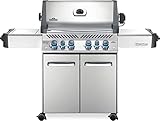
Napoleon Prestige 500 RSIB
- Infrared sizzle zone up to 1800F
- 18000 BTU infrared rear burner
- 500 sq in primary cooking area
- Included rotisserie kit
Best Infrared Grills for Searing in 2026
| Product | Specifications | Action |
|---|---|---|
| Charbroil Big Easy TRU-Infrared 3-in-1 |
|
Check Latest Price |
| Big Horn 1500F Infrared Grill |
|
Check Latest Price |
| Napoleon Prestige 500 RSIB |
|
Check Latest Price |
 Napoleon Rogue PRO 625 Napoleon Rogue PRO 625 |
|
Check Latest Price |
 Charbroil Pro Series Amplifire 4-Burner Charbroil Pro Series Amplifire 4-Burner |
|
Check Latest Price |
 Solaire Everywhere SOL-EV17A Solaire Everywhere SOL-EV17A |
|
Check Latest Price |
 Solaire SOL-IR17BWR With Warming Rack Solaire SOL-IR17BWR With Warming Rack |
|
Check Latest Price |
 Schwank 1500F Gen 2 Portable Grill Schwank 1500F Gen 2 Portable Grill |
|
Check Latest Price |
How Infrared Grill Searing Actually Works
Searing depends on one number: roughly 650 degrees Fahrenheit at the surface, reached fast. Above that threshold the sugars and amino acids on the meat undergo the Maillard reaction, which is what produces a browned, savoury crust. Below it you get browning slowly and unevenly, no matter how long you wait.
A conventional gas grill heats air, and the air heats the grate, and the grate heats the meat. There are three steps between the flame and the steak, and heat bleeds away at every one. An infrared grill inserts a plate between burner and grate. That plate absorbs burner heat and re-radiates it as infrared waves, which travel in straight lines and strike the food surface directly. Conduction and convection still happen at the same time, but the radiant component does the heavy lifting on the crust.
The second effect is heat recovery. A plate with real thermal mass stores energy, so when you pull a steak off, the surface comes back to temperature quickly instead of sagging. That matters more than raw temperature when you are cooking three steaks in a row, which is where a lot of grills disappoint.
Now the honest part. Infrared has real limits, and anyone who sells one without telling you about them is not being straight. Sweet rubs and sugary marinades scorch long before the crust develops, because sugar caramelises and burns at a lower temperature than protein browning does. The cooking chamber runs dry, so you get less smoke than a charcoal grill. And because the heat is aimed, most of these grills are poor low-and-slow smokers compared with a kamado or a pellet grill.
Real Infrared vs Marketing Infrared
Community cooking forums keep asking the same question: nearly every grill at every price point calls itself infrared, so what is actually different? The answer is that four different machines are sold under the label, and they deliver very different heat.
Ceramic burner infrared is a porous ceramic plate that burns gas across its whole face and radiates through it. This is the classic TRU-Infrared approach and it genuinely reduces flare-ups because fat dripping onto hot ceramic burns rather than pooling and igniting under the food. It is a durable, well-understood design, but it raises surface temperature far less dramatically than the marketing implies.
Heat emitter plates are the brushed stainless plates found in modern Amplifire-style systems. They spread burner output evenly and cut flare-ups substantially. Treat the temperature claim cautiously. One verified buyer of the Charbroil Pro Series below disputes that its diffusers are infrared elements at all, describing cheap aluminium inserts instead, and reports the grill running hot rather than even.
Radiant glass systems use a glass or ceramic surface lit from behind or below by a flame on a plenum. They radiate hard and fast and are the most expensive architecture, mostly found in built-in patio grills outside the budget most people work with.
Sear-zone side burners are the compromise most of the premium gas grills in this roundup actually use. A dedicated small infrared burner sits beside the main grate and reaches very high temperature in seconds, but it covers about 140 square inches. You sear there, then move the steak to the main grate to finish. It gives you a great crust on a limited number of pieces at a time.
So the honest answer to the forum question is that below the premium built-in tier, most of what you are buying is a metal plate between burners and grates that reduces flare-ups and improves evenness. That is a real benefit, not a scam. It is just not the same as a 1500 degree top-down broiler, and no amount of badge wording will make it one.
1. Charbroil Big Easy TRU-Infrared 3-in-1 Smoker, Roaster and Gas Grill
Charbroil The Big Easy TRU-Infrared 3-in-1 Smoker, Roaster & Gas Grill, Black – 14101550
180 sq in infrared grate
22.7 lb cart-style unit
Rotary ignition
1 year limited warranty
Pros
- TRU-Infrared grate cooking virtually eliminates flare-ups
- Three-in-one design fries roasts and smokes in a single unit
- Roasting basket fits up to a 21 lb turkey
- Removable grease tray simplifies cleanup
- Highest average rating in this set at 4.7 stars
Cons
- 180 sq in grate is compact beside full-size cabinet grills
- Cart-style unit rather than a built-in or tabletop model
- No manufacturer surface temperature figure is published
Charbroil publishes no maximum surface temperature for this grill, and we will not invent one. What it does publish is the thing that actually solves flare-ups: a TRU-Infrared grate system that burns drippings instead of letting them pool beneath the food. That single design choice is why it holds a 4.7 average across more than 3,000 reviews, the strongest combination of rating and review volume in this group.
The 180 square inch grate is genuinely small next to a 500 square inch cabinet grill, and reviewers say so often. It suits two or three steaks, a stack of burgers, or a whole flat top, and the roasting basket takes a turkey up to 21 pounds when you are not searing.
The 3-in-1 framing matters more than the numbers suggest. The same box fries without oil, slow roasts and smokes, using TRU-Infrared for consistent results. Reviewers rate the removable grease tray as the reason cleanup stays bearable, and the rotary ignition as the reason nobody gets left holding a lighter.
One limitation is that it is a cart unit at 22.7 pounds, so it is portable in the sense that it has wheels and no worse. It is not a patio-saver unless you own a cart with the space for it.
How it handles a hard sear in practice
Because the grate system suppresses flare-ups rather than blasting the steak with radiation from above, the crust develops steadily rather than in a flash. That suits a reverse sear well: cook indirect on the grate to your target internal temperature, then move the steak to the hottest zone for the finishing pass.
It also means you are less likely to char the outside while the centre stays raw, which is the most common failure on a grill with a single wild hot zone.
Where it falls short for searing
If your idea of searing is a very thick ribeye hit with a hard blast of radiant heat for 60 seconds a side, this grill will feel restrained next to a top-down broiler. The technology is about control and flare-up resistance rather than raw temperature output.
Anyone cooking for more than four people at once should also note the grate size. It is a two-to-three steak grill, and that ceiling shows up at every gathering.
2. Big Horn Outdoors 1500F Infrared Propane Grill
BIG HORN OUTDOORS 1500°F Infrared Propane Gas Grill – Portable Steak Broiler & Sear Station, Outdoor Salamander BBQ, Stainless Steel, 21.2 inch
19,000 BTU dual burners
1500F in about 5 minutes
21.4 x 21.2 x 14.1 inches
Pros
- Reaches 1500F in about 5 minutes
- Dual independent burner controls for two doneness levels
- Top-down infrared heat mimics a restaurant salamander broiler
- Seven-tier rack for searing through baking
- Detachable stainless parts clean in the dishwasher
Cons
- Compact tabletop surface limits batch cooking
- Top-down heat suits steaks more than large slow roasts
- No published BTU-to-surface verification beyond the 1500F claim
This is the one grill in the roundup that puts a specific, testable temperature claim on the box: 1500 degrees Fahrenheit in about five minutes from two 19,000 BTU infrared burners. That architecture is genuinely different from a grate system. The heat comes down from above like a restaurant salamander broiler, which is the closest any of these products gets to the way a steakhouse actually cooks.
Owners describe it as producing a fast, hard crust on thin cuts, and the dual independent burner knobs mean you can run one steak at full blast while another finishes at a lower setting. That is a control advantage no cabinet grill in this list matches.
The seven-tier rack is the underrated feature. It lets you drop a pizza stone lower for baking, or push the food up close to the emitters for a fast finish, which means one appliance covers searing and roasting without a second cooker.
Around 79 percent of reviews sit at five stars. The seven percent of one-star reviews concentrate on capacity and the learning curve of a top-down layout rather than on build quality, which tells you what real owners find difficult.
Why the top-down layout changes the sear
Top-down heat strikes the entire upper surface of the steak at once, so you are not waiting for conduction to travel up through the meat. That produces a crust across the face of the cut rather than just along the grate marks, and it does it fast enough to finish a thick steak in minutes rather than a long indirect cook.
It is also why a dry surface matters so much here. Any moisture on the steak turns to steam on contact and stalls the browning.
Where it falls short
The chamber is small, at 21.4 by 21.2 by 14.1 inches. This is a one-or-two steak appliance, and the reviewers who complain about it are complaining about hosting several people at once, not about quality.
The other limitation is fire control. Top-down broilers are not two-zone cookers in the way a cabinet grill is, so searing a batch and then slow cooking sides alongside it is awkward.
3. Napoleon Prestige 500 RSIB Propane Gas Grill
Napoleon P500RSIBPSS-3 Prestige 500 RSIB Propane Gas Grill, sq. in + Infrared Side and Rear Burner, Stainless Steel
1800F infrared sizzle zone
500 sq in primary area
196.7 lb steel cart
Pros
- Infrared sizzle zone side burner reaches up to 1800F in 30 seconds
- Layered stainless sear plates spread heat evenly across the surface
- 500 sq in primary surface plus a 260 sq in warming rack
- JETFIRE ignition with a back channel between burners
- 18000 BTU infrared rear burner with rotisserie kit included
- Presidents Limited Lifetime warranty
Cons
- Heaviest unit here at 196.7 lb
- 9 percent one-star share is the highest negative share among these grills
- Rotisserie accessories beyond the included kit sell separately
The sear story on this grill is the side burner, not the main grate. Napoleon states the infrared sizzle zone reaches up to 1800 degrees in 30 seconds, which is the highest figure any manufacturer in this roundup publishes for a sear zone. Thirty seconds to full blast is the difference between searing at the end of a cook and searing on purpose.
The main surface is a different story. Four stainless burners feed layered stainless sear plates for even heat across 500 square inches of primary cooking area, plus a 260 square inch warming rack. That is an entertaining-sized grill, and the layered plates mean fewer hot spots than a bare tube burner.
The 18,000 BTU infrared rear burner and the included heavy-duty rotisserie kit turn it into a two-heat-zone machine: sear on the side burner, roast on the rear burner, finish and hold on the main grate. Pitmaster communities repeatedly single out this Prestige RSIB family as well built with useful extras and good value, which matches the specification sheet.
JETFIRE ignition lights every main burner in sequence through a back channel, so one ignition tube does the work. On a grill this size that reliability matters more than it sounds.
How the sear zone changes your workflow
A dedicated sear zone means you are not waiting for the whole 500 square inch grate to come up. You preheat the main burners for the slow part of the cook, and you light the side burner in the last two minutes for the crust.
That also makes reverse searing straightforward. Cook indirect on the main grate to temperature, then move to the sizzle zone for a short blast on each face.
Where it falls short
At 196.7 pounds this is a permanent fixture, not something you wheel around a patio. Plan the placement before it arrives.
The listed specification includes a single power level per burner, which limits fine-grained control at the low end. And while 74 percent of reviews are five stars, 9 percent are one stars, the highest negative share among the premium grills here, mostly around durability and features rather than searing.
4. Napoleon Rogue PRO 625 Five-Burner Grill with Infrared Sear Station
Napoleon Rogue PRO 625 5-Burner Propane Grill with Infrared Side Burner
Integrated infrared sear station
34.75 x 18 inch main area
160 lb
15 year warranty
Pros
- Integrated infrared sear station for high-temperature searing
- Large main cooking area suits direct and indirect cooking
- Owners report around 700F for searing and below 200F for smoking
- Backlit white LED control knobs for after-dark grilling
- Stainless WAVE cooking grids described as virtually maintenance free
Cons
- Pictograph-only assembly instructions with no parts list
- Consumes more LPG to heat up and maintain than smaller variants
- Only 34 reviews so long-term evidence is thin
This is the pick for a large patio where the cooking area matters more than a headline temperature number. Five burners feed a 34.75 by 18 inch main cooking area, with 74,000 BTUs across the grill and 988 square inches of total area including side shelves and the sear station.
Owners report it reaching roughly 700F for searing and dropping below 200F for smoking. That range is what separates a real multi-zone gas grill from a sear specialist, and it means the same box handles a low-and-slow cook on one side and a hard sear on the other.
The integrated infrared sear station doubles as a prep station for sauces, which is a practical use people underuse. Backlit white LED knobs make after-dark grilling safer, and the stainless WAVE grids are described by owners as virtually maintenance free. The 15-year limited warranty is the longest in this roundup.
Its weak point is assembly. Several verified reviewers, including mechanically experienced buyers, single out pictograph-only instructions, unlabelled parts and heavy cardboard packaging as the hardest part of ownership, and one reports shipping damage to the panel set.
Whether it suits two-zone cooking
This is the grill to buy if you want a genuine two-zone workflow: burners off on one side for an indirect finish, burners on full blast on the other. The large flat area also has room for a cast iron griddle or a pizza stone alongside regular grilling, which the smaller units cannot offer.
Owners who compared it with the non-PRO Rogue 625 are split on whether the infrared sear station and LED knobs alone justify stepping up.
Where it falls short
It consumes more LPG than smaller variants to heat up and hold temperature, which matters if you cook on a small propane cylinder. With only 34 reviews, long-term durability evidence is thinner than for the picks above.
The side burner control sits between two main burner knobs and uses a different ignition process, which confuses people the first time.
5. Charbroil Pro Series Amplifire Four-Burner Grill
Charbroil Pro Series with Amplifire Infrared Technology 4-Burner Propane Gas Grill Cabinet with Side Burner, Black – 463281024
Amplifire infrared system
535 sq in primary area
178.2 lb
10 year burner warranty
Pros
- Amplifire infrared system spreads heat evenly and cuts flare-ups
- Converts between grill
- griddle and charcoal with included accessories
- Switch cooking modes in 60 seconds or less
- Owners report reaching roughly 700 to 750F for steaks
- Charcoal trays lift out for fast ash cleanup
Cons
- One verified reviewer disputes that the diffusers are true infrared elements and reports it running hot
- Griddle insert is large at 17 by 20 inches and needs seasoning
- Assembly is slow and screws are easily lost between panels
The Amplifire system on this grill is a heat-distribution play. Rather than chasing an extreme temperature figure, it evens out delivery across 535 square inches of primary cooking space with a 200 square inch warming rack above it, and reviewers report it largely eliminates flare-ups while keeping steaks moist.
What makes it unusual is the conversion. It ships with a griddle insert and charcoal trays, and it switches between grilling, griddling and charcoal in 60 seconds or less. You can griddle bacon on one half of the grate and sear on the other at the same time, which no other grill here does.
The 700 to 750F owner reports are meaningful for searing. That is above the 650F threshold where the Maillard reaction gets going properly, and it comes from a mid-size four-burner cabinet rather than a dedicated sear burner.
The honest caveat is the infrared claim itself. One detailed verified review disputes that the heat diffusers are genuine infrared elements, describing cheap aluminium inserts instead, and reports the grill running hot rather than even. Other reviews note charcoal preheating takes about twice the stated time.
Whether the three-way conversion is worth it
If you already plan to buy a griddle and a charcoal basket, this grill consolidates three appliances into one frame. The lift-out ash trays make the charcoal mode far less of a chore than they sound, and the fast mode switch means you are not dismantling anything mid-cook.
Charbroil buyers with long ownership histories cite the infrared design specifically, which is meaningful evidence for this architecture.
Where it falls short
The 17 by 20 inch griddle insert is cumbersome, needs seasoning and can rust. The charcoal inserts are too wide to use together with the griddle, so you pick one or the other. Grate height cannot be adjusted, which means you cannot simply move the food further from the heat on a hot day.
At 178.2 pounds it is heavy, and assembly is a real time commitment.
6. Solaire Everywhere SOL-EV17A Portable Infrared Grill
Solaire SOL-EV17A Everywhere Portable Infrared Propane Gas Grill, Stainless Steel
12000 BTU infrared ceramic burner
140 sq in V-shaped grate
Weighs 15 pounds
Pros
- Genuine infrared ceramic and stainless steel burner
- V-shaped grate improves flavour and virtually eliminates flare-ups
- At 15 pounds it is the most genuinely portable grill here
- Electronic push-button ignition
- Wide accessory range including stand and tripod
Cons
- Smallest cooking surface in this roundup at 140 sq in
- Single burner with no second heat zone
- Lowest average rating among the higher-review-count products at 4.1 stars
- 18 percent of ratings sit at 3 stars or below
Solaire describes the burner rather than claiming an effect, and that is a good sign. This is a real infrared ceramic and stainless steel burner with electronic push-button ignition behind a V-shaped grate designed to improve flavour and virtually eliminate flare-ups. No surface temperature is published, so judge it on what the design does rather than a number.
At 15 pounds it is the most portable grill here, and the accessory range is unusually good for a unit this size. You can add a stand, a tripod, a tank adapter or a natural gas conversion kit, so a small balcony grill can become a proper patio cooker later.
The catch is capacity. 140 square inches fits six four-inch burgers, and with a single burner there is no way to run two heat zones. For two people cooking steaks and burgers, that is genuinely enough. For a family gathering, it is not.
The 4.1 average across 153 reviews is the weakest among the products with meaningful review volume, and the rating distribution is spread out, with 18 percent of reviews at three stars or below. That pattern usually means inconsistent results between users rather than a single bad batch.
When a small single-burner grill makes sense
Small-patio and balcony cooking is the case for it. There is no charcoal, no smoke and no open flame outside a compact footprint, and 140 square inches is enough for two steaks if you are not hosting.
It also works well as a searing finisher alongside a smoker or a kamado, where the big grill does the low work and this one does the crust.
Where it falls short
A single burner means no indirect zone, so any long cook needs a different appliance. Twelve thousand BTU is modest next to the multi-burner cabinet grills, and the small surface is the practical ceiling for everything you will do with it.
The rating spread suggests some owners get a noticeably better result than others, which is worth factoring in if you have no local way to see one cook.
7. Solaire SOL-IR17BWR Portable Infrared Grill With Warming Rack
Solaire SOL-IR17BWR Portable Infrared Propane Gas Grill with Warming Rack, Stainless Steel, with Carrying Bag
Infrared ceramic burner
140 sq in grate plus 67 sq in warming rack
1 year warranty
Pros
- Adds a 67 sq in warming rack above the base grill for holding food while searing
- Includes a carrying bag for transport
- Real infrared ceramic burner with a flare-reducing V-grate
- Electronic push-button ignition
- Same wide accessory range as the base Solaire model
Cons
- Same 140 sq in primary cooking surface as the base model
- Single burner with no secondary sear zone
- Only 50 reviews so durability evidence is limited
- Warming rack adds weight and bulk over the base model
This is the base Solaire portable with a 67 square inch warming rack added above the hood, and that rack is the whole reason to choose it. When you are searing one steak at a time, the rack holds the rest of the meat, the vegetables or the sides at safe temperature instead of overcooking them while you work.
The 4.4 average is noticeably better than its sibling model in this roundup, with 78 percent of reviews at five stars. Reviewers specifically praise the warming rack and the included carrying bag, and confirm the ceramic burner and V-grate reduce flare-ups as advertised.
The limitations are structural rather than quality problems. The primary grate is still 140 square inches, there is still one burner, and the accessory list is the same broad family as the base model including stand, tripod and natural gas conversion.
With only 50 reviews, long-term durability evidence is thin. That is the main reason this unit sits below its sibling in our ranking despite the better average rating.
Why a warming rack changes the cooking rhythm
A warming rack converts a one-at-a-time sear appliance into a workable service model. You sear, move the steak up to the rack, and sear the next one. Without the rack you are either searing in sequence and serving cold food, or letting the finished steaks sit on the grate where they overcook.
It also gives you somewhere to put a resting steak while the next one cooks, which protects the crust from steam.
Where it falls short
It does not add cooking capacity. Anything beyond two or three burgers at a time is still out of reach, and the warming rack adds bulk and weight to a grill you have to carry.
If you already own the base model, this is an incremental upgrade rather than a necessity. If you are buying fresh, it is simply the better of the two Solaire portables.
8. Schwank 1500F Gen 2 Portable Infrared Grill
Schwank 1500°F Portable Infrared Propane Grill, Stainless Steel LP Gas with Dual Burners – Made in USA, Steakhouse Maillard Tech for Quick Juicy Steaks, Ideal for Camping & Tailgating.
1500F infrared searing temperature
Dual overhead burners
62 lb
Made in USA
Pros
- Reaches 1500F for a fast golden crust
- Dual overhead infrared burners lock in crust while keeping the centre juicy
- Thick steaks reported done in about 3 minutes
- Stainless steel construction made in the USA
- Removable grate and pull-out drip tray drawer
Cons
- 62 lb is heavy for a portable unit
- Lowest average rating in the set at 4.1 stars with 10 percent one-star reviews
- Compact 25 by 17 inch footprint limits batch cooking
- One-year manufacturer warranty is the shortest here
Like the Big Horn, the Schwank burns overhead with dual infrared burners and publishes the same 1500F figure. The brand states the design triggers the Maillard reaction directly, fusing proteins and sugars on the surface, and reports thick steaks cooking in about three minutes depending on thickness and doneness.
It is also the only product here made in the USA, which some buyers weigh heavily for a tool that lives outdoors in all weather. The removable grate and pull-out drip tray drawer make cleanup straightforward, and both propane and natural gas variants exist.
The problem is that the execution is not as consistent as the spec sheet suggests. At 4.1 stars with a 60 percent five-star share and 10 percent one-star reviews, this has the widest spread of any product in the roundup. Enthusiasts love the temperature, but others clearly do not get the same result.
At 62 pounds it is also the heaviest portable in the group, which sits awkwardly against the tailgating and camping positioning. The 1-year warranty is the shortest offered here, and 39 reviews is not much evidence for long-term reliability.
How the dual overhead burners sear
Overhead dual burners mean both faces of the steak get radiant heat at once, so you build crust on the top and the sides together rather than flipping to warm a cold second face. The lift handle and rugged carrying handles make it workable for transport despite the weight.
The compact 25 by 17 inch footprint means it is a grill for one or two people rather than a gathering.
Where it falls short
If you want a portable infrared broiler with a strong and consistent review record, the Big Horn at position two does the same job with a much larger review base and a seven-tier rack for versatility.
The one-year warranty and the wide rating spread both suggest buying it with a returns policy in mind rather than expecting it to be a permanent fixture.
How to Sear a Steak on an Infrared Grill
Infrared rewards restraint. The heat is already more intense than a conventional grill, so most of the technique is about preparation and patience rather than fighting the machine.
Dry the surface completely. Any moisture on the steak turns to steam on contact and stops the crust forming. Pat it dry and leave it uncovered while the grill heats.
Bring the steak to room temperature. A cold steak dropped on a hot grate spends its first minute catching up instead of browning.
Preheat fully, then clean the grate. Give the burners ten to fifteen minutes on high, then scrape the grate with a wire brush so old carbon does not smoke and bitter your crust.
Oil the steak, not the grate. A light coat of high smoke point oil on the meat gives the Maillard reaction something to work with.
Lay it down and leave it. Give each face at least two minutes of uninterrupted contact. Flipping repeatedly prevents the crust from building, which is the most consistent piece of advice across cooking communities.
Rest it properly. Rest the finished steak on a rack, not on the grate, for five to ten minutes so the juices redistribute without steaming the crust away.
On timing, a thick steak on a 1500F top-down broiler can be finished in roughly three minutes, while the same steak on a cabinet gas grill with a sear zone wants about two minutes a side after an indirect cook. A common community approach is the reverse sear: cook to temperature away from direct heat, then blast to finish.
The 3-3-3 rule, which is three minutes per side for three minutes of rest, was designed for a grill running around 450F. On infrared you are usually finishing at a much higher temperature, so shorten the sear to one to two minutes a side and keep the three-minute rest.
Watch your rubs too. Any sugar or honey in a marinade will blacken before the crust sets on an infrared grill. Apply sweet rubs after searing, or use a dry rub with no sugar for the crust-forming stage.
Who Should Not Buy an Infrared Grill
If you already own a kamado, a good charcoal grill or a pellet grill, an infrared grill is probably a lateral move. All three reach searing temperatures natively, and the most common view across cooking forums is that adding an infrared appliance on top of one is redundant.
If your cooking leans heavily on sugary rubs, honey glazes or sweet barbecue sauces, infrared will work against you more often than for you. The intensity that builds a beautiful beef crust also turns a sugar-heavy rub black in under a minute.
If low-and-slow smoking is a primary use case, keep your charcoal or pellet appliance. The Rogue PRO 625 in this list is the exception that proves the rule, since owners report it dropping below 200F for smoking, but most of these grills are sear tools that tolerate slow cooking rather than excel at it.
If you cook for large groups and care about serving many steaks at once, a sear-zone side burner covers roughly 140 square inches. That is one or two steaks at a time, and the third one waits. A large main cooking area with an infrared sear station, or a charcoal grill, serves that situation better.
And if you already sear well, the honest answer is that a cast iron griddle or a set of grill grates over an existing grill may solve the same problem for a fraction of the money. Test what you own before you buy.
Infrared Grill Buying Guide: What Actually Decides the Sear
Start with temperature, and treat any claim sceptically. BTU is not a temperature proxy, which is the single most common mistake buyers make with spec sheets. A grill with more BTU can still deliver less heat at the grate because of distance, airflow and grate design. Look for a stated surface temperature, and check where the number was measured.
Next, identify the architecture. Ask where the emitter sits. Below the grates as a plate is a ceramic or heat emitter system, which mainly buys you flare-up resistance and evenness. Above the food as an overhead burner is a broiler, which is the genuine high-heat searing setup. Beside the grates as a side burner is a sear zone, which is excellent for finishing one or two steaks at a time.
Then size the cooking area honestly. Add up the square inches you need for the number of steaks you want to sear in one pass, then check the sear zone separately. A 140 square inch sear zone does not sear 500 square inches of food.
Look at grate contact and material next. Cast iron and porcelain-coated cast iron give more surface contact with the meat than rail-style grates, and more contact means more crust. Anodised aluminium or thin steel rails cook more evenly but sear less of the surface.
Check recovery time, which manufacturers rarely publish. A plate with real thermal mass holds temperature through a drop and comes back fast. On a sear zone, that is what determines whether your fourth steak crusts as well as your first.
Fuel type and warranty are the last two checks. Decide between propane and natural gas based on where the grill will live, since converting later is an extra part and a job. Warranty terms vary enormously in this category, from one year on the portable broilers to a limited lifetime on the Napoleon Prestige, and that difference usually tracks the thickness of the steel.
Finally, test what you already own. Heat your current grill to its maximum, wait fifteen minutes, and take an infrared thermometer reading on the grate at the centre and at the edges. If the centre reads 650F or higher, you already have a searing grill and a new appliance will not transform your steaks. If it reads below that, you know exactly what gap you are filling.
Frequently Asked Questions
Are infrared sear burners worth it?
A dedicated infrared sear burner is worth it if you cook steaks often and your main grill runs cooler than about 650F. It reaches high temperature in seconds, which lets you sear at the end of a cook instead of committing to a hot grill for the whole meal. The limitation is that a typical sear zone covers around 140 square inches, so it finishes one or two steaks at a time rather than a whole batch.
What is the best grill for searing steaks?
For most buyers the Charbroil Big Easy TRU-Infrared is the best balance, because its grate system suppresses flare-ups and its 4.7 average across more than 3,000 reviews is the strongest in our roundup. If you want raw temperature rather than control, a 1500F top-down portable broiler such as the Big Horn reaches searing heat in about five minutes.
Do steakhouses use infrared grills?
Steakhouses generally do not use infrared appliances. They use very hard charbroilers and heavy cast iron griddles running at extremely high heat with almost no thermostat. What infrared shares with that setup is radiant heat delivered directly to the food, which is why the technique and the crust transfer even though the equipment does not.
How to sear a steak on an infrared grill?
Pat the steak dry, bring it to room temperature, preheat the grill fully and brush the grate clean. Lay the steak down and leave it undisturbed for two to three minutes per side rather than flipping repeatedly, then rest it on a rack for five minutes so the crust does not steam away. Hold sugary rubs until after searing, because sugar burns before the crust forms.
What are the disadvantages of using an infrared grill?
The main disadvantages are a tendency to scorch sugary rubs and marinades before the crust develops, a dry cooking chamber with less smoke flavour than charcoal, and generally weaker low-and-slow capability than a kamado or pellet grill. Top-down infrared broilers also have small cooking areas that limit how many steaks you can sear at once.
Are Char-Broil grills as good as Weber grills?
For searing specifically, the difference is in the infrared system rather than the brand. Char-Broil builds TRU-Infrared and Amplifire grate systems across most of its grills, which mainly deliver flare-up resistance and even heat, and Charbroil owners with long ownership histories report satisfaction with that design. For temperature-driven searing, compare the published surface temperature and the sear zone size rather than the badge on the lid.
The Verdict: Which Infrared Grill to Buy
Choose the Charbroil Big Easy TRU-Infrared if you want the safest bet in this category: the highest average rating in the roundup across the largest review base, flare-up-free cooking and enough range to smoke, roast and fry as well as sear.
Choose the Big Horn 1500F if searing is the only thing you care about and you cook for one or two people. Top-down radiant heat at 1500F builds a faster crust than any cabinet grill here, and it is ready in about five minutes.
Choose the Napoleon Prestige 500 RSIB if you entertain and want a real sear zone alongside a 500 square inch main grate. Choose the Rogue PRO 625 if you also want to smoke on the same grill. Choose a Solaire portable if you are cooking on a balcony or tailgating.
And if you already own a charcoal or kamado grill, skip all of it and test your existing grate with an infrared thermometer first.